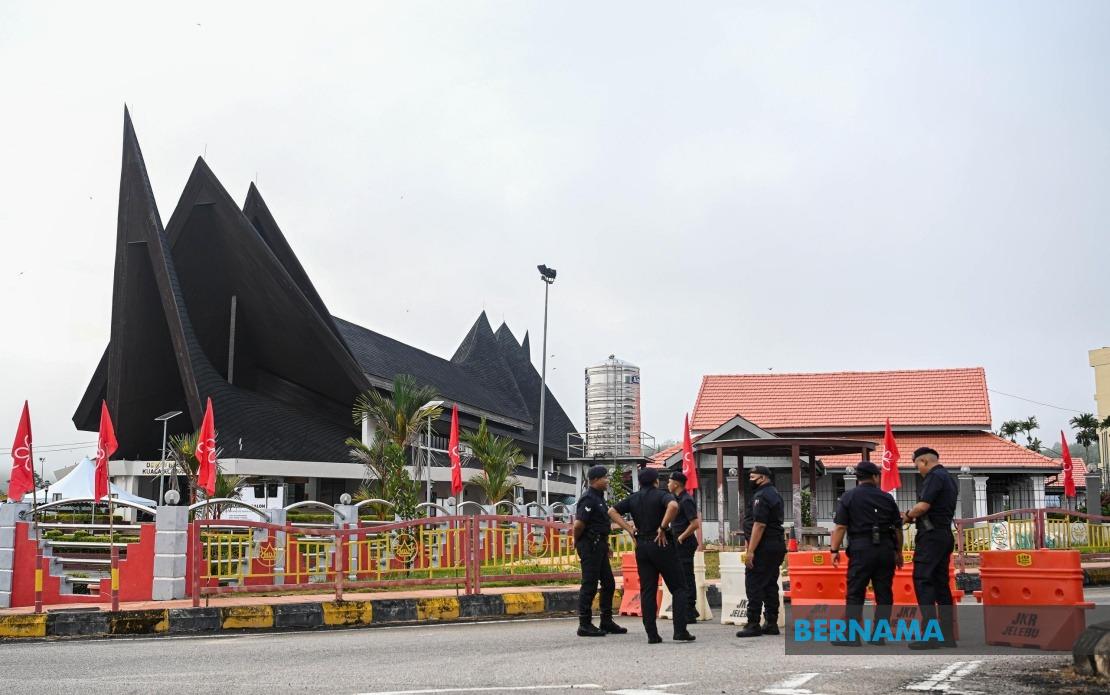
The Negeri Sembilan state election swung into high gear on July 18 as the nomination process for the 16th state assembly election commenced at eight centres across the state. Optimal weather conditions greeted the nomination day, facilitating smooth operations as Election Commission officials completed final arrangements at each venue. The process began promptly at 9 am and was scheduled to conclude by 10 am, setting the stage for what is shaping up to be a competitive multi-cornered contest in the industrial and politically significant state.
Media representatives and party supporters converged on nomination centres as early as 7 am, signalling the intensity of interest surrounding this electoral contest. Election Commission personnel were visibly engaged in last-minute preparations to manage the influx of candidates and their entourages. The compressed one-hour window for nominations underscored the commission's determination to maintain an efficient electoral process, a critical consideration given the number of competing parties and candidates expected to file their nomination papers.
The political landscape in Negeri Sembilan has shifted considerably since the state assembly was dissolved on June 5. The Election Commission subsequently fixed July 28 for early voting and August 1 as polling day, compressing the campaign period into a tightly scheduled month. With 889,490 eligible voters across the state—comprising 867,151 ordinary voters, 16,884 military personnel and spouses, and 5,455 police officers—the electoral exercise represents a substantial democratic exercise in a state with significant representation in broader Malaysian politics.
Pakatan Harapan has positioned itself as the dominant challenger, announcing its intention to contest all 36 state seats. This aggressive strategy reflects the coalition's confidence in its political machinery and messaging following mixed results in recent national elections. The coalition's comprehensive contest differs markedly from the more measured approaches of rival groupings, signalling a determination to consolidate its position or expand its foothold depending on local political dynamics.
Barisan Nasional, historically the dominant force in Malaysian state politics, has adopted a more selective strategy by contesting 25 of the 36 seats. This approach suggests a pragmatic calculation regarding resources and expected performance in particular constituencies. The decision to cede some seats may reflect either acknowledgement of demographic shifts or strategic accommodation with potential coalition partners at the state level. Perikatan Nasional is competing in 11 seats, maintaining its position as a significant force in certain pockets of the state while declining to mount a comprehensive challenge.
The configuration of smaller parties adds complexity to the electoral landscape. Parti Orang Asli Malaysia, Parti Sosialis Malaysia, and Parti Barisan Jemaah Islamiah Se-Malaysia have each committed to contesting a single seat, likely reflecting their strategic focus on particular constituencies or communities. Most significantly, Parti Pribumi Bersatu Malaysia has announced its participation as a solo contender, fielding candidates in 24 seats with an unusual arrangement allocating two seats to Parti Bersepakat Hak Rakyat Malaysia, which will use the Bersatu logo. This intricate internal arrangement within the Bersatu grouping illustrates the complex dynamics within Malaysian political coalitions and the necessity for accommodation among parties competing under different nominal identities.
The prospective contest unfolds against the backdrop of the 15th state election results from 2023, which saw Pakatan Harapan secure 17 of 36 seats, Barisan Nasional capture 14 seats, and Perikatan Nasional win five seats. These results established the competitive terrain for the current election, with PH holding a narrow advantage and both BN and PN positioned to contest gains. The intervening months have witnessed shifts in the political landscape at both state and federal levels, potentially influencing voter preferences and party positioning for this fresh contest.
Negeri Sembilan holds particular significance within Malaysia's political framework. As an economically productive state with substantial manufacturing and services sectors, its governance carries implications beyond state boundaries. The electoral outcome will influence broader coalitional mathematics at the federal level and shape resource allocation priorities for the state administration. For Malaysian voters and political observers, the Negeri Sembilan contest provides an important indicator of contemporary voter sentiment and the relative standing of competing political movements in an economically vibrant state.
The nomination process represents the formal commencement of the electoral competition, transforming months of behind-the-scenes negotiation and candidate selection into public record. The filing of nomination papers marks the point beyond which parties cannot adjust their candidate lists or strategic configurations without forfeiting candidacies. This procedural finality adds weight to the choices announced by each political organization, reflecting their assessments of electoral viability and resource availability.
The compressed timeline between nominations and polling day—merely 15 days—concentrates campaigning into an intensive period requiring parties to execute coordinated media strategies, grassroots mobilization, and public messaging with precision. For Negeri Sembilan's 889,490 voters, the coming weeks will witness intense political activity as candidates attempt to persuade constituents of their respective parties' vision for state governance and contributions to national political direction.

