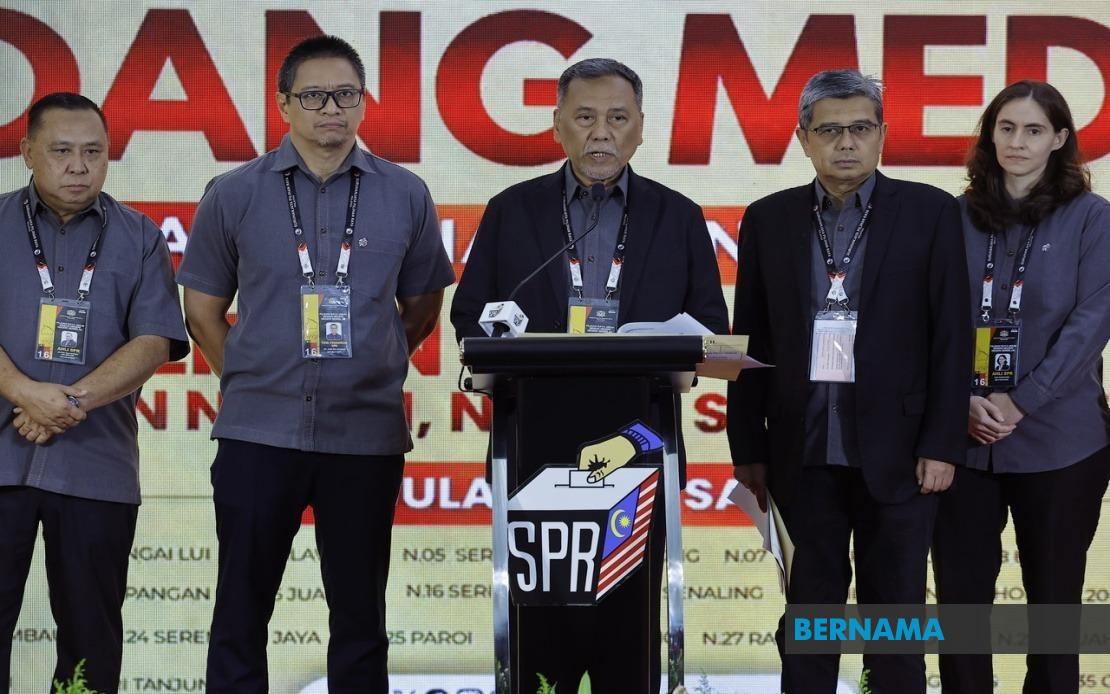
The race for Negeri Sembilan's 36 state assembly seats has taken shape with 103 candidates now officially cleared to contest the August 1 election, according to the Election Commission. The validation process concluded on July 18 following submissions at eight nomination centres across the state, setting the stage for a competitive contest that will determine control of the Selangor-adjacent state in Malaysia's political landscape.
Election Commission chairman Datuk Seri Ramlan Harun announced the final tally after verification of all nominations, confirming that the field encompasses a diverse range of political players and independents. The candidate pool reveals significant variations in candidate profiles, with the oldest contender being 70 years old while the youngest is just 23, illustrating generational diversity within Malaysia's political ecosystem. The gender composition shows 94 male and nine female candidates, reflecting persistent underrepresentation of women in electoral contests despite growing calls for greater inclusivity.
Pakatan Harapan has established itself as the dominant coalition, fielding 36 candidates across all contested seats—effectively running a full slate. This positions the opposition alliance to potentially command every seat should voters deliver a sweep, though electoral mathematics suggest a more fragmented outcome. Barisan Nasional, Malaysia's traditional governing coalition, enters the contest with 25 candidates, ceding 11 seats and effectively conceding ground in what appears to be a strategic decision regarding deployment of resources and candidates.
The fractured opposition landscape adds complexity to the electoral dynamics. Bersatu, the breakaway party from the original Mahathir-led UMNO faction, has fielded 24 candidates and remains positioned to play kingmaker in hung assembly scenarios. Perikatan Nasional, the coalition comprising Bersatu and other parties, has contributed 11 candidates overall to the contest. This multiplication of candidates from parties nominally aligned creates potential vote-splitting risks, particularly in constituencies where support bases overlap.
Microparties and independent candidates are also contesting, though with minimal representation. Barisan Jemaah Islamiah Se-Malaysia, the Malaysian Orang Asli Party, and the Socialist Party of Malaysia each fielded single nominees, while four independent candidates are seeking election. These actors serve primarily as spoilers or niche representatives in the electoral marketplace, though they occasionally prove decisive in closely contested seats.
The configuration of electoral contests varies significantly across the state. Twenty-one of the 36 seats will witness three-cornered battles—the most common configuration—where voters must choose among three candidates, typically complicating the path to victory. Eleven seats remain set for direct contests between two candidates, offering clearer voter choice but also potentially higher stakes for the contenders involved. Four seats will experience four-cornered fights, and the constituencies of Nilai and Sri Tanjung stand out with five candidates competing, creating highly fragmented contests where plurality results could determine outcomes.
The electorate participating in this contest encompasses 889,490 registered voters, a substantial base for a state-level election in Malaysia. The voting population comprises 867,151 ordinary voters across residential constituencies, while 16,884 military personnel and their spouses hold voting rights, and 5,455 police officers participate in the electoral process. This inclusion of security personnel within the voter roll reflects Malaysia's constitutional framework and represents a voting bloc that political parties typically court for its disciplined organization and bloc-voting potential.
The Election Commission has scheduled early voting for July 28, permitting advance voting for registered voters unable to participate on polling day. The compressed timeline between candidate nomination and voting day—approximately two weeks—reflects the commission's expedited schedule, leaving campaign periods relatively brief compared to federal elections. This condensed timeframe advantages established parties with existing machinery and disadvantages newer political forces attempting to build organization and awareness.
Negeri Sembilan's political trajectory carries implications beyond the state itself. As a pivotal central Malaysian state adjacent to Selangor and within proximity to federal territories, its governance demonstrates either the viability of opposition administration at state level or validates Barisan Nasional's capacity to retain strongholds. The state's economy relies substantially on small and medium enterprises, agriculture, and commuter employment, making it vulnerable to both national macroeconomic conditions and governance quality. Voters' decision will potentially influence perceptions of the major coalitions' administrative competence heading toward the next federal election cycle.
The dissolution of the state assembly on June 5 followed the expiration of the previous assembly's term and reflects constitutional timelines rather than political instability. However, the timing of the election and its proximity to other state contests shapes broader narratives about coalition strength and electoral momentum within Malaysia's political environment. Results from Negeri Sembilan will provide early indicators of voter sentiment and party performance metrics that commentators will extrapolate to hypothetical federal outcomes.

