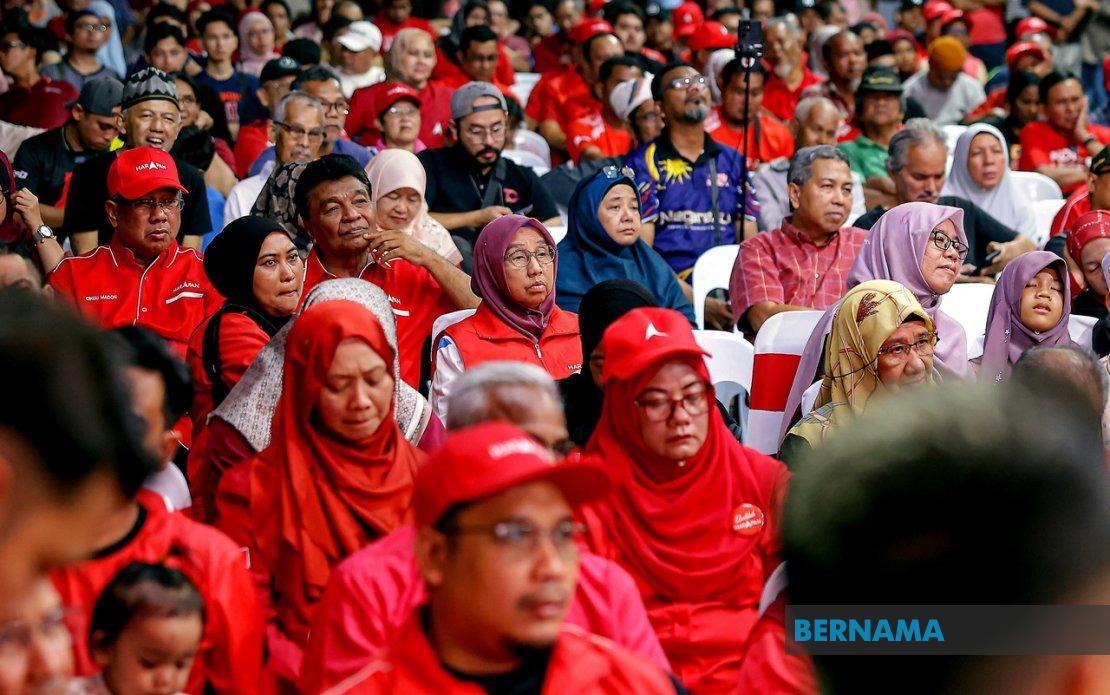
The campaign trail in Negeri Sembilan is revealing a fundamental shift in what voters believe matters most in political leadership. With nearly 890,000 registered voters preparing to cast ballots in the 16th state election, emerging evidence from electoral surveys shows that constituents are increasingly pragmatic about their expectations—they want leaders who are both approachable and capable of translating promises into action at the grassroots level.
This shift represents a departure from conventional political thinking, where local connections and party machinery have traditionally dominated election narratives. Voters across the state are instead prioritizing accessibility and demonstrable competence as the primary criteria for support. The electorate appears to have grown weary of distant politicians and empty rhetoric, instead demanding representatives who will maintain regular contact with constituents and work actively on resolving community problems. The emphasis on approachability suggests that many voters have experienced frustration with elected officials who prove difficult to reach once they assume office, creating a credibility gap between campaign promises and post-election reality.
Retired educator Kamarulzaman Ab Aziz articulates this sentiment with striking clarity, arguing that outsiders can earn voter confidence if they demonstrate genuine engagement with their constituencies. His perspective challenges the traditional advantage enjoyed by candidates with deep local roots, suggesting that authentic connection and accessibility have become more valuable than family names or lifelong residence in a constituency. This viewpoint likely resonates with many Negeri Sembilan voters who have grown frustrated with representatives who maintain physical or emotional distance from their communities despite holding significant public office.
The cost of living crisis dominates conversations among business operators and working families throughout the state. Nurulainee Hamidon, a Port Dickson food trader, captures the grinding pressure facing small enterprise owners who find themselves squeezed between rising input costs and customer resistance to price increases. Her concerns reflect a broader economic reality across Malaysia's retail and food service sectors, where inflation in raw material and supply chain costs has eroded profit margins while wages have remained stagnant. For traders like Hamidon, this represents an existential challenge—she must either absorb costs and sacrifice income or raise prices and risk losing customers in an increasingly cost-conscious market.
Rural development inequality presents another critical concern shaping voter sentiment in Negeri Sembilan. Housewife M. Manisha highlights the persistent disparity between urban and estate communities in accessing public facilities and development opportunities. Malaysia's rubber and palm oil estates, while economically significant, often lag behind in infrastructure investment, sanitation, educational facilities, and health services. Her plea reflects broader frustrations among estate residents who feel systematically excluded from development planning processes and resource allocation, creating a two-tier system where urbanites enjoy superior amenities while rural workers are left behind.
Employment quality and wage fairness represent emerging concerns among younger voters entering the workforce. College student Mohammad Najmi Aiman, casting his ballot for the first time in the Paroi constituency, expresses frustration with a labor market where wages frequently fail to reflect workers' actual qualifications and capabilities. This sentiment points to a significant credibility problem in Malaysia's job market, where degree holders often accept positions offering wages equivalent to secondary school leavers, while employers cite supply and demand economics to justify depressed salary scales. For young voters like Najmi Aiman, this represents both personal concern about their own economic futures and broader anxiety about Malaysia's competitiveness as a knowledge-based economy.
Campaign conduct and political civility have emerged as unexpected priorities for some voters, revealing mounting concern about the tone and methods of political competition. Lim Kian, a Port Dickson private sector employee, advocates for mature, constructive campaigning that respects democratic norms and refrains from personal attacks or character assassination. His perspective suggests that voters are becoming increasingly conscious of how political behavior affects social cohesion and institutional trust. The proliferation of negative campaigning, social media attacks, and partisan vitriol has apparently fatigued sections of the electorate who recognize that whatever party wins will govern the state and serve all constituents regardless of voting preference.
The electoral mechanics of this state election involve 889,490 registered voters—comprising 867,151 regular voters alongside 16,884 military personnel and spouses and 5,455 police officers and spouses—choosing among 103 candidates contesting 36 state assembly seats. This candidate-to-seat ratio of approximately 2.9:1 is relatively competitive, suggesting genuine contest in many constituencies rather than coronation of predetermined victors. Early voting takes place on July 28, with the main polling day scheduled for August 1.
What emerges from these voter conversations is a portrait of an electorate increasingly demanding and discriminating in its political choices. Rather than accepting traditional criteria—family connections, party loyalty, or incumbency—voters are imposing new performance standards on candidates. They want leaders who will personally engage with constituents, understand the economic pressures ordinary Malaysians face, ensure equitable development across all communities, and conduct themselves with maturity and respect throughout political competition. This recalibration of electoral expectations could have significant implications beyond Negeri Sembilan, potentially signalling how voters across Malaysia may behave in future electoral contests.
The prominence of cost-of-living concerns, development equity, and employment quality in voter conversations reflects Malaysia's broader political economy challenges. These are not parochial grievances but rather manifestations of national policy failures and structural economic problems that extend far beyond any single state government's authority. Yet voters continue to look to state elections as opportunities to register discontent and demand change at the level of government most accessible to them. This dynamic suggests that in the absence of federal policy reforms addressing inflation, wage stagnation, and regional development disparities, state-level politicians will face intensifying pressure to deliver visible improvements in living standards or risk electoral punishment from increasingly skeptical voters.

