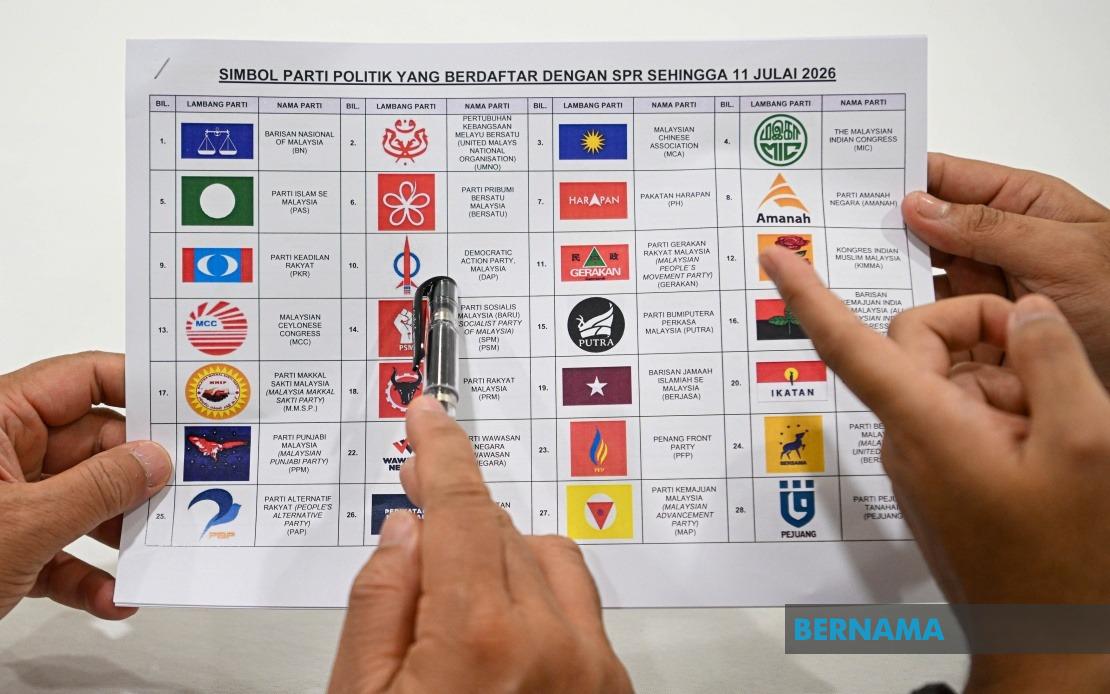
The machinery of Negeri Sembilan's democratic process swung into motion on July 18 as the state's 16th legislative election formally began. Nomination centres opened simultaneously across eight locations throughout the state from 9 am, marking the official start of what promises to be a keenly contested battle for control of the legislature. Prospective candidates had a one-hour window to lodge their nomination papers with Returning Officers, with the deadline set at 10 am. This compressed timeframe is a standard feature of Malaysia's electoral machinery, designed to ensure administrative efficiency while maintaining the integrity of the nomination process.
The State Election Commission announced that by the eve of nomination day, 464 nomination forms had already been distributed to interested candidates, with 70 prospective contenders having paid the mandatory election deposits to secure their participation. These figures suggest a competitive field, though the actual number of nominations received would only become clear once the returning officers completed their verification processes. The formal announcement of eligible candidates would immediately trigger the commencement of the 14-day campaign period, a constitutionally mandated window that would extend until 11.59 pm on July 31. This relatively short timeframe concentrates political activity into an intense fortnight, during which parties must mobilize their organizations, communicate their platforms, and court voter support.
Nearly 900,000 registered electors in Negeri Sembilan hold the power to determine the outcome of this contest. The electoral roll comprises 867,151 ordinary voters alongside 16,884 military personnel and their spouses and 5,455 police personnel and their spouses, a significant government sector component that reflects the presence of federal installations within the state. The distribution of these voters across 36 state constituencies will determine which party formations can claim to have secured the people's mandate to govern the state for the next five years.
The political landscape has crystallized into distinct competing formations, each pursuing contrasting strategies for contesting the 36 seats. Pakatan Harapan, the incumbent coalition currently holding state power following its 2023 victory, has opted for a comprehensive approach by fielding candidates in all 36 constituencies. Barisan Nasional, the traditional federal ruling coalition until 2018 and a competitor for influence at state level, has adopted a more selective strategy by contesting 25 seats. Perikatan Nasional, an alliance that has gained traction in various states, is putting forward candidates in 11 seats. These three major groupings are supplemented by smaller parties and independent formations: Parti Orang Asli Malaysia has fielded a single candidate representing indigenous Malaysian interests, the Socialist Party of Malaysia is contesting one seat, and Parti Barisan Jemaah Islamiah Se-Malaysia is putting forward one candidate. Most significantly, Parti Pribumi Bersatu Malaysia, while aligned with Perikatan Nasional, is contesting 24 seats, including two positions where candidates from Parti Bersepakat Hak Rakyat Malaysia are running under the Bersatu organizational banner.
The performance of these coalitions in the previous state election, held just over a year prior in 2023, provides a benchmark for assessing how electoral dynamics may have shifted. Pakatan Harapan secured 17 of the 36 available seats, granting it a narrow but functional majority. Barisan Nasional captured 14 seats, retaining significant influence despite losing federal power in 2018. Perikatan Nasional managed to secure five seats, demonstrating growing support in certain areas of the state. These results reflected Negeri Sembilan's status as a competitive political arena where no single force commands overwhelming dominance, requiring coalitions to navigate complex alliances and negotiate carefully to maintain governing capacity.
The operational preparations for conducting the election have reached an advanced stage. The Negeri Sembilan police force has mobilized 4,800 officers and personnel specifically to manage security and order during the electoral process, supplemented by an additional 1,373 officers and personnel deployed from the federal police headquarters at Bukit Aman. This substantial security deployment reflects both the administrative complexity of managing simultaneous proceedings at eight nomination centres and the potential for large gatherings of party activists and supporters. Election officials have issued reminders to all candidates and their supporters to scrupulously comply with electoral regulations and refrain from any provocative conduct that might disrupt the nomination procedures or compromise the peaceful character of the electoral process.
The electoral calendar has been structured to accommodate both early voting and the main polling day. Early voting is scheduled for July 28, allowing certain categories of voters—including those who may be travelling or unable to vote on the main day—to cast their ballots at designated locations. The principal polling day is fixed for August 1, marking the culmination of the campaign period and the moment when voters will express their preference for which party or coalition will govern the state. The dissolution of the state assembly on June 5, executed with the consent of Tuanku Muhriz Tuanku Munawir, the Yang Dipertuan Besar of Negeri Sembilan, initiated the formal electoral timeline and set in motion the various procedural steps leading to nomination day.
Weather forecasting has indicated that nomination day will bring variable conditions across the state. The Malaysian Meteorological Department predicted generally fair conditions in most areas during morning hours, with the notable exception of Port Dickson and Seremban, where rainfall is anticipated. Afternoon conditions across the entire state are expected to bring thunderstorms, a common pattern for the season in Malaysia's equatorial climate. Such weather would likely affect attendance at nomination proceedings, potentially altering the scale of public gatherings and the visibility of political activity. Despite such meteorological considerations, nomination day is widely anticipated to attract substantial numbers of party leaders, political figures, and grassroots supporters accompanying their candidates to the nomination centres, creating the visual spectacle and organizational energy that typically characterizes this stage of Malaysia's electoral cycle.
The contest unfolding in Negeri Sembilan carries significance extending beyond the state itself. As a geographically central state within Peninsular Malaysia and a traditional barometer of political trends, the outcome may provide early signals about shifting voter preferences and the relative standing of competing political formations ahead of other electoral contests. For Pakatan Harapan, retaining control of Negeri Sembilan would validate its performance as a state government and provide momentum. For Barisan Nasional, significant gains would suggest an electoral recovery from its 2018 nadir. For Perikatan Nasional and its associated parties, further growth would confirm their emergence as a consequential political force capable of competing effectively across Malaysia's diverse states. The fortnight of campaigning ahead will test how effectively each coalition can mobilize its organizational machinery, communicate its vision for the state's future, and persuade voters that it deserves their support.

