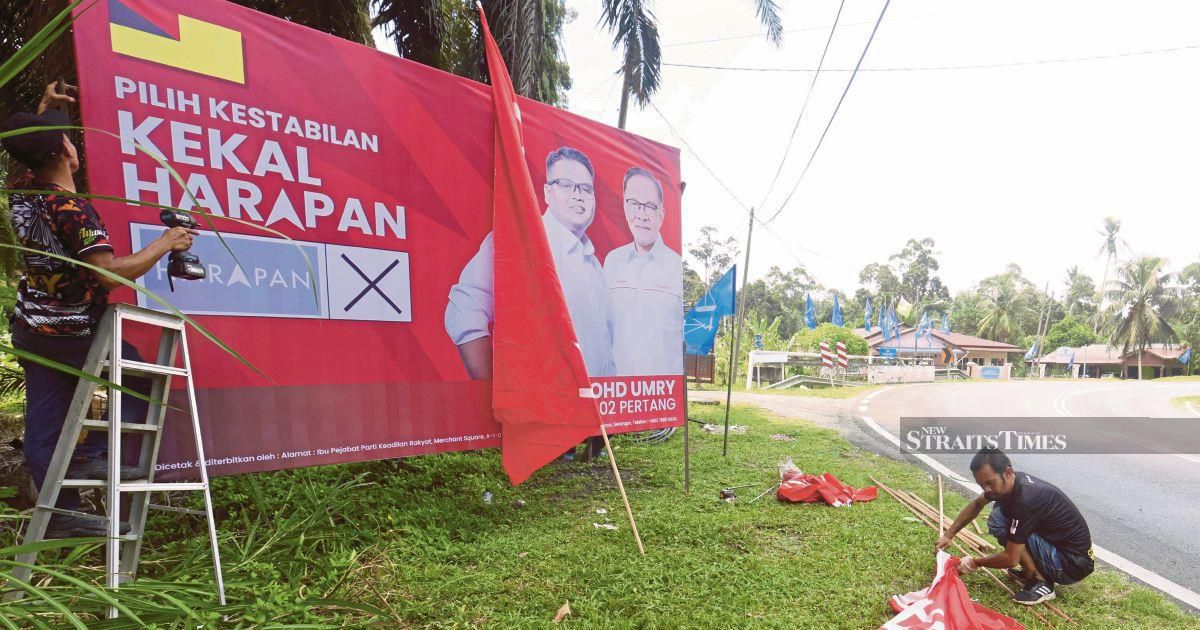
The Negri Sembilan election represents a critical inflection point for Bersatu, a party already navigating treacherous political terrain across the peninsula as coalitional mathematics shift beneath its feet. With 103 candidates contesting 36 state seats, this state-level contest will serve as a barometer for reformist politics in the region and offer early signals about whether Bersatu can maintain relevance in an increasingly crowded political marketplace dominated by BN and PN.
Bersatu's predicament stems from its awkward positioning between two larger coalitions. The party emerged from Pakatan Harapan's implosion in 2020 but has struggled to establish itself as an independent force with genuine grassroots support. Its decision-making capacity has been constrained by constant negotiations and compromise, leaving it vulnerable to being outmanoeuvred by more established rivals with deeper organisational reach and stronger institutional backing.
The cooperation framework between BN and PN, formalised through electoral and governance agreements, creates fundamental constraints on Bersatu's manoeuvrability. These arrangements privilege the two larger coalitions in seat distribution and strategic positioning, reducing the space available for smaller players to carve out meaningful electoral gains or negotiate favourable terms. For Bersatu, this translates into a narrowing window to demonstrate electoral viability before being marginalised entirely.
Negri Sembilan itself is significant politically. As a state where both BN and PN maintain substantial presence and where local dynamics remain relatively fluid, the contest will reveal whether Bersatu can still mobilise sufficient voter interest to claim meaningful representation. The state has been competitive between major coalitions, though BN has maintained traditional strength in parts of the electorate. A strong Bersatu showing could reinforce the party's case for expanded cooperation; a weak performance would deepen questions about its continued relevance.
The internal dynamics within Bersatu leadership also matter considerably. The party has experienced factional tensions and questions about direction, particularly regarding its relationship with Malay-Muslim politics and whether it should emphasise inclusivity or consolidate a more specific voter coalition. How these tensions play out in candidate selection and campaign messaging will influence electoral outcomes and affect perceptions of the party's coherence.
For Malaysian voters observing from outside Negri Sembilan, this election carries implications for national political stability. If Bersatu emerges weakened, it could accelerate a realignment where BN and PN become the predominant forces, potentially reshaping the competitive landscape for the next general election. Conversely, if Bersatu performs credibly, it might negotiate from a position of greater strength in future coalition discussions.
The broader context of BN-PN cooperation remains fluid and contested. While both coalitions have demonstrated capacity to work together at federal and state levels, underlying tensions persist around leadership, policy direction, and long-term strategic vision. Bersatu occupies an ambiguous space within this framework, sometimes welcomed as a balancing element but never fully integrated or trusted by either coalition leadership.
Regional dynamics also influence the Negri Sembilan outcome. The state sits within a strategic corridor between Selangor and other peninsular states where coalition competition remains intense. How various parties perform in Negri Sembilan will reverberate through neighbouring constituencies and influence calculations for future electoral contests across the broader region.
Voter sentiment in Negri Sembilan appears to reflect broader national patterns—concern about economic management, service delivery, and political stability feature prominently in informal feedback. The election offers parties an opportunity to address these concerns and demonstrate competence. For Bersatu especially, the campaign represents a chance to reconnect with voters beyond the organisational and coalition mechanics that have dominated recent political narratives.
The 103-candidate field across 36 seats suggests competitive contests in multiple constituencies. In some areas, straight fights between BN and PN candidates appear likely, while others may feature Bersatu candidates attempting to establish themselves as viable alternatives. The distribution of candidates and their credibility within local contexts will significantly influence seat distribution.
Media coverage and voter attention will be critical. State elections sometimes attract less scrutiny than federal contests, but Negri Sembilan's significance within national political calculations means this race will receive substantial coverage. Bersatu's campaign messaging, candidate quality, and organisational effectiveness will be closely examined as indicators of its broader trajectory.
Ultimately, the Negri Sembilan election functions as both a local contest and a national political indicator. For Bersatu, the stakes are particularly high. The party requires a credible performance to justify continued negotiations with larger coalitions and to maintain relevance as Southeast Asian politics continue evolving. A disappointing result would force serious soul-searching about direction and potentially accelerate consolidation around the two larger coalitional blocs.

