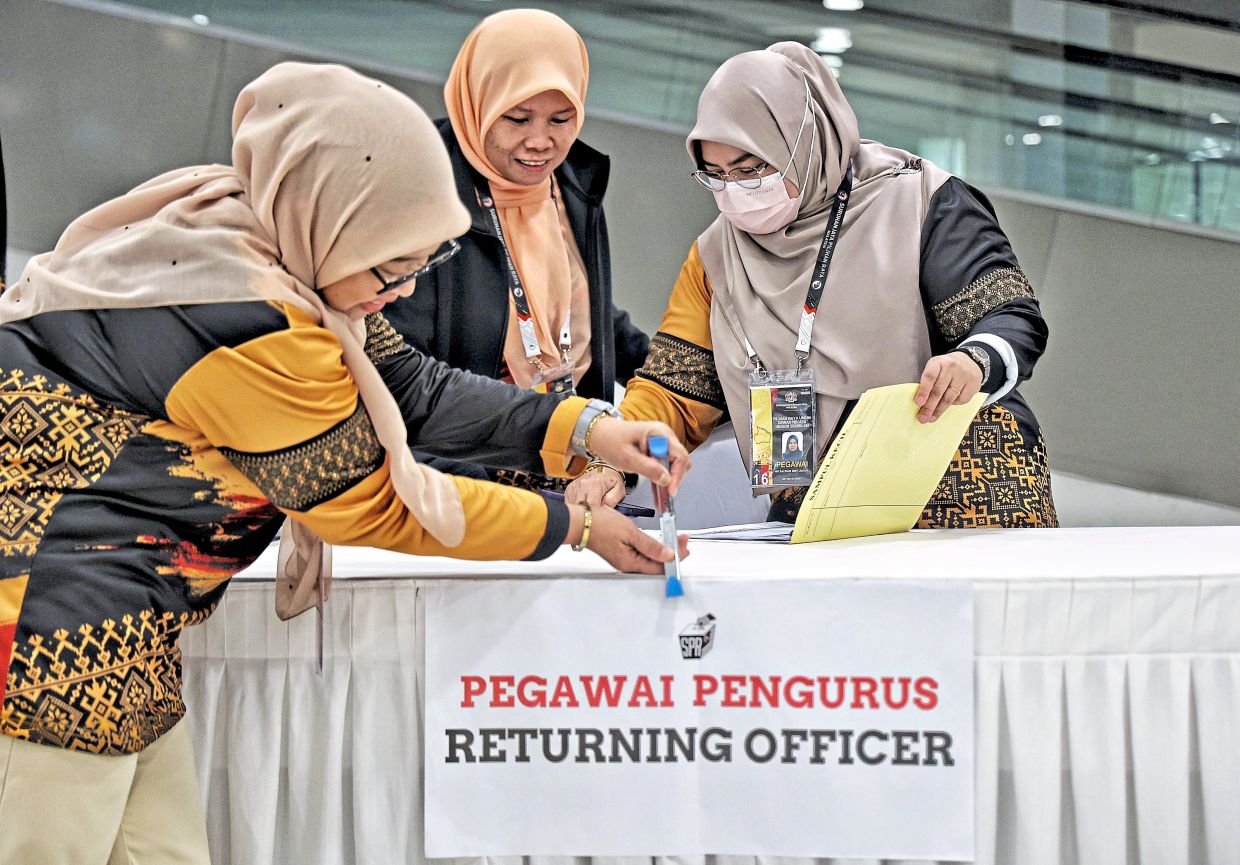
The August 1 Negri Sembilan state election has emerged as a crucial proving ground for an experimental political realignment that could fundamentally alter Malaysia's federal power structure. This test comes after mounting evidence that PAS has been orchestrating a strategic reconfiguration of opposition forces, signalling a potential shift away from the current unity government arrangement that has defined Malaysian politics since 2022.
The seeds of this new alignment were sown well before the recent Johor state elections, where PAS demonstrated its intentions through calculated political manoeuvres. Although PAS contested 11 seats in Johor, party leadership strategically encouraged its supporters to back Barisan Nasional candidates in constituencies where PAS was not standing. This coordinated approach, despite yielding zero seats under the Perikatan Nasional banner in Johor, was widely interpreted as a deliberate sacrifice aimed at proving the viability of closer cooperation between PAS and Barisan at a future opportunity. Negri Sembilan now represents that opportunity, and the state's electoral outcome will determine whether this partnership can translate theoretical alignment into practical electoral success.
On paper, the proposed PAS-Barisan configuration appears formidable, combining PAS's grassroots mobilisation capabilities with Barisan's administrative machinery and financial resources. However, the critical question remains whether this partnership can deliver results when tested at the ballot box. The political fundamentals differ markedly from Johor, where Barisan maintained historical dominance and could theoretically govern alone. Negri Sembilan presents a more complex electoral battlefield where the new alignment's effectiveness will face genuine scrutiny from voters.
Should this reconfiguration prove successful on polling day, the implications for Malaysia's federal government would be immediately severe. The most immediate casualty would likely be the Democratic Action Party, which has long anchored Pakatan Harapan's hold on non-Malay voters. The Johor election already demonstrated the vulnerability of DAP's traditional support base, with the party losing four of ten seats it had secured during the 2022 general election. A similarly disappointing performance in Negri Sembilan would intensify internal pressure within DAP, forcing a fundamental reckoning about the party's continued alignment with Prime Minister Datuk Seri Anwar Ibrahim's coalition.
DAP faces a particular existential challenge that transcends normal electoral cycles. The party's participation in the unity government has increasingly become electorally costly, as voters punish it for supporting Anwar's administration while simultaneously expecting it to constrain Malay-Muslim-centric policies. This tension crystallised recently in Melaka, where DAP withdrew four assemblymen from the Umno-led state government in protest against constitutional amendments permitting nominated state assemblymen. Yet this principled stance is undermined by DAP's continued participation in the Pahang state government despite similar arrangements, suggesting the party's ideological consistency is negotiable when electoral consequences differ. Such inconsistency erodes DAP's moral authority with its voter base.
DAP's scheduled National Congress on August 16 will become a pressure cooker for internal dissent if Negri Sembilan produces another disappointing result. Party delegates will increasingly question whether holding federal Cabinet positions justifies the steady erosion of electoral support, particularly as DAP's remaining relevance depends on maintaining urban non-Malay constituencies. An extended period of poor electoral performance could trigger demands for the party to either renegotiate its role in government or withdraw entirely, fundamentally destabilising Anwar's coalition from within.
Beyond DAP's predicament lies a second critical threat: the unity government's precarious standing among Malay voters. The emerging PAS-Barisan arrangement explicitly targets Malay constituencies through a coordinated strategy transferring PAS's grassroots mobilisation network to Umno candidates. This alliance directly challenges Pakatan Harapan's already-tenuous position within the Malay heartland, where the coalition has never commanded substantial voter support. Without establishing credible Malay electoral legitimacy, Anwar's federal government faces a persistent crisis of political legitimacy that raw parliamentary numbers cannot cure. Voters increasingly perceive the government as representing narrow urban, non-Malay, and secular interests rather than the broader Malay-Muslim polity, a vulnerability the new opposition alignment is explicitly designed to exploit.
The third and most consequential threat stems from shifting federal power dynamics. Should the PAS-Barisan alliance emerge victorious in Negri Sembilan and subsequently replicate success in the Melaka elections, an emboldened Umno will accumulate tremendous leverage over Prime Minister Anwar. A strengthened Barisan, buoyed by battlefield success under this new configuration, would effectively hold Anwar hostage, capable of extracting concessions or ultimately departing the coalition entirely to formalise the opposition alliance at the federal level.
The mathematical implications for Parliament are stark and transformative. The current government coalition commands 151 of 220 Dewan Rakyat seats, comprising Pakatan Harapan's 77 seats, Barisan Nasional's 30, Gabungan Parti Sarawak's 23, Gabungan Rakyat Sabah's seven, plus six ex-Bersatu rebels and scattered independent and smaller-party representation. The opposition commands 69 seats, primarily through PAS's 43 seats and Bersatu-aligned MPs. However, if Barisan's 30 seats migrated to the opposition bloc, the government's majority would collapse from 82 seats to merely 10 seats above the 111-seat threshold required for parliamentary control. This razor-thin margin would leave Anwar vulnerable to even minor defections by regional parties or independent-minded backbenchers.
Such a realignment would represent not merely an electoral setback but a fundamental structural rupture in Malaysia's political architecture. The unity government was constructed around a specific historical moment when Pakatan, Barisan, and regional parties converged against Perikatan Nasional's dominance. That moment has now passed, and the artificial coalition holding these normally-competing forces together has begun showing fractures. Negri Sembilan will test whether these fractures are superficial or symptomatic of deeper incompatibility.
The broader strategic calculation for all parties involves competing visions of Malaysia's political future. Umno leadership, particularly under pressure from internal factions demanding greater Malay-centric policies, increasingly views the unity government as constraining rather than empowering. PAS, conversely, sees the new alignment as an opportunity to reclaim relevance through cooperation with Barisan rather than perpetual opposition. For Anwar and Pakatan, the challenge intensifies: sustaining a coalition that no longer reflects underlying political sentiments requires delivering tangible benefits that offset the electoral costs imposed on coalition partners.
Ultimately, the Negri Sembilan election functions as a pressure test on Malaysia's current political settlement. A decisive victory for the new PAS-Barisan alignment would signal that the unity government's underlying contradictions have become unmanageable, setting the stage for a broader federal realignment that could fundamentally rewrite Malaysian politics by year's end. Conversely, a Pakatan victory would suggest the unity government retains sufficient resilience to resist the centrifugal forces pulling it apart. For Malaysian observers and international stakeholders alike, the result will carry implications far beyond a single state government, potentially reshaping the nation's entire political trajectory.

