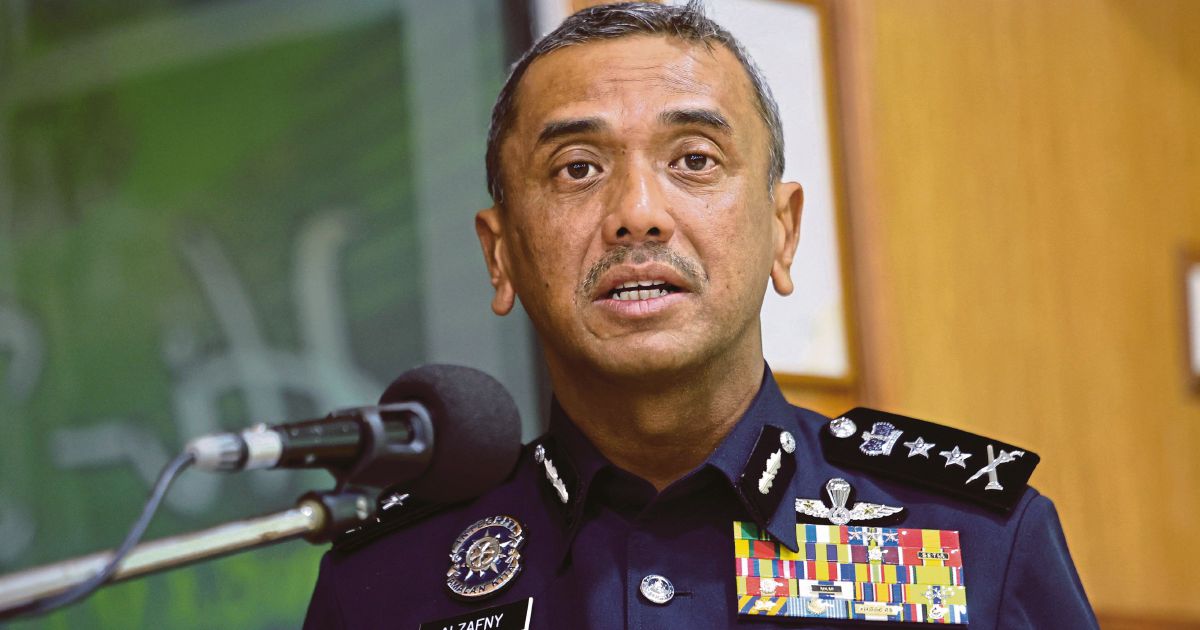
As political parties prepare for the Negri Sembilan state election, law enforcement authorities have issued a firm directive warning candidates and party officials against instrumentalising sensitive national issues for electoral advantage. The police reminder, delivered in Port Dickson, underscores official determination to preserve public order and community cohesion throughout the campaign season.
The advisory specifically highlights religion, royalty, and race—the trio commonly referred to as the 3R—as subjects that pose heightened risks to social stability when introduced into partisan political discourse. These three domains have historically been sources of tension in Malaysian politics, capable of inflaming communal divisions if exploited carelessly or deliberately during competitive elections. The police warning reflects a well-established principle in Malaysian governance: certain matters are deemed sufficiently sensitive that their politicisation can undermine national unity and invite serious consequences.
Negri Sembilan, as a state with a distinct constitutional framework centred on its reigning Sultan, holds particular vulnerability to discourse touching on royal prerogatives and the institution of monarchy. The state's Duli Yang Maha Mulia serves as both ceremonial head and a symbol of state identity, making discussions about royal authority inherently charged in the local political context. Any campaign messaging that questions, undermines or leverages the institution for partisan gain risks both legal ramifications and community backlash that could escalate beyond the immediate election cycle.
The religious dimension carries equally substantial weight. Malaysia's Muslim-majority population practises Islam as the federation's official religion, while significant communities of other faiths coexist across the nation. Political campaigns that weaponise religious identity, pit faith communities against one another, or make provocative claims about religious authority create fractures that extend far beyond polling day. Negri Sembilan, like other Malaysian states, has experienced periods of religious tension that demonstrate the speed with which inflammatory rhetoric can spread and destabilise social relations.
Racial sensitivities remain deeply embedded in Malaysia's constitutional and political fabric. The federation's foundational social contract, established at independence, explicitly recognises special positions alongside commitments to citizenship rights across all communities. Political campaigns that reopen these foundational bargains or frame them as zero-sum contests between ethnic groups can undermine the delicate equilibrium that has generally preserved intercommunal peace. Police warnings about race-based messaging aim to prevent precisely this kind of destabilisation during intense electoral periods when emotions run higher and rhetoric grows sharper.
The timing of this police directive reflects standard practice during Malaysian election campaigns. State and national authorities routinely issue such cautions weeks before voting begins, signalling official intolerance for boundary-crossing conduct while providing parties opportunity to self-regulate. This approach balances respect for democratic free speech with recognition that certain speech categories pose demonstrable risks to public order—a tension that election management repeatedly navigates.
Political parties contesting in Negri Sembilan will have absorbed these messages through multiple channels by now. The state's largest formations, represented across the peninsula's political landscape, generally maintain internal compliance mechanisms to prevent candidates from straying into prohibited territory, though individual candidates occasionally test boundaries or ignore guidance. Newer or smaller parties may lack such institutional discipline, creating higher risk of inadvertent or deliberate transgression.
Enforcement mechanisms available to police include detention under provisions addressing sedition, incitement to violence, and breaches of religious law depending on specific content and context. The existence of such powers functions partly as deterrent; the actual deployment remains selective and reserved for serious violations. Police communications emphasising the warning without immediately prosecuting ambiguous cases reflect this calibrated approach—creating pressure for compliance while avoiding blanket suppression of legitimate campaign speech.
For Malaysia's broader electorate, particularly in Negri Sembilan, these police warnings signal that campaign season will proceed within established guardrails. Voters anticipating elections often fear that competitive politics will devolve into communal appeals or divisive identity politics. Official assertions that certain red lines remain operative, backed by police enforcement capacity, provide reassurance that partisan competition will occur within bounds that protect wider social stability. This permits genuine electoral competition and choice without collateral damage to interethnic and interreligious relations.
The international dimension should not be overlooked. Malaysia's political stability and its reputation as a relatively tolerant, multi-community Southeast Asian democracy depend partly on demonstrating that competitive elections can occur without triggering communal violence or institutional breakdown. Police and election management conducted responsibly signal to international observers and investors that democratic processes remain orderly and predictable—factors relevant to Malaysia's regional standing and economic prospects.
Moving into the campaign period proper, stakeholders ranging from civil society monitors to community leaders typically also activate their own messaging about responsible campaign conduct. This multi-level approach—combining police warnings, party self-regulation, and civil society vigilance—has generally proved effective in maintaining election integrity while preserving social cohesion. The success of this framework in Negri Sembilan will likely inform approaches to subsequent elections elsewhere in Malaysia.

