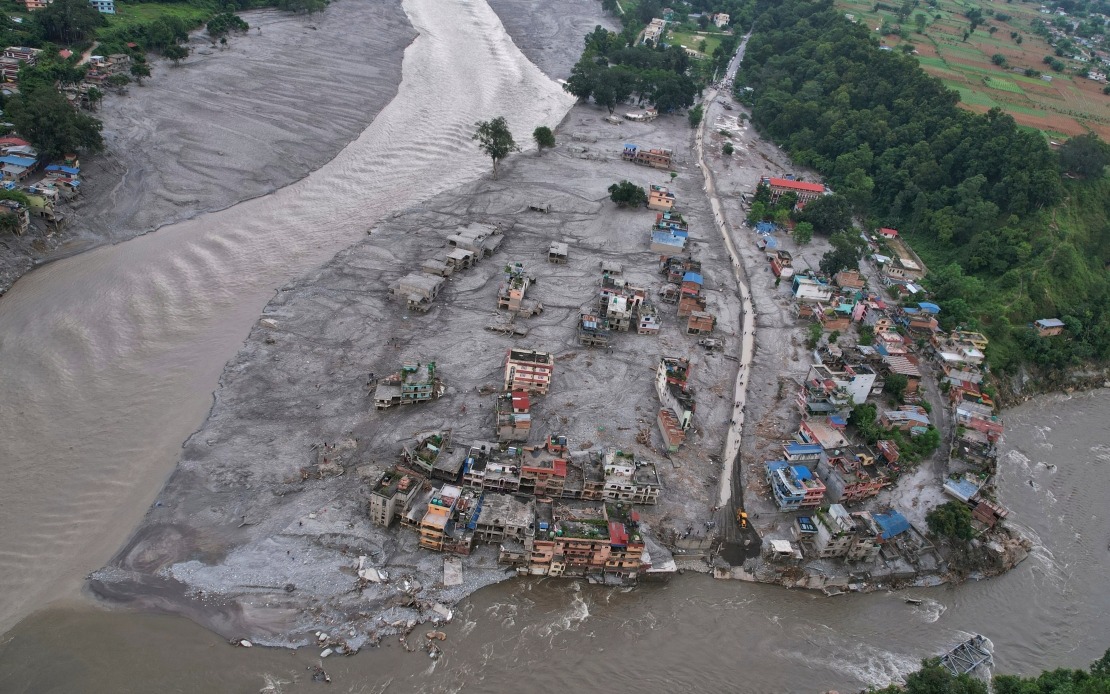
Nepal is moving cautiously on accepting international search and rescue assistance beyond what it has already mobilized, preferring to complete its assessment of damage and ongoing recovery efforts before committing to additional foreign deployments. The country's measured approach reflects the overwhelming scale of the emergency unfolding across its central and northern territories following Wednesday's river flooding, which has already claimed hundreds of lives and left thousands missing across the region.
The devastating floods along the Bhote Koshi and Trishuli rivers have devastated vast areas, creating an unprecedented crisis that has tested Nepal's disaster response infrastructure. In a statement relayed through Malaysia's diplomatic mission in Kathmandu, Mohd Firdaus Azman, charge d'affaires at the Malaysian Embassy, indicated that Nepalese authorities are currently prioritizing situation assessment. "They (Nepal) informed that they will assess the situation before accepting SAR missions from any other country," he explained, signaling that Kathmandu intends to evaluate its actual needs and existing capacity before expanding the international response.
Currently, Nepal has already activated search and rescue teams from four nations: Australia, China, India, and South Korea. These particular countries were chosen because they all have citizens employed at hydropower facilities in the flooded zones, giving them direct stakes in rescue operations. The involvement of these four nations reflects a strategic decision by Nepali authorities to leverage existing connections and on-the-ground knowledge rather than broadly mobilizing international rescue capacity.
The hydropower sector has become a focal point of the crisis, with more than 900 workers trapped across 11 separate facilities, many of which remain under construction. These individuals are stranded in tunnels and underground powerhouses, creating complex rescue scenarios that demand specialized equipment and expertise. The sheer number of people caught in these inaccessible locations, combined with challenging terrain and ongoing environmental hazards, underscores why Nepal is carefully evaluating what additional international support might be genuinely useful rather than simply accepting every offer.
Malaysia stands among the nations expressing willingness to support Nepal's relief and rescue efforts. Prime Minister Datuk Seri Anwar Ibrahim previously outlined Malaysia's humanitarian commitment, noting that the country is actively coordinating aid delivery to Nepal and considering deployment of the Malaysian Special Search and Rescue Team (SMART). The specialized nature of SMART's capabilities makes Malaysian assistance particularly relevant to the hydropower facility scenarios where technical expertise could prove decisive.
The casualty figures continue climbing as rescue operations progress. By Saturday, confirmed deaths had reached at least 633 across Nepal and China combined, with nearly 3,000 individuals still listed as missing. Among the missing are substantial numbers of foreign nationals from various countries, creating additional complications for international coordination. This humanitarian scale makes the distinction between what assistance Nepal genuinely requires and what it should accept strategically important—premature acceptance of multiple international teams could actually complicate coordination and field operations.
For Malaysia specifically, the crisis has direct implications. The Malaysian Foreign Ministry reported that 55 Malaysians in Nepal and 36 additional Malaysians in China remained uncontactable as of Saturday evening. These figures underscore Malaysia's personal stake in the recovery operation and justify the government's proactive diplomatic engagement with Nepali authorities. The wellbeing of these citizens remains uncertain, and any Malaysian rescue deployment would directly address this concern.
Nepal's cautious stance represents thoughtful crisis management rather than reluctance to accept help. Coordinating multiple international rescue teams in disaster zones requires significant logistical planning, communication protocols, and resource allocation. Too many uncoordinated deployments can create bottlenecks, duplicate efforts, and consume local resources that would otherwise support rescue operations. By completing a thorough assessment first, Nepal's authorities can identify precisely where international expertise is most needed and how best to integrate foreign teams with existing Nepali operations.
The flood event itself reflects the region's vulnerability to extreme weather and climate variability. The rivers that overwhelmed their banks on Wednesday serve as critical water sources for hydropower generation and irrigation across Nepal and downstream areas. The disaster's magnitude suggests that climate adaptation infrastructure may require urgent reassessment throughout South Asia. Malaysia, similarly dependent on regional water systems and facing comparable flooding challenges, can draw lessons from Nepal's experience in disaster management and international coordination.
For Malaysian officials and humanitarian organizations, Nepal's deliberate approach offers a model for how host nations should interface with international rescue communities. The principle that affected countries should retain decision-making authority over their own crisis response reflects respect for sovereignty while acknowledging the benefits of targeted international cooperation. As Nepal conducts its assessment over coming days, Malaysia's SMART team remains positioned to provide rapid deployment should Nepali authorities determine that Malaysian expertise would accelerate rescue operations, particularly in the complex hydropower facility scenarios.
The coming week will prove critical for both rescue operations and Nepal's decisions regarding expanded international assistance. As search efforts continue and casualty figures inevitably climb, the true scope of intervention required will become clearer. Nepal's measured approach during these early stages positions the country to make well-informed decisions about which international offers genuinely enhance its response capacity. For regional partners like Malaysia, maintaining readiness while respecting this assessment period represents the appropriate diplomatic and humanitarian stance.

