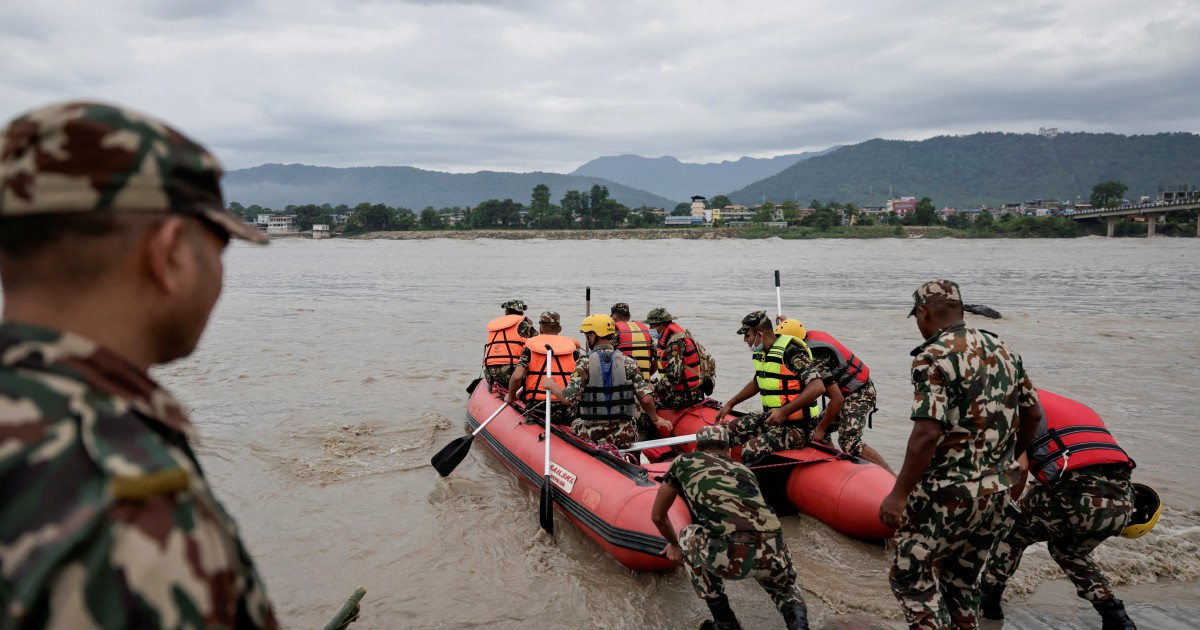
Nepal's leadership has characterised the nation's current natural disaster as unprecedented in its scale and human cost, with Prime Minister Balendra Shah describing the situation as both unimaginable and deeply tragic. The country is grappling with the aftermath of catastrophic floods that have swept across multiple regions, claiming hundreds of lives and leaving thousands of people unaccounted for, marking one of the most severe weather-related emergencies to strike the Himalayan nation in recent memory.
The challenge facing Nepali authorities extends beyond the immediate humanitarian crisis. Emergency response teams across the country remain unable to obtain comprehensive data on the full scope of casualties and destruction, hampered by geographical isolation, damaged infrastructure, and the sheer speed with which the disaster unfolded. Rural and mountainous areas, which form much of Nepal's terrain, have proven particularly difficult to access, creating a communications blackout that prevents officials from accurately gauging how many people require assistance or have perished in remote communities.
For Malaysia and Southeast Asia, Nepal's disaster underscores a shared vulnerability across the region to climate-related emergencies and extreme weather patterns. The Himalayan region, which influences weather systems across South and Southeast Asia, has experienced increasingly severe flooding events. Similar monsoon-driven disasters periodify impact countries from the region, including instances of devastating floods in Malaysia, Thailand, and the Philippines, making Nepal's crisis a sobering reminder of environmental risks that transcend borders.
The geographic complexity of Nepal compounds disaster response efforts significantly. The nation's mountainous terrain, while culturally and ecologically significant, severely restricts access routes for emergency supplies and rescue personnel. Landslides triggered by heavy rainfall frequently block the limited roads connecting major population centres, forcing relief organisations to coordinate complex operations that may require helicopter evacuations or alternative supply chains. This infrastructure vulnerability is characteristic of many developing nations in Asia, particularly those with challenging topography.
As rescue operations intensify, the distinction between confirmed deaths and missing persons remains fluid. Many communities remain unreachable, and the absence of communication from affected areas does not necessarily indicate survival. Authorities must contend with the devastating possibility that final casualty figures could rise substantially as access to isolated regions improves and bodies are recovered. This uncertainty creates acute psychological strain on families separated by the disaster, adding to the nation's collective trauma.
The disaster's economic implications extend across Nepal's fragile economy and affects regional trade networks. Floods frequently damage agricultural land critical to rural livelihoods, destroy vital infrastructure including bridges and roads, and displace populations dependent on seasonal commerce and tourism. For a nation where substantial foreign exchange earnings derive from trekking and tourism centred on the Himalayas, such disasters threaten both immediate revenue and long-term sector viability.
International humanitarian response mechanisms are mobilising to support Nepal's relief efforts. The South Asian Association for Regional Cooperation, together with bilateral assistance from India, China, and other nations, represents the multilateral framework through which external support flows. For Malaysia and other ASEAN members, such emergencies demonstrate both the importance of disaster preparedness frameworks and the value of maintaining robust regional cooperation protocols for mutual aid during climate-related crises.
The disaster raises critical questions about climate adaptation and resilience in vulnerable Himalayan communities. Nepal's susceptibility to monsoon-related flooding reflects not only the region's geography but also broader climate change patterns that intensify precipitation extremes. Scientists have documented increasing frequency and severity of extreme weather events across South Asia, a trend that demands urgent attention to infrastructure hardening, early warning systems, and community-based disaster preparedness.
For Nepal's government, the immediate priority centres on establishing functional communication networks with affected areas to confirm casualties and direct resources efficiently. Coordination between military, police, and civilian rescue organisations requires urgent centralisation to prevent duplication and maximise effectiveness. The Prime Minister's acknowledgment of the disaster's magnitude represents a necessary step toward mobilising comprehensive national resources and accepting international assistance without reservation.
The social fabric of affected communities faces severe disruption beyond the immediate loss of life. Family separation, trauma, and psychological distress accompany physical injuries and material losses. Mental health services, often limited in rural Nepal, will require significant expansion to address the psychological aftermath of mass casualty events. International humanitarian organisations working in disaster response increasingly recognise trauma support as essential to community recovery alongside material reconstruction.
Nepal's experience offers crucial lessons for Southeast Asian nations regularly threatened by monsoons and flooding. Investment in early warning systems, community evacuation protocols, and disaster-resistant infrastructure—though costly—ultimately proves far more economical than emergency response and reconstruction. Malaysia's experience with annual monsoon floods demonstrates that proactive planning and public education significantly reduce casualties and accelerate recovery timelines.
The disaster's trajectory remains uncertain as rescue operations continue and weather patterns evolve. Additional rainfall could trigger secondary disasters, including landslides and dam failures, complicating recovery efforts further. Monitoring systems must remain active throughout the aftermath period to detect emerging threats that could transform an already severe crisis into an even greater calamity.
As Nepal confronts what Prime Minister Shah characterised as an unimaginable tragedy, the international community watches with concern for both humanitarian outcomes and broader implications for regional stability and resilience. The coming weeks will prove critical in determining whether authorities can transition from immediate emergency response to sustained reconstruction and psychosocial recovery.

