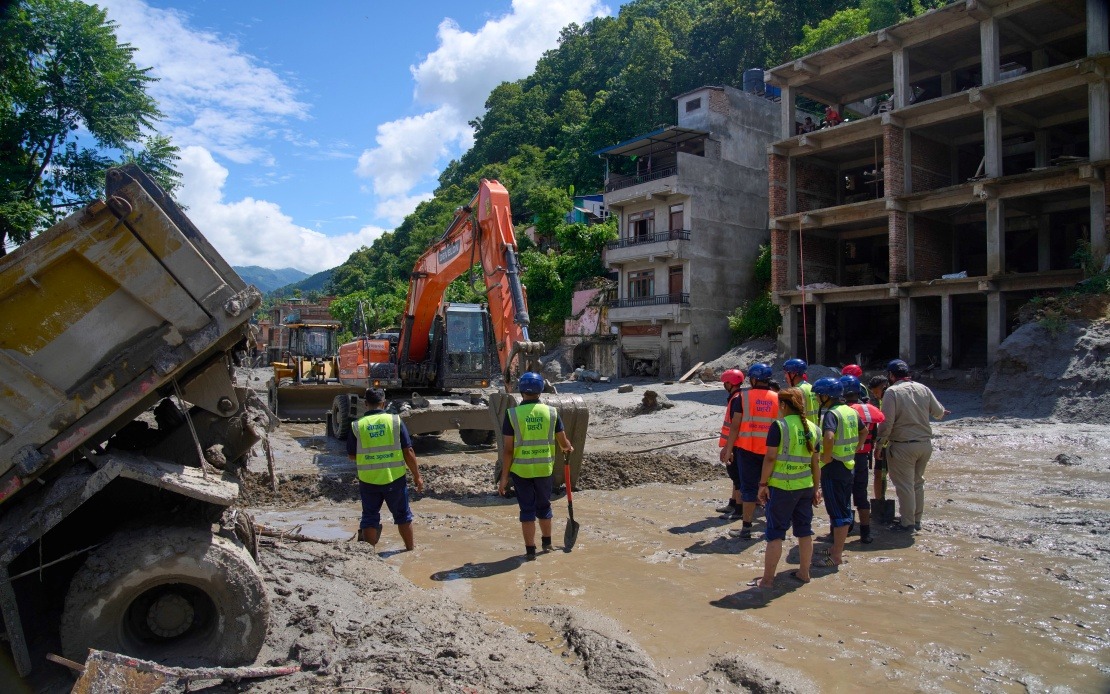
Nepal's Foreign Ministry has moved swiftly to mobilise a dedicated Emergency Response Team in the aftermath of the catastrophic Bhotekoshi River flooding that struck the Rasuwa district on Wednesday morning. The establishment of this coordinating body reflects the scale of the humanitarian crisis unfolding in the region, where preliminary death tolls have reached 359 with hundreds still unaccounted for in one of the country's worst natural disasters in recent years.
The Emergency Response Team will function as the central coordinating hub for all search and verification operations, consolidating information on missing foreign nationals and facilitating communication between Nepal's government agencies, diplomatic missions, and the families of those affected. By concentrating efforts through a single official channel, Kathmandu aims to prevent duplication of search efforts and ensure that rescue operations remain coordinated across multiple agencies responding to the crisis. The team's establishment also underscores the international dimension of this disaster, given that a substantial proportion of those missing are foreign nationals, primarily from India and neighbouring regions.
Operationally, the Emergency Response Team will oversee the critical work of gathering verified information on foreign nationals impacted by the floods, liaising directly with rescue and recovery teams operating in the affected areas. The team will also provide essential consular support services, acting as an intermediary between affected individuals, their families abroad, and the diplomatic missions representing their home countries. This function proves particularly vital given the communication challenges typically accompanying major disasters, where families often struggle to obtain accurate information about their relatives' whereabouts and welfare.
To facilitate public reporting and ensure information reaches the appropriate authorities, Nepal's Foreign Ministry has published multiple contact channels including two dedicated WhatsApp and phone lines: +977-9744441227 and +977-9744441228. Additionally, those with information can communicate via email at [email protected]. This multipronged communication approach recognises that affected families may be located across numerous countries and time zones, and may prefer different methods of contact depending on their circumstances and connectivity.
The scale of the unaccounted persons presents an enormous challenge to rescue operations. While 31 individuals have been rescued so far, more than 800 people remain missing, with the majority hailing from India and Nepal itself. This substantial gap between confirmed deaths and unaccounted persons raises significant concerns about search and rescue capacity, though it also leaves open the possibility that many may have survived but simply remain unreachable or unregistered in affected communities. The flooding's impact on infrastructure in the remote Rasuwa district has likely hampered both rescue operations and the ability to account for all those in the disaster zone.
For Malaysia and the broader Southeast Asian region, the situation carries particular significance given the regional tourist patterns that bring substantial numbers of visitors to Nepal's mountain and valley regions annually. Malaysian Foreign Minister Datuk Seri Mohamad Hasan has noted that the exact number of Malaysian citizens unaccounted for in the disaster has not yet been confirmed by Nepali authorities, a status that reflects the ongoing challenges in establishing comprehensive casualty and missing persons counts in the immediate aftermath of such a major event. Malaysian authorities are presumably working through diplomatic channels to identify any nationals affected and coordinate with Nepal's emergency response mechanisms.
The formation of the Emergency Response Team also signals Nepal's recognition that managing the international dimensions of this crisis requires dedicated, high-level coordination. Beyond the immediate humanitarian response, the team will need to facilitate consular access to affected nationals, expedite identity verification processes, and manage repatriation arrangements for deceased victims. These functions typically demand sensitive diplomatic coordination between multiple governments, especially when deaths involving foreign nationals are involved.
From a regional perspective, this disaster underscores the vulnerability of mountain communities throughout the Himalayan and Hindu Kush ranges to sudden flooding events, driven by increasingly unpredictable weather patterns and topography that can funnel water into catastrophic flows. Similar risks confront communities across Nepal, Bhutan, and parts of northern India and Pakistan, making the outcomes of this disaster and the effectiveness of response mechanisms instructive for neighbouring countries' own disaster preparedness planning.
The Emergency Response Team's work will likely continue for weeks or months as rescue operations conclude and investigations into the disaster's causes and response effectiveness proceed. For Malaysian families with relatives in Nepal or the region, the published contact channels provide the most direct route to obtain information and report sightings or communications from those unaccounted for. The team's success in reunifying separated families, accounting for all victims, and facilitating dignified handling of deceased persons will significantly influence how this tragedy is remembered and what lessons are drawn for future disaster response in the region.

