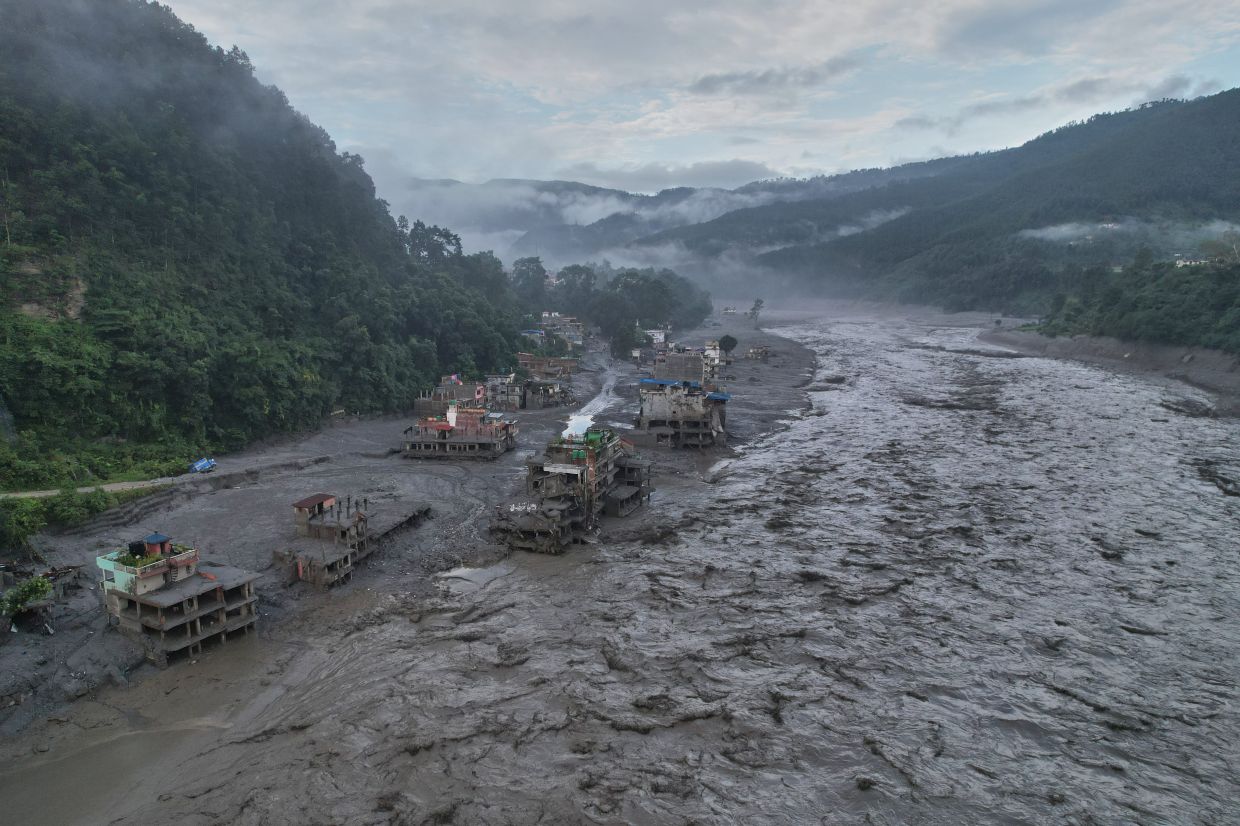
Survivors of Nepal's recent catastrophic flooding had only a handful of minutes to react before torrents of water engulfed their communities, revealing a troubling absence of reliable early-warning infrastructure across the Himalayan region. Dharam Raj Uprety, who heads Nepal's National Disaster Risk Reduction and Management Authority, acknowledged the stark reality during recent discussions with international media: residents received less than five minutes' notice before the deluge swept through populated areas. This inadequate response window underscores how geographical and institutional barriers have left vulnerable mountain communities dangerously exposed to natural hazards that are intensifying as the climate warms.
The core problem hampering disaster preparedness in Nepal's high mountains stems from two interconnected challenges. First, the country lacks sufficient weather monitoring stations in its most elevated terrain, where conditions change rapidly and unpredictably. Second, Nepal struggles to access critical meteorological information from across its northern border with China, where significant portions of relevant glacier and weather data originate. Uprety identified the absence of formal cross-boundary data-sharing mechanisms as a fundamental obstacle, one that severely restricts Nepal's capacity to build comprehensive forecasting models. Without real-time information about conditions in the Tibetan Plateau's glacial zones, Nepali authorities operate with incomplete situational awareness, unable to detect brewing hazards until they materialize catastrophically downstream.
The specific catastrophe that unfolded on 26 August involved a glacial collapse in a remote valley that converted ice, debris, and water into a destructive torrent. Satellite analysis suggests that bedrock beneath the glacier gave way, triggering a cascade of destruction that obliterated entire settlements in its path. Harrowing footage documented people attempting to outrun advancing walls of water and rubble as structures crumbled, bridges collapsed, and the landscape itself was reshaped by the violence of the flowing mass. Initial estimates suggest reconstruction costs may exceed US$5 billion, potentially requiring seven to eight years of intensive rebuilding efforts comparable to the recovery period following Nepal's devastating 2015 earthquake.
China has responded to international scrutiny by emphasising its commitment to transboundary cooperation on disaster management. Through official channels and diplomatic statements, Beijing indicated that it conducts glacier monitoring and analysis within its technological capacity and has shared relevant findings with Kathmandu. The Chinese Communist Party has also directed its own agencies to strengthen monitoring and early-warning systems for linked hazards across the Tibetan Plateau. President Xi Jinping specifically advocated for accelerated surveys of glaciers and glacial lakes in the region, recognising that climate-driven instability in these areas poses cascading risks not only to China but to downstream nations including Nepal. However, Nepali officials notably did not confirm that advance warnings of the 26 August event were received from Chinese counterparts.
The warming climate has fundamentally altered the nature of threats in the Himalayan corridor. Elevated temperatures are destabilising permafrost that binds high-altitude terrain together, weakening geological structures and destabilising slopes at rates that outpace institutional capacity to monitor and predict failures. Scientists caution against prematurely attributing the specific glacier collapse to climate change, yet the broader pattern is unmistakable: warming is accelerating the rate at which mountain systems become unstable. For a nation like Nepal, where tourism and hydroelectric power generation depend on mountain stability and water security, these climatic shifts carry profound economic implications alongside the immediate human cost.
Currently, Nepal maintains some monitoring infrastructure in lower-elevation valleys where communities and infrastructure are concentrated. However, large expanses of high mountain terrain remain poorly observed or unobserved entirely. Installing and maintaining weather stations at extreme altitude presents formidable logistical and financial obstacles, placing such infrastructure beyond the practical reach of Nepal's resources. The expenses involved in deploying robust monitoring systems across hundreds of kilometres of difficult terrain, combined with the technical challenges of maintaining equipment in harsh alpine conditions, mean that authorities continue to operate with significant blind spots in their understanding of what is occurring in the mountains above.
The implications of these gaps extend well beyond Nepal's borders. For Malaysia and other Southeast Asian nations, the case study illustrates how regional climate and disaster risks demand cooperative governance frameworks that transcend traditional sovereignty concerns. The Himalayan water systems ultimately influence precipitation and hydrological patterns across much of Asia. Improved forecasting in Nepal and Tibet would enhance regional resilience more broadly. Moreover, as climate change accelerates, glacial systems in other high-altitude regions throughout Asia may face similar destabilisation, making the urgent development of cross-border monitoring protocols a matter of pressing regional concern.
Nepali authorities have begun designing a comprehensive roadmap to strengthen early-warning capabilities with the explicit goal of providing communities with extended preparation time. This effort aims to move beyond the current regime of near-zero notice toward systems that offer hours or days for evacuation and protective measures. The roadmap is expected to receive formal endorsement soon, reflecting the government's recognition that enhanced disaster preparedness has become essential infrastructure alongside roads, schools, and hospitals. Successful implementation will require sustained international technical support, climate finance from developed nations, and meaningful cooperation from China on transboundary data exchange.
Uprety emphasised a fundamental truth that extends beyond Nepal's specific predicament: without dismantling artificial boundaries around climate and weather information, disasters originating in inaccessible mountain zones will remain extraordinarily difficult to anticipate and manage. The tragedy of August 2024 demonstrates that geographical isolation and institutional fragmentation create lethal vulnerabilities in the modern age. As warming accelerates change in mountain systems globally, the precedent established in the Himalayas will influence how other regions approach transnational disaster governance and climate adaptation.

