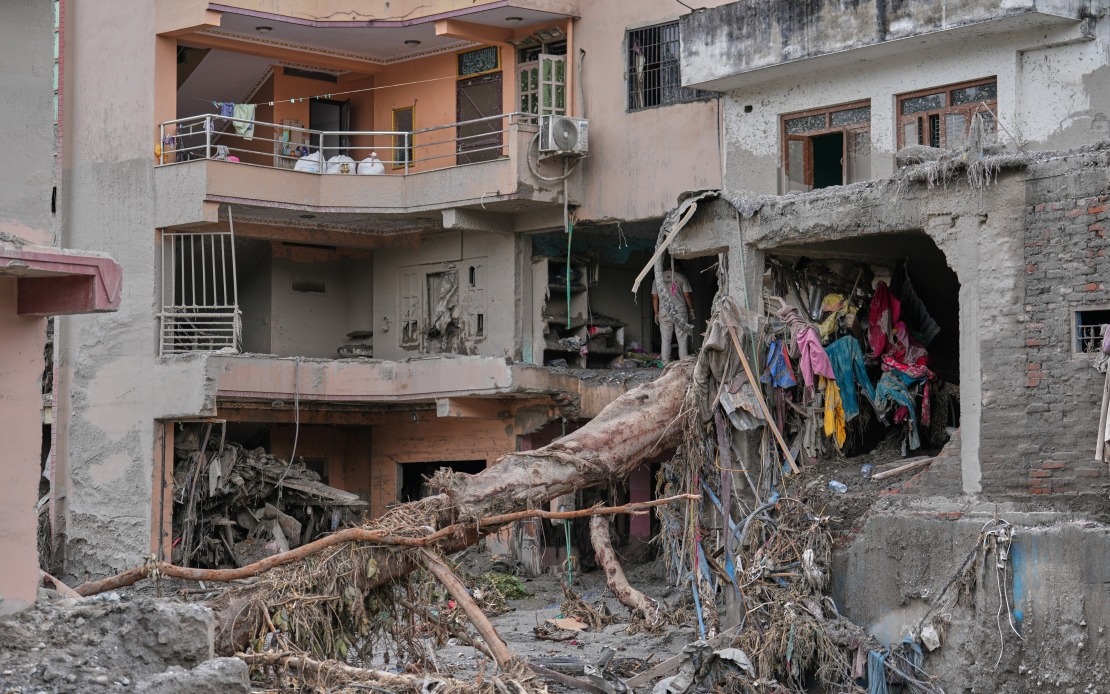
Nepal's government has announced a formal protocol to safeguard genetic and identifying materials from deceased victims of the devastating Bhotekoshi River floods that swept through the country on August 26, establishing a framework that prioritises later identification before final disposition of remains. Prime Minister Balendra Shah disclosed the policy through a social media statement on Saturday evening, indicating that authorities will retain DNA samples and other evidence-based materials solely from bodies that cannot be immediately recognised, allowing for potential identification by family members or authorities at a future date before burial or alternative management procedures are undertaken.
The catastrophic flooding occurred when the Bhotekoshi River overflowed its banks five days prior, unleashing widespread destruction and loss of life throughout a densely populated river corridor. The damage extended across multiple districts in Nepal's central and western regions, with particular severity reported in Rasuwa, Nuwakot and Dhading, where communities along the waterway faced the full force of the deluge. Infrastructure serving these areas, including roads, bridges, and community facilities, sustained extensive damage that compounded the humanitarian crisis and complicated rescue and recovery efforts in the immediate aftermath.
The scale of the tragedy became apparent as recovery operations progressed across affected regions. Government teams working in Rasuwa, Dhading, Nuwakot, Chitwan, Tanahun, Gorkha, Nawalparasi East and Nawalparasi West had recovered 675 bodies at the time of Prime Minister Shah's statement, with recovery efforts continuing throughout the affected corridor. The distribution of casualties across such a wide geographic area underscores the flood's magnitude and the challenge facing authorities managing the dual imperatives of rapid dignified treatment of the deceased and thorough identification procedures.
The preservation protocol addresses a fundamental humanitarian concern facing disaster management agencies worldwide: balancing the urgent need to process remains with the long-term necessity of allowing families opportunity to claim and identify their deceased relatives. By maintaining biological and other identifying evidence from unidentified bodies, Nepal's approach creates a database that can potentially serve identification purposes for months or even years following the disaster, accounting for the reality that not all families immediately know their relatives' fates or can access recovery sites quickly.
This systematic approach reflects international best practices developed following major disasters in the Asia-Pacific region. Similar protocols have been employed following tsunamis, earthquakes and other mass casualty events where immediate identification proves impossible but family reunification efforts continue over extended periods. The preservation of DNA samples is particularly significant in contexts where remains may be severely damaged or decomposed, where traditional visual identification proves unreliable, or where families live in remote areas and require time to travel to identification centres.
For Malaysian and Southeast Asian observers, the Nepali response carries lessons regarding disaster preparedness and victim management protocols. The region remains vulnerable to similar flooding events, particularly during monsoon seasons when rivers across Thailand, Laos, Cambodia and Malaysia experience comparable overflow risks. Nepal's experience demonstrates the critical importance of establishing victim management procedures before disasters occur, ensuring that authorities can respond systematically rather than reactively when multiple deaths overwhelm normal administrative capacity.
The preservation protocol also reflects evolving standards regarding dignity and respect in disaster victim management. Rather than hastily processing remains without identification attempts, the procedure ensures that every reasonable effort is made to restore bodies to families, acknowledging the cultural and religious significance of proper funeral rites in Nepali society. Many families derive closure and opportunity to complete religious observances only through confirmed identification and recovery of remains.
The geographic distribution of casualties across eight districts indicates that the Bhotekoshi River flood represented a major natural disaster by regional standards, comparable in scale to other recent South Asian flooding events. The concentration of deaths in the river corridor suggests that communities settled along the waterway faced the highest danger, a pattern consistent with flood behaviour in Himalayan river systems during extreme precipitation events. Authorities' ability to recover bodies across such dispersed locations required significant mobilisation of rescue personnel and coordination between district administrations.
For regional authorities, the Nepali government's public communication of its victim management policy carries implicit messaging about governance capacity and humanitarian commitment. By announcing that unidentified remains will be respectfully preserved rather than disposed of hastily, Prime Minister Shah's statement reassures families that authorities are approaching the crisis with systematic care. This contrasts with scenarios in other disasters where inadequate identification procedures have prevented families from locating deceased relatives for extended periods, creating secondary trauma beyond immediate losses.
The implementation of this protocol will require Nepal to establish or designate facilities capable of safely storing biological samples under proper conditions, cataloguing materials with precision, and maintaining records accessible to families and authorities. Such infrastructure development becomes part of the broader disaster recovery agenda beyond immediate rescue operations, constituting investment in systems that will serve the bereaved community throughout the identification and repatriation process.
As monsoon season continues across South Asia, the Bhotekoshi River flooding serves as a sobering reminder of the region's vulnerability to hydrological disasters. Nepal's methodical approach to victim identification and remains management, communicated transparently through official channels, establishes a standard that neighbouring countries may reference when developing or refining their own disaster protocols. The commitment to preserve identifying evidence reflects recognition that respectful treatment of the deceased extends beyond the immediate aftermath of tragedy into the months-long process of family reunification and closure.

