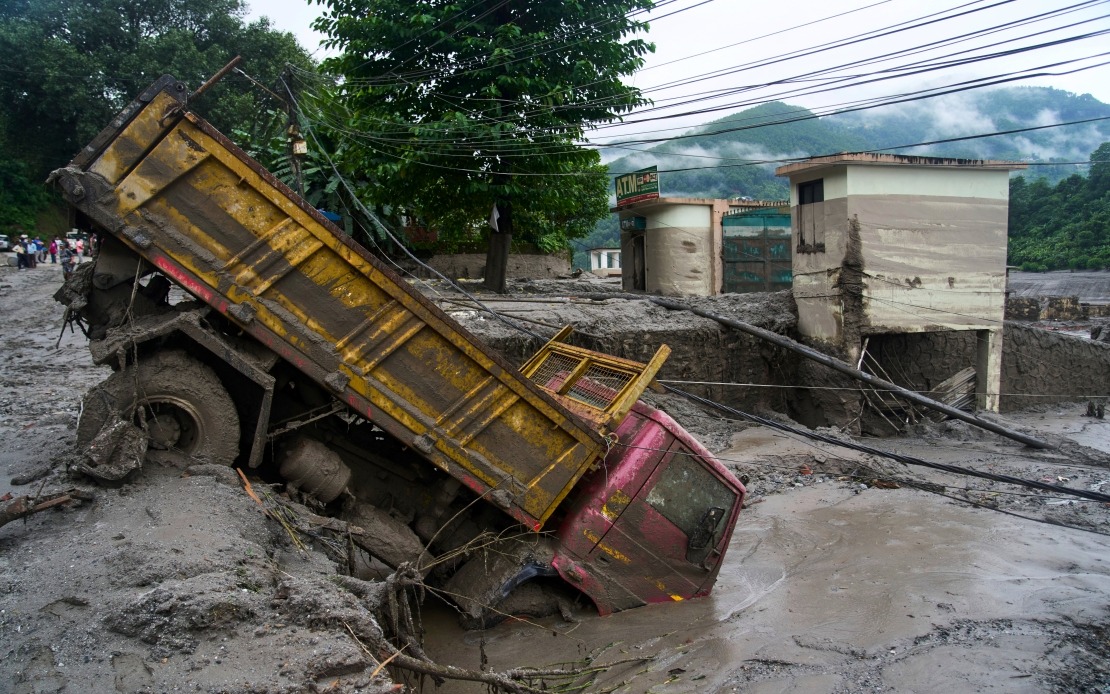
Nepal's National Disaster Risk Reduction and Management Authority (NDRRMA) has sounded the alarm over renewed flooding dangers along the Bhote Koshi River, where a devastating flash flood struck just two days earlier, killing hundreds and leaving many more unaccounted for. The warning, issued on Friday, follows observations of rapidly rising water flows heavy with debris and sediment in the same section of the river in Rasuwa district, raising fresh concerns among rescue and relief coordinators already stretched thin by the previous disaster.
The escalating water levels represent a direct continuation of the catastrophic conditions that first swept through the region on Wednesday, August 26. The fresh alert underscores the volatile nature of mountain rivers in Nepal during monsoon season, where weather patterns can shift rapidly and trigger successive waves of flooding. Authorities have not indicated whether the renewed surge stems from upstream rainfall, glacial melt, or both, though such combinations are typical in the Himalayan watershed during peak monsoon months.
The death toll from the initial disaster has climbed to 475 people, with the figure expected to rise as search operations continue throughout affected areas downstream. Hundreds of individuals remain missing, prompting emergency teams to maintain intensive efforts along riverbanks and in downstream valleys where bodies and survivors are frequently discovered days after floodwaters subside. The sheer scale of the crisis has strained Nepal's response capacity, making the prospect of another flood particularly alarming for both rescue workers and vulnerable populations still in affected regions.
The NDRRMA's advisory specifically targeted all personnel engaged in ongoing rescue operations along both the Bhote Koshi and the adjacent Trishuli rivers, emphasising the need for heightened vigilance and swift decision-making. The authority explicitly instructed anyone working in or near high-risk zones to relocate immediately to elevated, safer ground upon detecting any warning signs such as sudden water level changes, unusual sounds from the riverbed, or marked increases in debris flow. Such precautions reflect the unpredictable nature of flash flooding in mountain terrain, where communities can be inundated with little advance warning.
The broader context of these successive flood events highlights vulnerabilities that recur annually across Nepal's mountainous geography. The Bhote Koshi and Trishuli river systems drain steep Himalayan slopes where monsoon moisture intersects with terrain that channels water with tremendous force and velocity. Infrastructure in such areas remains generally limited, and early warning systems, while improving, cannot always provide adequate lead time for vulnerable populations to evacuate. The frequency of major flooding in Nepal—often triggered by intense rainfall events concentrated over short periods—means communities have adapted to recurring disaster cycles, yet each major event still overwhelms response systems.
For the broader Southeast Asian region, Nepal's recurring flood crises carry implications for transboundary water management and disaster preparedness protocols. The Bhote Koshi flows into the larger Trishuli system, which eventually merges with the Ganges basin, affecting communities across borders. Understanding Nepal's vulnerability to sudden, severe flooding informs how downstream nations plan their own water resource management and flood defence infrastructure. Additionally, rapid climate variability in the Himalayas influences precipitation patterns across South Asia, making Nepali experience relevant to regional forecasting and preparedness strategies.
The NDRRMA's decision to issue a second alert within 48 hours demonstrates a shift toward more precautionary communication with rescue teams and communities. Rather than waiting for definitive confirmation of imminent danger, authorities are signalling potential risks based on measurable environmental indicators. This approach reflects lessons learned from previous disasters where delayed warnings cost lives, though it also risks creating alert fatigue if multiple warnings are issued without subsequent major events materialising.
The recovery and search operations underway represent an enormous undertaking for Nepal's government and humanitarian organisations. With hundreds still missing and a fresh flood threat looming, search teams face the grim possibility of their efforts being disrupted or reversed by renewed flooding that could sweep away evidence and additional bodies downstream. The psychological toll on rescue workers conducting what are increasingly recovery rather than rescue operations, combined with the physical dangers of working in unstable riverine environments, adds further strain to emergency response capacity.
Looking ahead, the renewed alert highlights critical needs within Nepal's disaster management infrastructure. Enhanced early warning systems, improved communication networks reaching remote mountain communities, and pre-positioned relief supplies along high-risk corridors would improve response times. Training for local volunteers in flood response procedures could also bridge gaps when national resources are overwhelmed. Additionally, long-term watershed management and slope stabilisation projects could reduce the severity of debris flows that amplify flooding damage, though such measures require sustained investment and international cooperation given the transboundary nature of Himalayan water systems.

