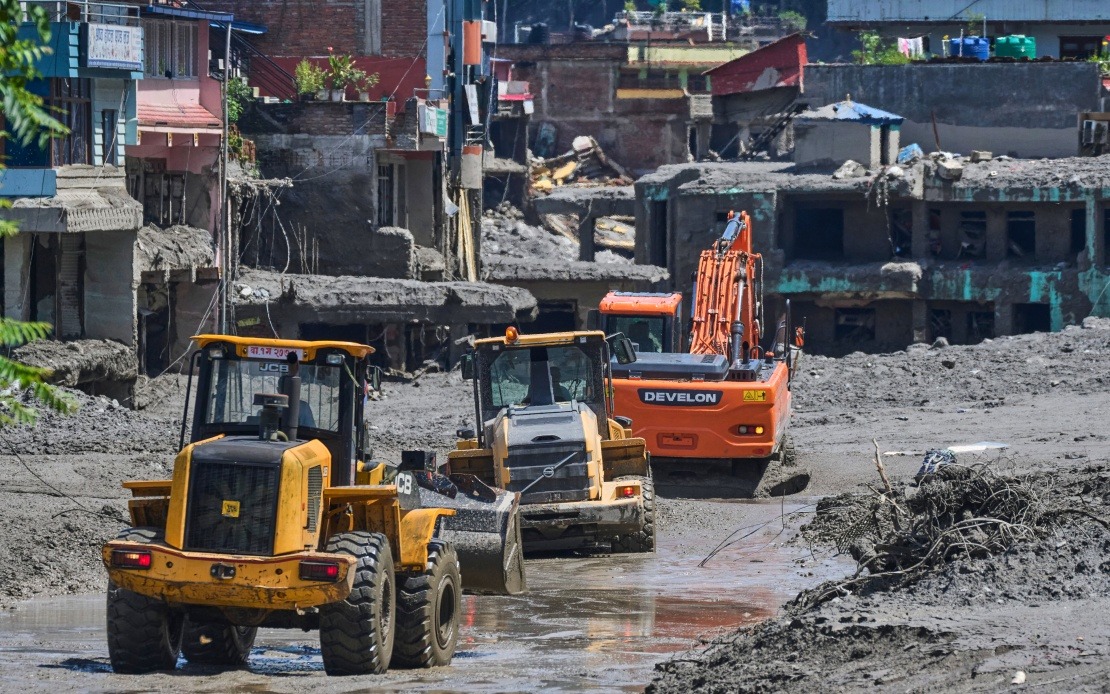
Nepal's government is treating the catastrophic flooding that struck the Bhote Koshi River on Wednesday as a national priority, mobilising resources across multiple agencies to locate survivors and assist those displaced by the disaster. According to the Embassy of Nepal in Kuala Lumpur, the emergency response encompasses coordinated search and rescue operations, immediate humanitarian relief, and detailed damage assessments across the affected regions. The scale of the crisis underscores the vulnerability of Nepal's mountainous terrain to sudden, climate-driven natural disasters that can overwhelm localised response capacities within hours.
The impact zone spans four districts in central Nepal—Rasuwa, Nuwakot, Dhading and Gorkha—each facing severe challenges as flood waters receded and the full human and material toll became apparent. In addition to the immediate loss of life, entire communities have experienced destruction of homes, agricultural land, and essential infrastructure including roads, bridges, and water systems. The Bhote Koshi, which originates in the Tibetan plateau and flows through rugged terrain before joining the larger Sunakosi River, is prone to sudden surges triggered by heavy monsoon rainfall or glacial lake outbursts—phenomena that are becoming more frequent and unpredictable due to climate change and glacial retreat in the high Himalayas.
Nepal's Office of the Prime Minister and Council of Ministers has issued an urgent appeal for financial assistance, recognising that the government's immediate resources will be insufficient to address both emergency response and the longer-term reconstruction required. The appeal specifically targets individuals, commercial enterprises, and philanthropic organisations, reflecting a reality common across South Asia where governments often depend on supplementary funding from private sources to mount adequate disaster relief. This funding gap has become increasingly pronounced as climate-related disasters intensify and strike with greater frequency, straining national budgets allocated for reconstruction and recovery.
For the Nepali diaspora in Malaysia—a significant population representing skilled workers, business owners, and professionals—the embassy has issued a direct call to mobilise support. This appeal carries particular weight given the historical patterns of diaspora contributions to major humanitarian crises in Nepal. The Nepali community in Malaysia, numbering in the thousands, often maintains strong emotional and financial connections to their home country and has repeatedly responded generously to national emergencies. By channelling resources through formal government structures, the embassy ensures that funds reach verified relief mechanisms rather than scattered informal networks, enhancing accountability and effectiveness.
Two established government relief funds have been designated as primary recipients of international contributions. The Prime Minister's Disaster Relief Fund and the Prime Minister's Relief Fund, both operational through Rastriya Banijya Bank and Nepal Bank Limited, provide transparent mechanisms for donors to contribute. The provision of multiple account numbers and QR codes on the embassy's Facebook page reflects adaptation to digital payment methods now commonplace among diaspora populations. This dual-bank arrangement also provides redundancy, ensuring that technical issues or capacity constraints at a single institution do not impede fund collection during a critical window when immediate resources are most needed.
From a humanitarian logistics perspective, the flood's occurrence mid-week and the embassy's rapid public statement by Thursday demonstrates coordination between Kathmandu and diplomatic missions abroad. This quick mobilisation is significant because early fundraising often determines the success of relief operations; delays in securing resources can compound suffering as affected populations exhaust personal reserves and communities face shortages of food, water, medicines, and shelter materials. The embassy's use of Facebook as a primary communication channel reflects the prevalence of social media among diaspora networks in Malaysia and across Southeast Asia, where multiple generations maintain active digital connections to home country news and appeals.
The destruction across Rasuwa, Nuwakot, Dhading and Gorkha carries particular significance for Nepal's development trajectory. These districts, while less densely populated than the Kathmandu Valley, contain crucial infrastructure, agricultural productivity, and rural communities whose livelihoods depend entirely on seasonal harvests and sustainable land management. Flooding during the monsoon season disrupts transportation networks that already operate with minimal redundancy in mountainous terrain, isolating affected areas and delaying delivery of relief supplies. Damage to agricultural land at mid-monsoon removes opportunities for farmers to replant and salvage portions of their annual crops, creating cascading economic effects that ripple through local markets and food security networks.
The appeal to Nepali nationals, business associations, and well-wishers represents a comprehensive strategy to mobilise all available resources within Malaysia's diverse communities. Beyond the ethnic Nepali population, the appeal extends to those with business interests in Nepal, international aid workers, and humanitarian-minded individuals from other backgrounds. This inclusive framing reflects recognition that disasters transcend nationality, and that compassion and practical support often cross ethnic and national boundaries, particularly in multicultural societies like Malaysia where humanitarian cooperation is increasingly normalised.
For Southeast Asian observers, Nepal's response pattern offers important lessons about institutional preparedness and the role of diaspora networks in disaster management. As climate change intensifies precipitation events and glacial hazards across the Himalayan region—affecting water supplies and flood patterns for billions downstream in South Asia and beyond—the mechanisms through which governments mobilise domestic and international resources become increasingly critical. Nepal's relatively early appeal for funds, rather than awaiting formal international humanitarian mechanisms, reflects both urgency and pragmatism. The country's experience with repeated natural disasters has created institutional pathways for rapid response that other regional governments continue to study and adapt for their own contexts, making each Nepali disaster response a de facto case study in contemporary humanitarian crisis management.

