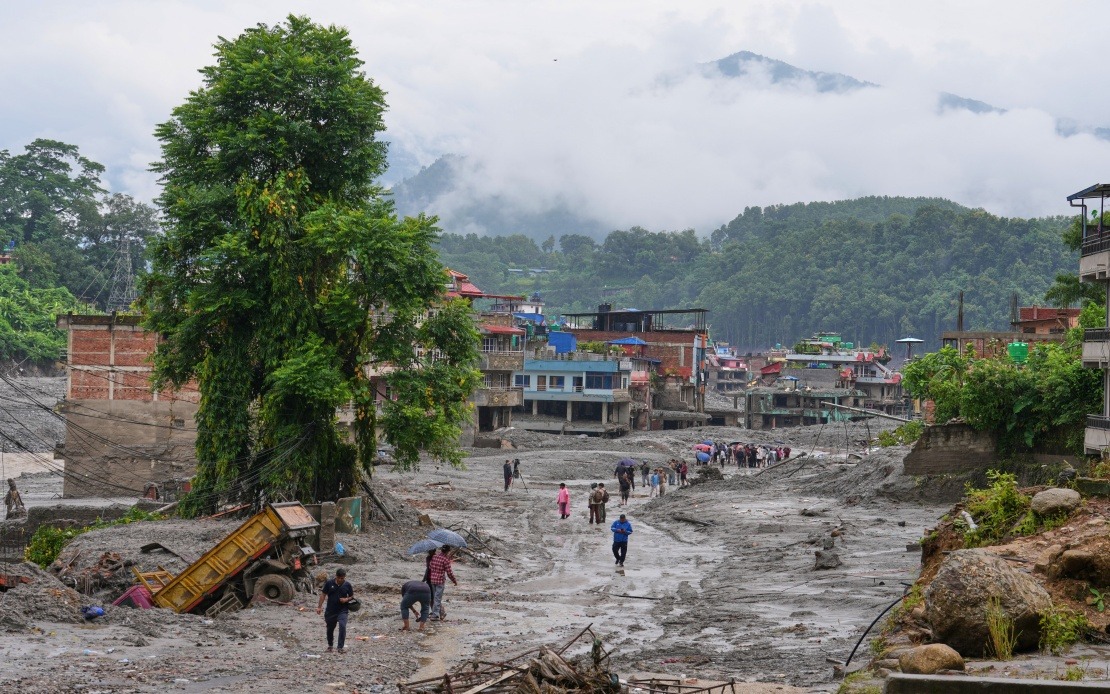
A catastrophic series of mudslides across Nepal has claimed at least 675 lives, according to the country's National Disaster Risk Reduction and Management Authority, with the death toll expected to climb as search and rescue efforts continue across affected districts. As of Saturday evening, authorities reported nearly 2,500 people remain unaccounted for in mudslide-affected areas, prompting an extensive mobilisation of relief resources across the nation's mountainous regions.
The disaster has disrupted normal life in several districts surrounding Kathmandu, the nation's capital. Three districts—Rasuwa, Nuwakot, and Dhading—have been identified as the hardest-hit zones, with the local administrative office in Kathmandu launching an urgent appeal for relief materials. The call went out to businesses, non-profit organisations, institutions, and individual citizens to contribute supplies for displaced communities, underscoring the scale of humanitarian need unfolding in these mountain valleys.
The international dimension of this disaster has added complexity to the crisis response. Nepal's Department of Tourism reported that 753 tourists had lost contact as of Saturday afternoon, with 589 of them being foreign nationals. This substantial number of missing international visitors reflects the popularity of trekking and tourism activities in Nepal's mountainous terrain, and raises concerns about coordination between national authorities and embassies regarding welfare checks and evacuation efforts. Tourism remains a vital economic sector for Nepal, and such incidents can have ripple effects on the country's travel industry and foreign exchange earnings.
Mudslides triggered by heavy monsoon rainfall are a recurring hazard across South Asia, but their frequency and severity have prompted disaster management agencies to strengthen preparedness protocols. Nepal's mountainous topography, combined with deforestation and climate variability, creates ideal conditions for soil displacement during intense precipitation events. The vulnerability of communities living in valleys and on steep slopes means that even moderate rainfall can trigger life-threatening slides that destroy homes, infrastructure, and livelihoods in minutes.
For Malaysian readers and Southeast Asian observers, Nepal's crisis serves as a sobering reminder of the region's collective exposure to natural disasters. Countries across Southeast Asia—including Malaysia, Indonesia, and the Philippines—face similar geological and meteorological risks. The monsoon systems that bring catastrophic rainfall to Nepal and the Himalayan region also affect other parts of Asia, making disaster preparedness and regional cooperation in emergency response increasingly relevant to the broader Southeast Asian context.
The response mechanisms deployed by Nepal's authorities highlight both the challenges and possibilities in disaster management for developing nations. The activation of district administrative offices and the coordination of relief supplies through local networks demonstrates how decentralised governance structures can mobilise resources quickly when centralised systems are overwhelmed. However, the scale of missing persons suggests that communication infrastructure may have been damaged and that some communities remain cut off from assistance.
Climate change has intensified the hazards posed by monsoon systems across Asia. Scientific analysis increasingly links warming global temperatures to changes in precipitation patterns, with some models predicting more intense localised rainfall events. For Nepal and other Himalayan nations, this trend compounds existing vulnerabilities related to glacial retreat, changing snowfall patterns, and ecosystem degradation. The mudslides that have devastated these communities may become more common without significant mitigation and adaptation investments.
International humanitarian response protocols are likely being activated as news of the disaster spreads. Neighbouring countries, including India, and international organisations often coordinate assistance during such crises. For Malaysia and other ASEAN members, the tragedy underscores the value of maintaining robust disaster response frameworks and international mutual aid agreements. The Association of Southeast Asian Nations has worked to strengthen disaster management cooperation among its members, recognising that transnational hazards require coordinated regional approaches.
The long-term recovery process for affected communities in Nepal will extend far beyond the immediate rescue phase. Reconstruction of homes, restoration of agricultural land, and psychological support for traumatised survivors present challenges that can persist for years. Nepal's economy, already strained by various development challenges, will face additional pressure as resources are redirected toward disaster recovery. International development partners and the global community often provide assistance during such crises, but the sustainability of recovery depends on local institutional capacity and long-term investment in resilience-building measures.

