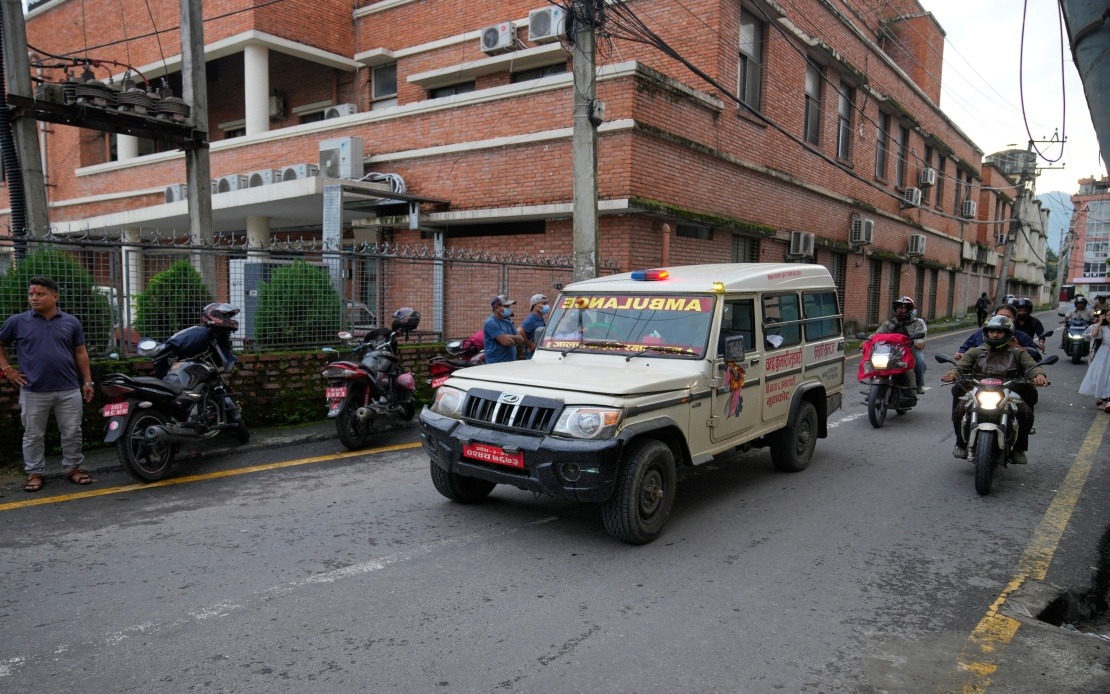
Nepal's rescue operations have pulled 121 foreign nationals to safety from the flooded regions ravaged by Wednesday's disaster, though search teams continue combing downstream areas as the confirmed death toll climbs toward 550. The rescued foreigners represent a wide cross-section of international travellers caught in the disaster zone when the Bhote Koshi and Trishuli rivers burst their banks following a sudden Himalayan glacial collapse—a catastrophic natural phenomenon that sent torrents of water and debris through popular tourist corridors in the Himalayan foothills.
According to figures compiled by Nepal's tourism authority as of Friday evening, the rescued contingent comprised primarily Indian nationals (85 individuals), followed by 16 Chinese citizens and nine South Koreans. Smaller numbers from Western nations included two Americans, two Russians, and two Italians, with individual rescues recorded from Belgium, Bulgaria, Portugal, Spain, and Switzerland. This broad geographic spread underscores how the disaster affected not just regional trekkers and pilgrims but also tourists from across the globe who traverse Nepal's famous mountain routes annually.
The scale of the humanitarian crisis extends well beyond those successfully evacuated. Indian authorities have reported 320 Indian nationals with whom contact has been lost, according to India's Ministry of External Affairs spokesman Randhir Jaiswal, highlighting the difficulty of establishing accurate casualty figures in such circumstances. The challenge grows more acute when accounting for Indian-origin individuals holding third-country passports—approximately 100 people whose whereabouts remain unknown. Additionally, around 400 Indian nationals trekking in the Xizang region of China as part of the Kailash Mansarovar pilgrimage remained unaccounted for, though Jaiswal indicated many may subsequently be confirmed safe once communication lines fully restore.
Nepalese authorities face mounting logistical strain in managing the disaster's aftermath. Hospitals in Chitwan and Pokhara districts have exceeded capacity, forcing officials to grapple with the grim challenge of identifying victims and securing appropriate storage facilities for recovered bodies. Local media reports indicate that this infrastructure bottleneck has become a critical constraint on relief operations, slowing the identification process and hampering efforts to return remains to families across multiple jurisdictions. The complexity intensifies given that victims hail from numerous countries, each requiring consular coordination and appropriate handling protocols.
Prime Minister Balendra Shah convened an emergency Cabinet meeting on Friday to assess the disaster response and chart recovery priorities. In a gesture of commitment to relief efforts, Shah and his Cabinet colleagues pledged one month's salaries to the Prime Minister's Natural Disaster Relief Fund, demonstrating top-level engagement with the crisis and providing concrete resources for emergency assistance operations. This move signals recognition that the immediate aftermath requires substantial financial mobilisation to support displaced populations and accelerate reconstruction efforts.
International humanitarian assistance has begun flowing into Nepal. India, as the closest major power with extensive people-to-people ties to Nepal, has taken the lead in aid delivery, dispatching two consignments totalling 47.5 tonnes with additional relief materials scheduled to arrive by plane on Friday. Among those confirmed safe were 63 Indian workers employed at the Trishuli hydropower project, while another 21 rescued individuals have already been transported back to India. Pakistan's Prime Minister Shehbaz Sharif contacted his Nepalese counterpart on Friday to express condolences and confirm that Pakistan would also send emergency relief assistance, reflecting the broader South Asian solidarity in responding to the disaster.
The glacial collapse that triggered this calamity represents an increasingly common hazard in the Himalayan region as climate patterns shift. These events occur when accumulated ice and snow suddenly detach from mountain faces, often triggered by warming temperatures or geological instability. The resulting debris and water can devastate downstream communities with little warning, as occurred along the Bhote Koshi and Trishuli river valleys where the initial impact was most severe. The disaster thus carries implications beyond immediate rescue operations, raising questions about hazard monitoring systems and early warning protocols that might mitigate future incidents.
For Malaysian readers and Southeast Asian travellers, this disaster underscores the inherent risks of Himalayan trekking and pilgrimage activities, particularly during monsoon seasons when glacial melt accelerates and weather conditions become unstable. Many Malaysians and Southeast Asians undertake similar expeditions to Nepal's mountain regions annually, making awareness of such hazards prudent. Travellers considering visits to the affected regions should coordinate with their embassies and monitor official advisories, particularly regarding trekking routes in the Langtang Valley and surrounding areas where the glacial collapse occurred.
The involvement of multiple nations in rescue and recovery operations demonstrates how disaster response increasingly demands international cooperation and coordination mechanisms. The spread of affected nationals across Asia, Europe, and the Americas necessitates aligned communication channels between Nepal's authorities and foreign diplomatic missions. Such coordination has become particularly important given that accurate casualty figures remain fluid and family tracing efforts require cross-border information sharing. The incident reinforces how natural disasters in one region can rapidly become multinational humanitarian emergencies requiring sustained diplomatic and operational collaboration.
As rescue operations continue, attention is shifting toward understanding what early warning systems might have prevented loss of life. Nepal's meteorological and geological agencies, working alongside international partners, will likely conduct investigations into whether observable precursors to the glacial collapse existed and whether communication protocols allowed sufficient lead time for evacuation. These findings could inform improvements to hazard monitoring across the broader Himalayan corridor, potentially benefiting populations throughout South and Southeast Asia who inhabit downstream regions vulnerable to similar phenomena.
The weeks ahead will test Nepal's disaster management infrastructure and the nation's capacity to coordinate international assistance while addressing immediate humanitarian needs. The involvement of major regional powers including India and Pakistan, alongside contributions from other nations whose citizens were affected, suggests that rebuilding efforts will extend beyond national capacity into a broader framework of South Asian cooperation. For affected families and communities, recovery will be prolonged, extending well beyond the initial rescue phase into reconstruction of damaged infrastructure and restoration of economic livelihoods dependent on tourism and hydropower sectors.

