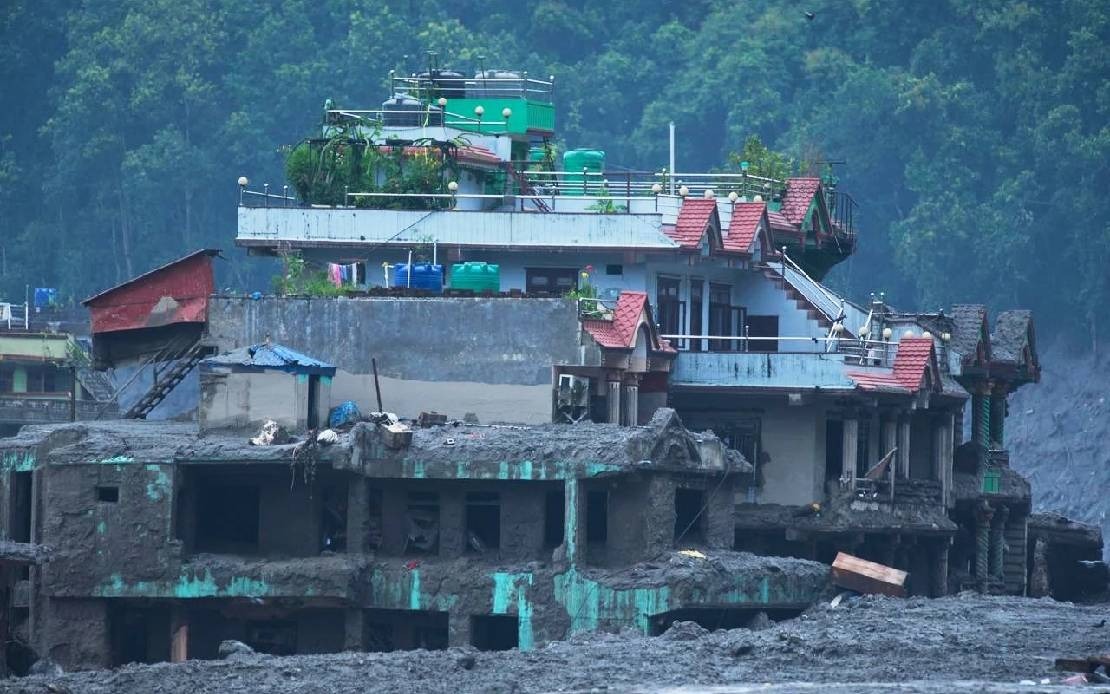
Nepal is mobilizing international support following one of the region's most catastrophic natural disasters in recent years, as a glacier collapse on Wednesday unleashed a torrent of rock, ice, mud and debris that tore through mountain river systems, leaving devastation across the Himalayan landscape. The impoverished nation of 30 million people has suspended search and rescue operations due to persistent bad weather and poor visibility in affected areas, while simultaneously appealing to the international community for specialized technical expertise it currently lacks.
The death toll from the disaster has climbed to at least 626 in Nepal, with an additional seven fatalities reported in China's Tibet region. The scale of the destruction is reflected in the staggering number of people unaccounted for—approximately 2,426 are missing in Nepal, while at least 554 remain untraced in Tibet's Gyirong County alone. Among those missing are at least 540 foreign nationals, predominantly Hindu pilgrims from India who were in the region for religious observances when the disaster struck. The rapid movement of the glacial debris overwhelmed everything in its path, obliterating buildings, collapsing bridges, and destroying critical power infrastructure across multiple districts.
The unprecedented scale of the crisis has compelled Nepal's government to articulate its recovery needs beyond immediate rescue efforts. Finance Minister Swarnim Wagle has indicated that preliminary assessments suggest between US$4 billion and US$5 billion will be required to reconstruct the devastated regions and restore essential infrastructure. Officials emphasised that this represents an initial estimate, with comprehensive damage assessments still underway as teams work through the affected areas to catalogue losses in detail.
Narendra Pariyar, the chief administrator of the severely impacted Rasuwa district, explained that ongoing rescue efforts have been hindered by deteriorating meteorological conditions, with rain and thick fog limiting visibility and making operations increasingly hazardous. Rather than continuing rescue operations under dangerous conditions, authorities have prioritized logistical coordination to transport rescued pilgrims and survivors to Kathmandu, the capital. This strategic shift reflects the transition from active rescue phases toward managing the humanitarian consequences already evident.
A particularly grim challenge has emerged as rescue teams recover bodies from the debris three days after the initial catastrophe. Many corpses have deteriorated to a point where visual identification has become impossible, forcing authorities to implement alternative protocols. The Chitwan district administration announced that bodies will be subject to DNA sample collection before burial, with remains interred in designated open spaces to mitigate health risks and prevent potential disease outbreaks. At Maharajgunj Medical Campus in Kathmandu, where bodies have been transported for identification, families of the missing have gathered in desperate attempts to locate missing relatives, with photographs of recovered bodies displayed on gates and walls. Of the 49 bodies initially brought to the hospital, only seven had been identified as of the report's filing, highlighting the identification challenges confronting authorities.
Beyond immediate rescue concerns, Nepal faces an emerging secondary threat from a substantial lake formed by glacial melt and debris damming across the Nepal-China border. This lake briefly threatened to overflow into Nepal's Lhende Khola and Trishuli rivers, prompting authorities to temporarily suspend rescue operations on Friday. By Saturday, Chinese authorities reported that the immediate overflow risk had diminished, with satellite imagery indicating the water was gradually flowing through the dam at a manageable rate. However, officials cautioned that this represents merely one of two upstream reservoirs Nepal is actively monitoring, meaning flood risks will persist until both bodies of water have completely drained naturally.
Nepal's Foreign Minister Shisir Khanal has articulated precisely which forms of international assistance his government requires to address the crisis effectively. The nation does not require foreign personnel for traditional search and rescue operations, Khanal explained, but urgently needs specialized expertise in extracting survivors from collapsed tunnels, restoring damaged transport and communication networks where bridge infrastructure has been destroyed, identifying deceased individuals through forensic means, conducting DNA analysis, and establishing facilities for temporary body storage. This calibrated request reflects realistic assessment of where Nepal's technical capacity reaches its limits.
India, as Nepal's immediate neighbour and diplomatic partner, has responded with substantial material and personnel support. New Delhi has dispatched three flights carrying approximately 60 tonnes of humanitarian relief, including blankets, pharmaceuticals, food supplies, and water purification tablets. Beyond immediate relief, India has committed to sending a specialized tunnel rescue team and a dedicated medical response unit. The Indian foreign ministry further pledged its disaster response force and has offered prefabricated bridges along with technical teams to assist in restoring severed transportation and communication links across the affected regions.
China, whose Tibet region has also suffered significant casualties and displacement from the flood, has called for emergency international aid and coordinated rescue cooperation, though Beijing has not yet specified the precise nature or volume of assistance it will provide to Nepal. This regional coordination represents a significant diplomatic engagement, given the geopolitical complexities often surrounding Nepal-China relations and the shared humanitarian imperative confronting both nations.
The scale and nature of this disaster carry implications extending well beyond Nepal's immediate borders. The catastrophe underscores the vulnerability of Himalayan communities to climate-related hazards, including glacial destabilization and sudden hydrological events. For Southeast Asian nations and the broader Asian region, the crisis provides urgent evidence of how climate change-driven environmental shifts in high-altitude zones can generate transnational humanitarian emergencies requiring coordinated regional responses. Malaysia and other ASEAN nations monitoring such developments may recognize parallels to vulnerability challenges across mountainous border regions within Southeast Asia itself.
The reconstruction challenge confronting Nepal represents not merely a technical and financial burden, but a test of international solidarity and the mechanisms through which the global community responds to climate-influenced disasters in developing nations. The US$4-5 billion reconstruction estimate, while preliminary, exceeds most developing countries' annual disaster recovery budgets and will likely require sustained international pledges and development assistance commitments extending years beyond the immediate emergency response phase.

