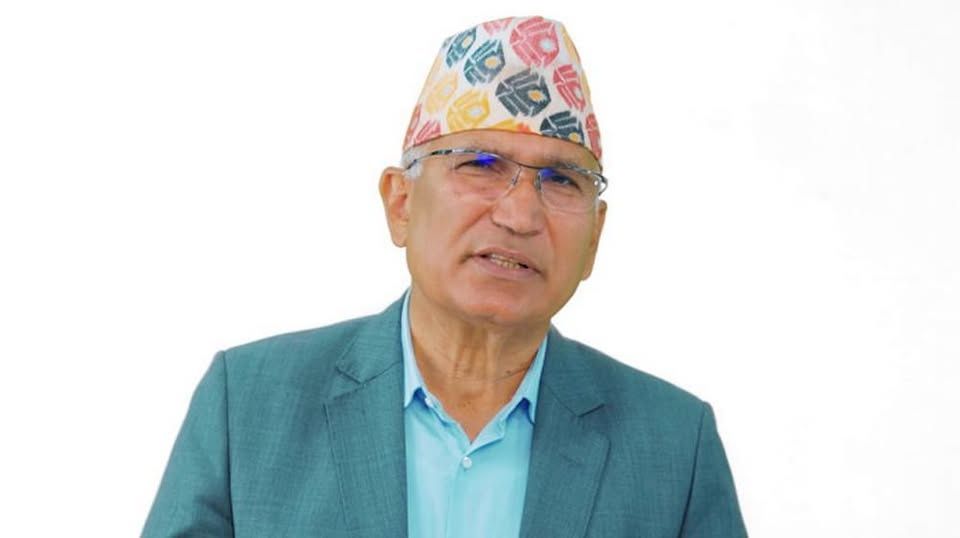
Nepal's police have arrested Bishnu Paudel, a former finance minister and senior Communist party figure, on money-laundering charges as the country's recently elected government pursues an aggressive anti-corruption agenda. The arrest on Monday came amid what observers view as a broader reckoning with officials from the previous administration, which was forced from power following civil unrest in 2025. Nepal Police spokesman Abhi Narayan Kafle confirmed that the department would investigate Paudel's alleged involvement in moving illicit funds through financial channels.
Paudel's detention carries significant political weight within Nepal's fractious party system. He serves as vice-chair of the Communist CPN-UML, led by former Prime Minister KP Sharma Oli, whose government collapsed during the September uprising. His arrest therefore represents a direct challenge to the opposition bloc that previously held executive authority, signalling that anti-corruption efforts under the new administration will extend to prosecuting figures across party lines rather than focusing exclusively on lower-level functionaries.
The newly elected Prime Minister Balendra Shah, who rose from entertainment to politics before securing his election in March, built his campaign on promises to dismantle endemic corruption that had eroded public trust in institutions. His ascension followed massive popular mobilisation against government failures, both in administration and economic management. The transition represented a generational shift in Nepal's volatile political landscape, with voters demanding fundamental changes in how power and resources are managed at the highest levels.
The opposition has swiftly challenged these prosecutions as politically motivated. KP Sharma Oli characterised Paudel's arrest as a "political stunt" designed to marginalise the CPN-UML ahead of future elections. The accusation reflects longstanding tensions in Nepal's politics, where anti-corruption campaigns have historically served as instruments to weaken rival factions. CPN-UML publicity head Niraj Acharya insisted that while the party respects legal processes, the Shah government exhibits "discriminatory behaviour" in its enforcement approach, suggesting that officials aligned with the previous regime face disproportionate scrutiny compared to those within the ruling coalition.
The current crackdown must be understood against the backdrop of the 2025 uprising, which claimed at least 76 lives and wounded more than 2,500 people during two days of intense violence. What began as public objection to a social media ban rapidly evolved into a broader rebellion against systemic corruption and economic mismanagement that had severely constrained opportunities for ordinary Nepalis. Oli himself and former interior minister Ramesh Lekhak faced arrest in March on allegations relating to the lethal suppression of these demonstrations, though both were released after two weeks without formal charges and continue to deny involvement in the violence.
The trajectory of those earlier arrests illustrated the complications surrounding accountability in post-uprising Nepal. Without criminal convictions, the detention of Oli and Lekhak appeared to many international observers as provisional punishment without due process. The subsequent release without charges raised questions about whether the new government possessed sufficient evidence for prosecution or whether the arrests served primarily as a political warning to the defeated administration. Such ambiguity undermines public confidence in whether justice is being administered impartially or wielded as a tool of factional advantage.
Beyond individual high-profile cases, Nepal's anti-corruption institutions are simultaneously addressing systemic malfeasance. The Commission for Investigation of Abuse of Authority has filed charges against 16 individuals, including the chief of the passport department, in connection with an alleged $66 million procurement swindle involving digital passport systems. This separate case illustrates how corruption permeated ordinary government operations, with officials allegedly embezzling vast sums designated for modernising essential services. Such procurement fraud particularly harms ordinary citizens who depend on functional public infrastructure and transparent systems.
The scale of alleged graft—$66 million represents a substantial portion of Nepal's annual development budget—demonstrates why anti-corruption became the dominant electoral issue in 2025. For a nation struggling with poverty and limited resources, massive diversion of public funds to illicit private gain represents not merely bureaucratic venality but a betrayal of collective development aspirations. Citizens mobilised precisely because they recognised that endemic corruption perpetuated poverty and stunted economic growth.
For Malaysia and other Southeast Asian nations observing Nepal's trajectory, several implications emerge. Nepal's experience demonstrates that popular uprisings against corruption can successfully dislodge entrenched power structures, yet transitional accountability remains deeply complicated. The line between legitimate prosecution of genuine wrongdoing and politically selective enforcement proves difficult to maintain under pressure. Malaysia's own experience with post-2018 accountability efforts offers parallels: transitions generate expectations of comprehensive justice that governing coalitions struggle to deliver while managing competing political interests.
The Paudel arrest also underscores how anti-corruption campaigns can become weaponised within competitive politics. While rigorous investigation of malfeasance serves essential democratic functions, opposition claims of selective targeting cannot be dismissed without independent assessment. Nepal's future stability may depend less on the volume of prosecutions than on whether accountability mechanisms maintain genuine impartiality and prosecute officials from all political affiliations with equivalent vigour.
As Nepal's new government consolidates power through these high-profile arrests, the critical test will be whether the anti-corruption momentum translates into sustainable institutional reform or gradually ebbs as political normalisation occurs. The commitment to reform demonstrated through pursuing former finance ministers means little if parallel investigations of sitting officials proceed with less urgency, or if prosecutions stall without achieving convictions based on compelling evidence.

