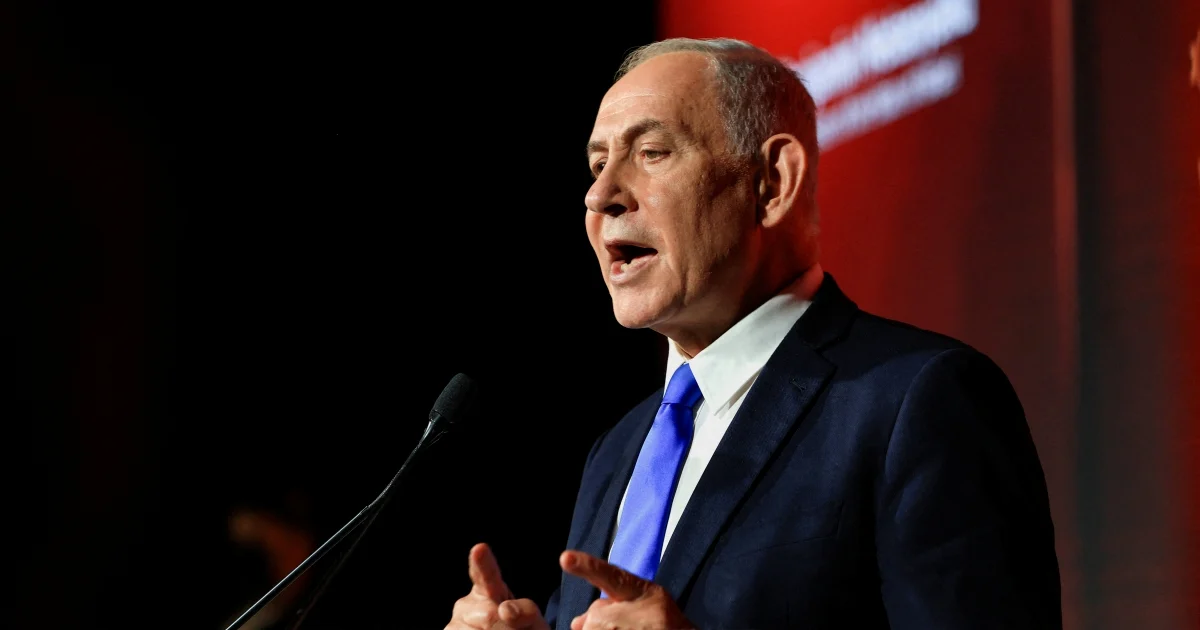
Israeli Prime Minister Benjamin Netanyahu declared on Sunday that military forces would remain stationed in southern Lebanon for as long as operational necessity demands, signalling a potentially extended Israeli presence in the border region. The statement underscores the continuing volatility along Israel's northern frontier and reflects broader Middle Eastern security concerns that extend well beyond immediate cross-border dynamics. Netanyahu's commitment to maintaining troops in the area addresses both immediate tactical objectives and longer-term strategic positioning in a volatile neighbourhood where regional actors possess competing interests and overlapping spheres of influence.
The Israeli leader's remarks came amid ongoing tensions that have characterised Israeli-Lebanese relations, particularly involving activities by armed groups operating from Lebanese territory. The deployment of Israeli forces into southern Lebanon represents a significant military operation with implications that reverberate throughout the Levant and the wider region. For Southeast Asian observers, the situation illustrates how unresolved conflicts and the presence of non-state actors can perpetuate military interventions and complicate international diplomatic efforts to achieve lasting peace settlements.
Netanyahu simultaneously reiterated Israel's unwavering opposition to Iran's nuclear weapons programme, framing this as a critical national security interest that transcends immediate regional flashpoints. The two-pronged policy statement reflects how Israeli security strategy interconnects multiple theatres and adversaries, treating them as components of a comprehensive threat architecture rather than isolated challenges. This integrated approach to security has shaped Israeli military doctrine and foreign policy for decades, influencing how the country approaches its relationships with neighbouring states and international powers.
The pledge to maintain forces in southern Lebanon indefinitely suggests Israeli officials view the security situation as fundamentally unresolved despite any ceasefire agreements or international understandings. This assessment carries implications for regional stability, as prolonged military deployments can create conditions for miscalculation, escalation, or the entrenchment of competing military positions that become increasingly difficult to unwind through diplomatic channels. The Lebanese government and international mediators face the challenge of negotiating Israeli withdrawal while simultaneously addressing the security concerns that originally prompted the deployment.
From a Southeast Asian perspective, the situation demonstrates how geographic proximity to conflict zones and the presence of proxy forces create conditions that invite external military intervention. Malaysia and other ASEAN nations have observed similar dynamics in their own regions, where state actors intervene across borders citing security threats emanating from non-state groups operating in neighbouring territories. The Israeli case provides instructive parallels for understanding how regional powers justify extended military presence and the diplomatic complications that arise when such operations lack clearly defined endpoints.
The emphasis on preventing Iranian nuclear advancement represents a longstanding Israeli preoccupation that has influenced Middle Eastern geopolitics for years. Israel has maintained that an Iran armed with nuclear weapons would fundamentally alter regional power dynamics and pose existential threats to Israeli security. This conviction has shaped Israeli military strategy, including reported operations against Iranian nuclear facilities and assets throughout the region, and continues to influence how Israeli policymakers evaluate both regional conflicts and international diplomatic initiatives addressing nuclear proliferation.
Netanyahu's dual focus on southern Lebanon and Iran reflects how Israeli security concerns operate across multiple geographic scales, from immediate border security to regional power competition. The interconnected nature of these challenges complicates efforts by international actors to mediate specific conflicts, as progress in one area may be held hostage to developments elsewhere. This approach mirrors how major powers construct security strategies that account for multiple theatres simultaneously, treating local conflicts as manifestations of broader systemic competition.
The Lebanese government has expressed concerns about the indefinite nature of foreign military presence on its soil, viewing it as a violation of national sovereignty. However, Lebanon's own institutional weaknesses and the presence of armed groups beyond state control have limited its capacity to enforce unilateral demands for Israeli withdrawal. This sovereignty dilemma—where legitimate security concerns meet the inability of a state to maintain territorial integrity—has created a stalemate that international mediation efforts have struggled to resolve.
Regional observers have noted how Israeli military operations in Lebanon intersect with broader conflicts involving Hezbollah, a powerful Lebanese militant and political organisation with strong ties to Iran. The group's presence in southern Lebanon has been a primary justification for Israeli interventions, creating a cycle where the stated threat justifies military response, which in turn may provoke counter-responses that further entrench the cycle. Breaking this pattern requires not only diplomatic agreements but also fundamental shifts in how regional actors perceive security threats and the legitimacy of military responses.
The statement from Netanyahu will likely influence international diplomatic calculations regarding potential ceasefire agreements or broader Middle Eastern peace initiatives. Countries seeking to advance regional stability must now account for Israeli intentions to maintain significant military footprints in Lebanon, which could constrain the scope of feasible agreements. For Malaysia and other non-aligned nations, the situation underscores the difficulty of resolving conflicts where multiple parties possess strong security concerns and where international consensus on appropriate responses remains elusive.
Longer-term implications suggest that resolution of Israeli-Lebanese security tensions may require comprehensive regional arrangements addressing broader questions of state capacity, international guarantees, and the role of non-state actors in regional security architecture. Absent such comprehensive approaches, unilateral military commitments like Netanyahu's pledge will likely continue defining the operational environment, with potential consequences for broader Middle Eastern stability and international efforts to reduce conflict-related costs to civilian populations.
%22%2F%3E%3C%2Fpattern%3E%3C%2Fdefs%3E%3Crect%20width%3D%22100%25%22%20height%3D%22100%25%22%20fill%3D%22url(%23ph3ryapg)%22%2F%3E%3Crect%20width%3D%22100%25%22%20height%3D%22100%25%22%20fill%3D%22url(%23ph3ryapp)%22%2F%3E%3Ctext%20x%3D%2250%25%22%20y%3D%2250%25%22%20text-anchor%3D%22middle%22%20dominant-baseline%3D%22central%22%20fill%3D%22rgba(255%2C255%2C255%2C0.95)%22%20font-family%3D%22Georgia%2C%20'Times%20New%20Roman'%2C%20serif%22%20font-weight%3D%22700%22%20font-size%3D%22272%22%20letter-spacing%3D%22-0.02em%22%3EFahmi%3C%2Ftext%3E%3C%2Fsvg%3E)
%22%2F%3E%3C%2Fpattern%3E%3C%2Fdefs%3E%3Crect%20width%3D%22100%25%22%20height%3D%22100%25%22%20fill%3D%22url(%23ph46dodg)%22%2F%3E%3Crect%20width%3D%22100%25%22%20height%3D%22100%25%22%20fill%3D%22url(%23ph46dodp)%22%2F%3E%3Ctext%20x%3D%2250%25%22%20y%3D%2250%25%22%20text-anchor%3D%22middle%22%20dominant-baseline%3D%22central%22%20fill%3D%22rgba(255%2C255%2C255%2C0.95)%22%20font-family%3D%22Georgia%2C%20'Times%20New%20Roman'%2C%20serif%22%20font-weight%3D%22700%22%20font-size%3D%22320%22%20letter-spacing%3D%22-0.02em%22%3E70%3C%2Ftext%3E%3C%2Fsvg%3E)