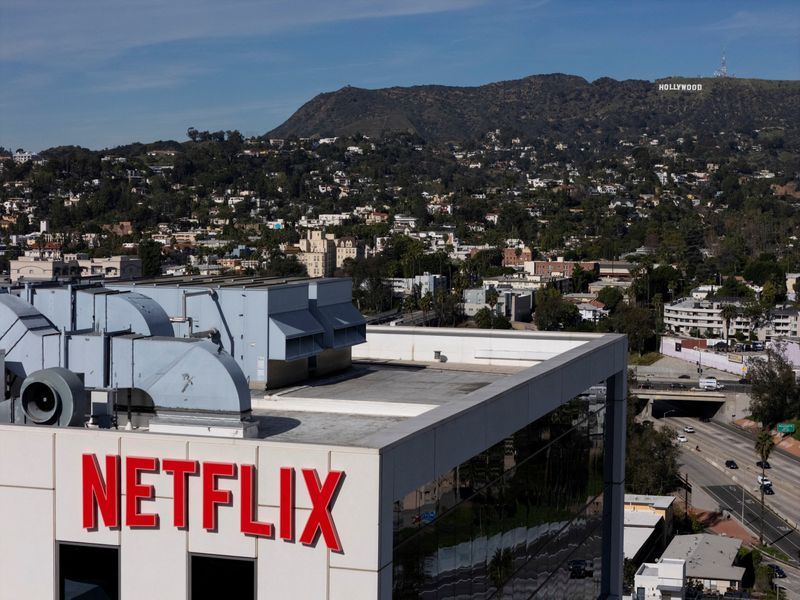
The streaming landscape has shifted dramatically for Netflix, which now faces a critical test of confidence when it releases second-quarter financial results on Thursday. Once the undisputed force in entertainment, the company must convince a wary investment community that it has credible strategies to reignite expansion after losing more than one-fifth of its market value this year. The mounting pressure reflects a fundamental challenge: Netflix has exhausted many of the growth levers that powered its rise, and the new ones it has activated are disappointing both analysts and shareholders.
Declining engagement metrics have become the primary concern shadowing Netflix's outlook. The platform's ability to retain viewers for subsequent seasons of popular shows has deteriorated markedly, with acclaimed series such as "The Night Agent" and "Beef" each shedding roughly half their audience after their debut seasons, according to Bloomberg's analysis of viewing patterns. This retention challenge strikes at the heart of the subscription model, which depends on sustained viewer loyalty and the psychological hook of "what comes next." As competition from traditional broadcasters, YouTube's free alternatives, and mobile-first platforms fragments the entertainment market, Netflix can no longer count on passive loyalty or the scarcity advantage it once possessed.
Revenue expectations for the quarter underscore how dramatically Netflix's growth trajectory has moderated. Analysts surveyed by LSEG anticipate second-quarter revenue of $12.59 billion, representing a 13.6 percent increase year-over-year—the slowest quarterly expansion in more than four consecutive periods. That deceleration would mark a stark contrast to the double-digit growth rates that once characterized the company's financial performance and justified its premium valuation. Adjusted earnings per share are projected to reach 79 cents, though this metric provides limited comfort when underlying business momentum is questioned.
The advertising business, positioned as the linchpin of Netflix's future expansion, remains far from fulfilling the growth expectations many investors had harboured. Revenue from the advertising tier is forecast to reach $705.8 million for the quarter, but growth trajectories have fallen short of the ambitious projections made by analysts who initially believed this segment would rapidly compensate for slowing subscription gains. Emarketer's Ross Benes has acknowledged downward revisions to advertising forecasts, noting that the channel has underperformed relative to widespread expectations. This shortfall raises questions about whether Netflix can build a viable, lucrative advertising business within an ecosystem designed around premium content and subscriber experience.
The exhaustion of traditional growth tactics compounds the advertising challenge. Netflix's aggressive password-sharing crackdown and successive price increases across subscription tiers provided substantial revenue boosts over the past two years, but those initiatives have inherent limits. Customers who feel squeezed by pricing may accelerate their subscription cancellations, while the password-sharing policy alienated segments of the user base. As these one-time revenue drivers fade in their impact, the company must demonstrate that it can expand through organic means—growing the subscriber base, increasing average revenue per user, or developing entirely new revenue streams. The advertising business was supposed to fill this gap, yet it has stumbled out of the gates.
To counteract engagement stagnation and attract advertiser dollars, Netflix has begun diversifying into live events and premium content acquisitions. Reports indicate the company is pursuing the exclusive U.S. broadcasting rights for the 2030 and 2034 FIFA World Cup competitions, a move designed to create must-watch moments that bind viewers to the platform and generate premium advertising inventory around marquee sporting events. Simultaneously, Netflix has engaged in discussions to acquire Letterboxd, the popular online film community platform, potentially offering a pathway to deeper engagement among cinephiles and data collection that could refine its recommendation algorithms. These initiatives signal a strategic shift toward experiential content that transcends traditional episodic series.
Yet analyst sentiment suggests Netflix is approaching an inflection point that mirrors the journey of many dominant companies before it. Paolo Pescatore of PP Foresight observed that Netflix has transitioned from disruption to dominance, a metamorphosis that fundamentally alters the competitive dynamics. The challenge of sustaining growth from a vastly larger revenue base is qualitatively different from the earlier years when the company could double or triple its subscriber count. Smaller percentage gains from a $30 billion annual revenue run rate require either significant margin expansion or entry into adjacent markets with proven demand. Neither pathway is straightforward for a company approaching market saturation in developed regions.
Investors and analysts remain divided on whether Netflix should pursue transformative mega-acquisitions or focus on targeted, strategic smaller deals. The spinoff of Comcast's NBCUniversal subsidiary fueled speculation about potential combinations, yet many market observers believe Netflix lacks both the financial appetite and strategic rationale for another blockbuster acquisition in the current environment. Instead, smaller bets on complementary platforms like Letterboxd, production capabilities, and live event rights appear more aligned with the company's current positioning. These moves aim to expand the total addressable market and create new engagement vectors without the integration risks and capital requirements of larger mergers.
For Malaysian and Southeast Asian viewers, Netflix's strategic struggles carry implications for content availability and pricing trajectories in the region. If the company fails to achieve profitability and growth targets, it may reduce investment in regional content production or raise subscription prices further to improve margins. Conversely, success with advertising-supported tiers could make Netflix more affordable for price-sensitive markets in Southeast Asia, potentially accelerating adoption in tier-two and tier-three cities. The company's performance this quarter will signal whether these markets remain a growth priority or become secondary to efforts to extract maximum value from saturated developed markets.
The broader context of competition deserves emphasis as well. Traditional media giants like Disney, Amazon, and Warner Bros Discovery have all launched their own streaming services or expanded existing ones, fragmenting the entertainment ecosystem in ways that Netflix largely created. YouTube's free, advertiser-supported model attracts casual viewers, while regional players tailor content to local preferences with lower production costs. Netflix's challenge is not merely to slow its own deceleration but to prove it can grow despite this fundamentally altered competitive environment. The second-quarter results will offer the first detailed evidence of whether management's strategic pivots are working or merely rearranging deck chairs on a slowing vessel.

