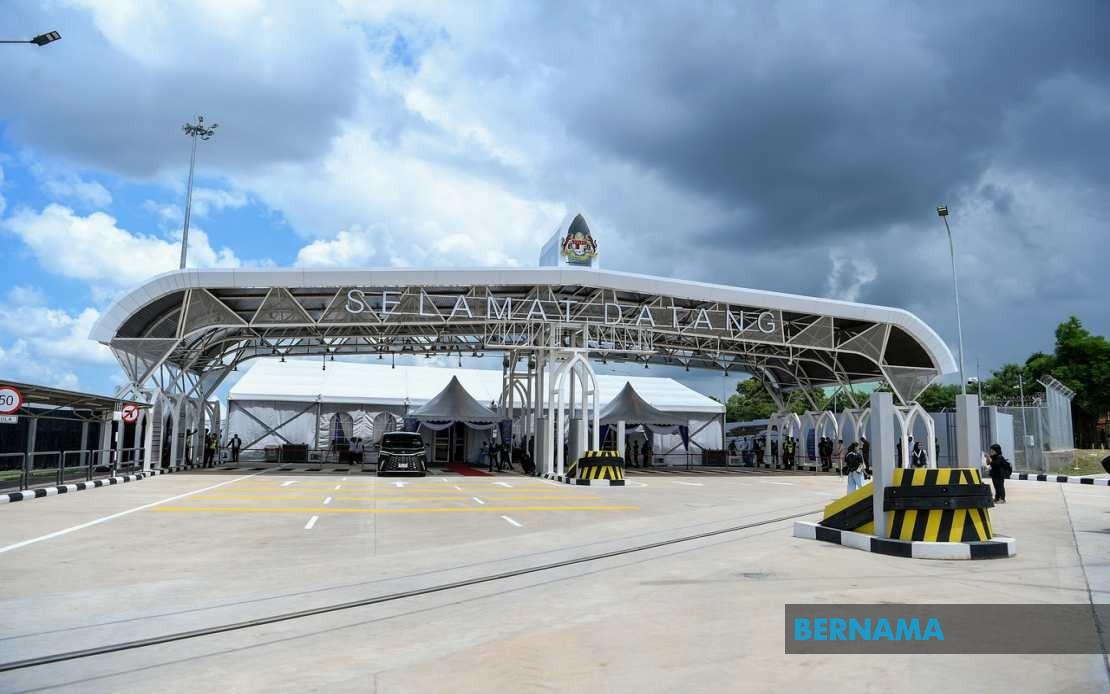
The fresh border passage connecting Malaysia's Kedah state with Thailand's Sadao has proven remarkably effective since commencing operations last month, fundamentally transforming how goods and people move between the two nations. The 900-metre corridor, which links the Bukit Kayu Hitam Immigration, Customs, Quarantine and Security Complex on the Malaysian side with Thailand's Sadao Customs, Immigration and Quarantine Complex, represents a significant infrastructure investment aimed at streamlining one of Southeast Asia's busiest land crossings.
Within just four weeks of opening, the routing has demonstrated tangible operational improvements that suggest years of planning and investment have paid dividends. The scale of adoption tells the story: nearly all commercial vehicles—lorries, buses, and vans—have migrated to the new pathway, effectively abandoning the congested older route that previously bottlenecked traffic during peak periods. This wholesale shift in traffic patterns indicates that operators recognise genuine efficiency gains worth the logistical adjustment.
Thai Customs director Buntoon Oucharoen highlighted how technological advancement underpins the route's success. The deployment of cutting-edge X-ray scanning equipment, colloquially termed "Fast Scan" systems, has dramatically accelerated container inspection procedures. Where previous inspection protocols consumed five minutes per container, the advanced machinery now completes the task in under sixty seconds. This seemingly modest reduction compounds dramatically across thousands of daily shipments, cumulatively eliminating hours of unnecessary delays that previously plagued commercial operators.
Beyond equipment upgrades, the new route incorporates integrated digital infrastructure that fundamentally changes how border procedures operate. Cargo information is now accessible through unified computer systems, eliminating the need for vehicles to queue endlessly while paperwork processes behind the scenes. This shift from physical queuing to digital processing represents the kind of modernisation that emerging economies across ASEAN urgently require to remain competitive in regional trade networks.
The traffic volumes demonstrate the route's immediate acceptance and the pent-up demand for efficient cross-border movement. More than 1,000 logistics vehicles daily now traverse the new corridor, a figure that underscores the critical importance of Malaysia-Thailand trade connectivity for regional commerce. These are not merely statistical abstractions but represent daily deliveries of perishable goods, automotive components, manufacturing inputs, and countless other commodities that sustain economic activity across both nations.
Trade data from the initial three weeks of operation provide striking evidence of the route's economic impact. Import values surged to 19 billion baht—approximately RM2.35 billion—during July 11-31 compared with 12 billion baht during the corresponding period in 2024. Export volumes climbed even more dramatically, reaching 24 billion baht against 13 billion baht previously. These increases, occurring during the very period when the route was still embedding itself into normal operations, suggest that businesses were eager to capitalise on improved logistics efficiency.
The inauguration ceremony, presided over jointly by Thai Prime Minister Anutin Charnvirakul and Malaysian Prime Minister Datuk Seri Anwar Ibrahim on July 10, symbolised deeper bilateral commitment to regional integration. The official operations launch the following day transitioned from ceremonial to practical, immediately releasing the productivity gains that operators had anticipated. This rapid progression from formal opening to measurable commercial impact reflects how strategically important this crossing has become for both governments.
Beyond cargo movements, the new route's infrastructure supports 11 dedicated inbound and outbound lanes that facilitate not only commercial traffic but also passenger movements. This capacity expansion holds particular significance for tourism flows between Malaysia and Thailand, especially during peak travel periods on weekends and public holidays. The Hatyai-Songkhla Hotel Association's endorsement reflects how tourism operators recognise that improved border efficiency translates directly into enhanced visitor experiences and extended spending in border communities.
The recent bilateral trade metrics illustrate the broader context within which this crossing operates. During the opening quarter of 2026, Malaysia-Thailand trade totalled RM31.33 billion—approximately US$7.90 billion—representing substantial growth from RM27.35 billion during the same quarter of 2025. This trajectory positions the two nations toward their stated ambition of achieving RM122.6 billion—equivalent to US$30 billion—in annual bilateral trade by 2027. The new border crossing becomes essential infrastructure for reaching these targets.
As Malaysia and Thailand approach celebrating seven decades of diplomatic relations next year, infrastructure projects like this crossing embody the practical deepening of economic ties that undergird political relationships. For Malaysian businesses, particularly those in logistics and manufacturing sectors reliant on cross-border supply chains, this route transforms operational economics. Similarly, Thai exporters gain more reliable access to Malaysian and Southeast Asian markets through improved gateway efficiency.
The route's early success carries lessons for other ASEAN border crossings grappling with congestion and inefficiency. The combination of modern inspection technology, integrated digital systems, and expanded physical capacity creates a model that economies throughout the region might replicate. As ASEAN seeks to deepen integration and compete globally, such critical infrastructure improvements become prerequisites for collective competitiveness.
Looking ahead, the focus inevitably shifts to whether the gains from these initial weeks can be sustained and amplified. Ensuring that technological systems remain optimally maintained, that staffing levels accommodate growth in traffic, and that both nations continue coordinating border procedures will determine whether the current momentum persists. For Malaysian exporters and logistics operators, this crossing now represents not merely a border checkpoint but a competitive advantage in regional and global supply chains.

