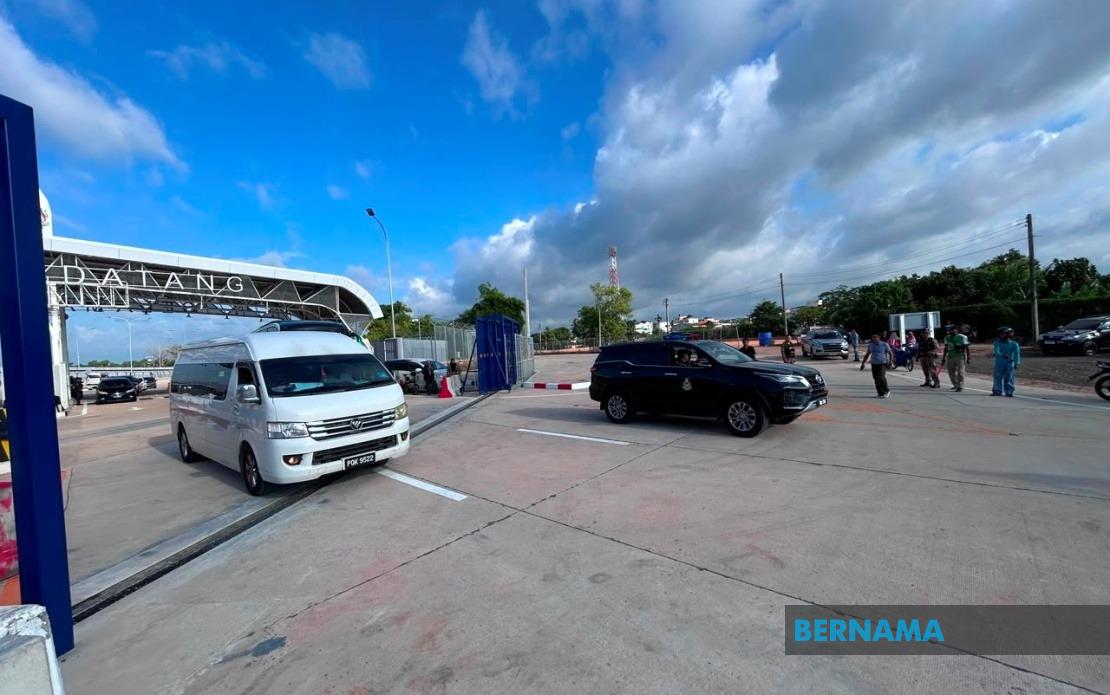
A new highway facilitating cross-border movement between Malaysia and Thailand began operations on 11 July, with the route officially opening at 6 am to streamline traffic flow at one of the region's busiest international checkpoints. The road now directly links the Bukit Kayu Hitam Immigration, Customs, Quarantine and Security Complex in Kedah with the Sadao Customs, Immigration and Quarantine Complex across the border in Thailand, replacing a more congested pathway that had long frustrated commuters and commercial transporters. The infrastructure project received ceremonial endorsement from Prime Minister Datuk Seri Anwar Ibrahim and Thai counterpart Anutin Charnvirakul, underscoring the bilateral importance of improved border efficiency.
Initial observations from traffic monitors indicated orderly vehicle movement along the newly opened corridor, with preliminary feedback from users proving encouraging. The route represents a significant upgrade to border crossing procedures that have historically struggled during peak travel periods, particularly school holidays and long weekends when Malaysian families frequently visit Thailand and vice versa. The initiative demonstrates regional commitment to reducing administrative friction and physical bottlenecks that impede the seamless flow of people and merchandise across the frontier.
Penang-based motorist Mohd Faizal Ahmad, 42, highlighted the practical advantages of the new arrangement after traversing the route on its first day of operation. He explained that previous journeys during school holiday periods had involved substantial delays, with the improved routing and dedicated infrastructure promising to substantially compress transit times and eliminate the frustration associated with bumper-to-bumper congestion. His perspective reflects broader traveller sentiment that the new corridor addresses long-standing pain points affecting both leisure and business journeys across the frontier.
Commercial transport operators similarly identified tangible operational improvements embedded in the new design. Lorry driver Wan Muhammad Shahid Wan Mohd Desa, 28, observed that the widened corridor employs systematic lane separation differentiating heavy vehicles from light traffic, enabling more fluid progression through the Sadao checkpoint. He explained that the previous arrangement forced commercial trucks and passenger vehicles to navigate a shared bottleneck when proceeding from Bukit Kayu Hitam to Danok and onwards into Thailand, generating acute congestion that disrupted schedules for time-sensitive goods movements. The physical redesign specifically addresses this commercial transport concern through dedicated pathways that prevent the compounding delays resulting from mixed traffic interaction.
The new Sadao customs facility itself represents a substantial facility upgrade that extends benefits beyond mere traffic engineering. Thai resident Mat Li Daman, 59, a frequent cross-border traveller, emphasised that the expanded complex provides markedly superior spatial comfort compared to the congested original checkpoint. He noted enhanced documentation processing capabilities, including streamlined vehicle entry declarations, alongside improved overall amenities reflecting modern border management standards. For regular transnational commuters, these facility upgrades translate into less stressful procedural experiences and reduced time spent navigating administrative formalities.
The project emerges from bilateral recognition that border infrastructure development constitutes essential groundwork for deeper economic integration and people-to-people connectivity. Both governments identified that inefficient crossing procedures created unnecessary friction hindering legitimate trade expansion and tourism flows. The route upgrade specifically targets the weekend and holiday periods when volumes surge dramatically, indicating strategic planning based on observed usage patterns rather than purely average-day requirements. This demand-responsive approach suggests that planners anticipated future volume growth and built additional capacity accordingly.
Malaysia and Thailand maintain substantial mutual economic interests spanning trade, tourism, and labour mobility, with the Bukit Kayu Hitam-Sadao corridor representing one of the primary commercial gateways on the peninsula. Manufacturing enterprises relying on cross-border supply chains, agricultural exporters accessing each other's markets, and logistics operators transporting goods throughout the region depend on efficient border procedures to maintain competitiveness. Congestion-induced delays directly impair profitability and reliability, making infrastructure improvements economically consequential beyond mere convenience considerations.
The tourism dimension similarly reflects material significance for both economies. Malaysian visitors to Thailand contribute substantially to Thai tourism receipts, whilst Thai nationals visiting Malaysia support hospitality and retail sectors. Friction at border crossings discourages casual leisure travel and elongates journey times for holiday trips, subtly shifting travel preferences. A smoother crossing experience may incrementally stimulate bilateral tourism flows by reducing the non-monetary costs associated with international travel, particularly for families with young children who experience travel fatigue more acutely.
Looking forward, the new corridor's effectiveness will depend partly on how smoothly the Malaysian and Thai immigration authorities coordinate operations and adapt procedures to leverage the improved physical infrastructure. Border management involves considerable administrative discretion regarding processing protocols, staff allocation, and technology deployment. The physical capacity upgrade provides the foundation for efficiency improvements, but realising those benefits requires complementary procedural optimisation and potentially technology integration such as advance documentation processing or biometric systems that reduce on-site processing time.
The opening also illustrates broader Southeast Asian trends toward reducing border friction as nations recognise that seamless connectivity generates mutual prosperity. Regional frameworks like ASEAN increasingly emphasise mobility facilitation, with member states implementing reciprocal procedures and infrastructure improvements. Malaysia's commitment to the Bukit Kayu Hitam upgrade aligns with these regional dynamics and positions the country as proactive regarding corridor development.
Regional observers should monitor whether the new route delivers anticipated congestion reductions during subsequent peak periods, as initial opening-day performance typically reflects novelty-driven light volumes rather than sustained usage patterns. Sustained monitoring will indicate whether the facility requires further refinement or whether projected benefits materialise as planned. Success at this crossing potentially provides template lessons applicable to other Malaysia-Thailand border points and neighbouring countries grappling with similar infrastructure constraints.

