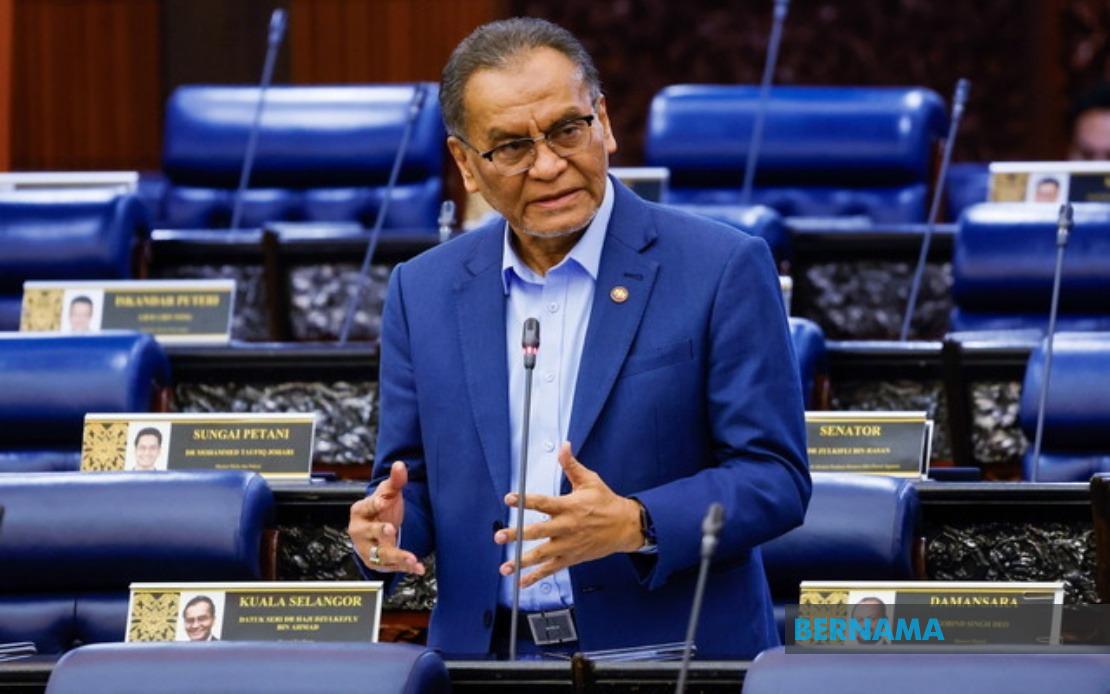
Health Minister Datuk Seri Dr Dzulkefly Ahmad has unveiled plans to construct a new hospital in Bandar Enstek, located in Nilai, Negeri Sembilan, to serve the escalating healthcare requirements of residents across the Seremban district. The facility is intended to alleviate mounting pressures on the Tuanku Ja'afar Hospital (HTJ), which has struggled to cope with demand as the region has experienced substantial development and population expansion in recent years.
The proposal emerges following a comprehensive evaluation by the Ministry of Health (MOH) of the earlier Tuanku Ja'afar Hospital 2 (HTJ2) initiative that had been planned for Rasah. Discussions between senior federal and state officials, including Negeri Sembilan Menteri Besar Datuk Seri Aminuddin Harun, on June 16 led to the recalibration of this healthcare infrastructure strategy. The shift towards establishing a facility in the northern Seremban corridor reflects acknowledgement that rapid urbanisation and demographic shifts in that area require more proximate medical services rather than relying solely on expanded capacity at the existing HTJ location.
The Health Ministry has identified two separate parcels of land, each spanning approximately 50 acres (20 hectares), within Bandar Enstek that are held by the Federal Lands Commissioner. Before proceeding with detailed planning and construction, MOH officials will conduct site inspections to evaluate both options and determine which location offers optimal conditions for the hospital's development. Following this assessment, the ministry will lodge a formal application with the Department of the Director General of Lands and Mines seeking approval for land-use conversion from their current designation to healthcare purposes.
Once the conversion application receives clearance, preliminary development activities will commence without delay. These foundational steps encompass comprehensive land surveying, soil investigation studies to identify any geological constraints, preparation of architectural and operational conceptual designs, detailed project cost estimation, and completion of the Value Assessment exercise that determines financial feasibility and cost-effectiveness. This methodical approach ensures that when construction eventually begins, all technical and financial groundwork has been thoroughly completed.
Parallel to the Bandar Enstek hospital initiative, State Menteri Besar Aminuddin has consented to release approximately 36.748 acres (about 14 hectares) of Federal Reserve land situated in Bandar Seremban for future healthcare development. This land allocation will support multiple objectives, including construction of an additional building block to expand the existing Tuanku Ja'afar Hospital's physical infrastructure and capacity. Additionally, the land will accommodate a Centre of Excellence (COE) in healthcare, positioning Negeri Sembilan as a hub for medical training, research, and specialised treatment delivery that could benefit patients across the region.
Beyond infrastructure development, the Ministry of Health is simultaneously addressing Malaysia's healthcare workforce challenges through targeted talent attraction initiatives. The government has implemented the Returning Expert Programme (REP) through TalentCorp, designed specifically to encourage Malaysian medical and healthcare professionals working overseas to repatriate and contribute their expertise within the country's healthcare system. The programme offers compelling financial incentives, including full exemptions from income tax and excise duty on the purchase of locally manufactured vehicles, reducing the financial transition costs for returning professionals and improving the net financial benefit of coming home.
Statistics from the REP reveal that healthcare sector applications originate predominantly from Malaysian professionals employed in the United Kingdom, Singapore, and Australia, reflecting where significant Malaysian medical talent has migrated. Within these applications, medical specialists and physicians comprise the largest cohort, indicating that the programme is successfully attracting senior clinical talent rather than merely junior staff. This demographic composition suggests that the initiative effectively targets high-impact returnees capable of advancing medical standards and mentoring the next generation of practitioners.
Simultaneously, MOH continues to engage foreign healthcare professionals under carefully controlled mechanisms to address critical service gaps. Foreign medical practitioners, including doctors and nurses, have long been permitted to work in Malaysia, but their employment remains subject to rigorous oversight by the Malaysian Medical Council and the Malaysian Nursing Board to safeguard healthcare quality and patient safety standards. The ministry currently recruits non-citizen medical specialists in critical and shortage-affected disciplines, and also engages non-citizen graduate medical officers who are permanent residents or spouses of Malaysian citizens for housemanship training programmes conducted at MOH facilities, creating pathways toward fuller integration into the healthcare workforce.
Regarding the recruitment of foreign nurses specifically for MOH positions, the ministry remains in an evaluation phase, conducting feasibility assessments in consultation with relevant government ministries and agencies to establish appropriate regulatory frameworks and integration protocols. This cautious approach reflects the complexity of nursing workforce management, where language proficiency, cultural adaptation, and standards harmonisation require careful consideration before large-scale foreign recruitment commences. The deliberate pace of these discussions suggests that decisions regarding foreign nurse recruitment will prioritise system sustainability and service quality over rapid numerical expansion.
The combined strategy emerging from these policy announcements demonstrates a multi-layered approach to Malaysia's healthcare infrastructure and workforce challenges. Rather than pursuing a single solution, the government is simultaneously investing in physical infrastructure expansion through the Bandar Enstek hospital and Seremban land allocation, whilst also addressing human resource constraints through the Returning Expert Programme and regulated foreign professional engagement. For Negeri Sembilan specifically, these initiatives promise both improved access to healthcare services through geographically dispersed facilities and enhanced clinical capacity through the attraction of specialist expertise, positioning the state to better serve its growing population and address the escalating healthcare demands of rapid regional development.
The fiscal and operational implications of these decisions extend beyond Negeri Sembilan, as successful implementation could serve as a model for other rapidly developing regions across Malaysia facing similar healthcare infrastructure pressures. The emphasis on preliminary assessments and phased implementation suggests a commitment to evidence-based decision-making rather than rushed construction, potentially yielding healthcare facilities better adapted to actual community needs. Meanwhile, the workforce initiatives acknowledge that infrastructure investment alone cannot resolve healthcare delivery challenges without corresponding attention to recruiting and retaining skilled medical professionals, a lesson increasingly evident across Southeast Asian healthcare systems grappling with brain drain and workforce shortages.

