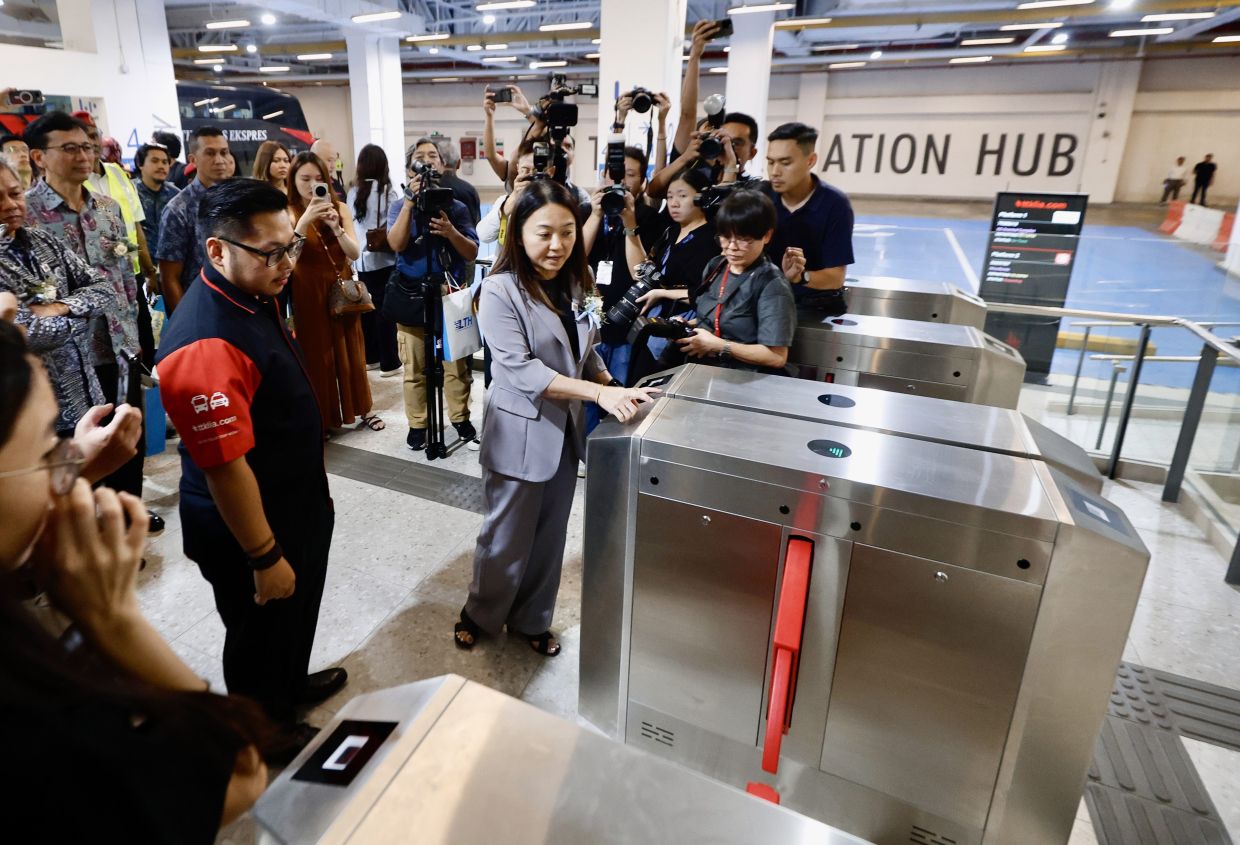
Kuala Lumpur's transport infrastructure has taken a significant step forward with the official launch of the LaLaport Transportation Hub at Bukit Bintang City Centre, a facility designed to centralise long-distance bus operations and streamline passenger movements in the congested heart of the capital. The hub, licensed by the Land Public Transport Agency (Apad) and currently hosting approximately 30 bus operators, represents a coordinated effort to tackle the city's worsening vehicular congestion by consolidating intercity coach services into a single, purpose-built location with modern amenities.
Minister in the Prime Minister's Department (Federal Territories) Hannah Yeoh launched the facility on Thursday (July 16), underscoring its strategic importance to the country's urban mobility agenda. The timing of this announcement reflects growing concerns about traffic volumes in Kuala Lumpur, where data from Kuala Lumpur City Hall shows that the metropolitan area absorbs an average of 1.2 million vehicles daily and processes approximately 5.5 million journeys entering and exiting the capital. These figures demonstrate the scale of the challenge facing city planners and why initiatives like the LaLaport hub have become essential infrastructure rather than mere convenience facilities.
Operating in phases since February, the hub occupies Level LG1 of LaLaport BBCC's East Atrium and has been designed with passenger comfort and operational efficiency as dual priorities. The facility features 11 dedicated bus bays to accommodate the operators, ensuring smooth traffic flow and preventing the chaotic street-side boarding that has historically characterised intercity bus services in Malaysian cities. Beyond the bus bays themselves, the infrastructure includes an air-conditioned waiting lounge equipped with ticketing counters, self-service booking machines, and real-time passenger information screens displaying current and upcoming bus schedules, allowing travellers to make informed decisions about their journeys.
The hub's current capacity targets 3,000 daily passengers, though planners have engineered the facility with significant headroom for growth, designing it to accommodate up to 10,000 passengers should demand increase over time. This forward-planning approach suggests that operators and the government anticipate substantial growth in intercity coach travel as the Klang Valley continues to expand and more workers commute from outlying areas. The scalability built into the facility prevents the common scenario where infrastructure becomes obsolete within years of opening, requiring costly upgrades and expansions.
Strategic location represents a critical advantage of the LaLaport hub, situating it immediately adjacent to the Hang Tuah interchange, a major public transport node that connects to Kuala Lumpur's LRT and Monorail networks. This positioning enables seamless multimodal journeys, allowing passengers arriving via coach to connect to rapid transit systems through a sheltered pedestrian walkway that protects users from the equatorial heat and monsoon rains. Such interchange connectivity transforms the hub from an isolated bus station into an integrated component of the broader metropolitan transport ecosystem, encouraging travellers to abandon private vehicles in favour of public transport chains.
Beyond conventional intercity buses, the facility provides comprehensive complementary services reflecting Malaysia's evolving transport landscape. Shuttle van operations serving KL International Airport Terminals 1 and 2 cater to time-sensitive travellers and business users, while demand-responsive transport services address first-and-last-mile challenges that often deter public transit usage. Designated zones for taxi and e-hailing vehicle pick-ups and drop-offs acknowledge the reality that most urban journeys involve private vehicle components, ensuring the hub functions as a genuine transport interchange rather than a single-mode facility.
The establishment of such a hub addresses a persistent problem in Malaysian urban transport: the dispersal of long-distance coach services across multiple locations throughout Kuala Lumpur and its suburbs. Historically, intercity buses have operated from ad hoc terminals, back alleys, and cramped loading zones scattered throughout the city centre and surrounding areas, creating traffic bottlenecks, environmental hazards, and poor passenger experiences. Concentrating these operations into a single, professionally managed facility promises to reduce congestion on surrounding streets by providing dedicated boarding and alighting areas rather than forcing buses to park illegally or obstruct traffic lanes.
The LaLaport hub also represents a response to evolving consumer expectations regarding transport amenities and service standards. Modern long-distance travellers increasingly expect facilities comparable to shopping malls and airports: climate-controlled waiting areas, reliable ticketing systems, real-time information, and food and retail options. Housing the transport hub within a shopping centre rather than in a traditional standalone terminal taps into these expectations while creating commercial synergies that make the facility economically viable for landlords and operators alike.
For Malaysian commuters and regional travellers, the hub's opening signals progress toward integrated urban mobility systems that currently remain aspirational in many Southeast Asian cities. As Kuala Lumpur grapples with traffic growth that outpaces road infrastructure expansion, shifting passengers from private vehicles to organised public transport services becomes increasingly critical. The LaLaport hub demonstrates that such transition is technically feasible and operationally viable, provided planners invest in modern facilities, convenient locations, and seamless connectivity between transport modes.

