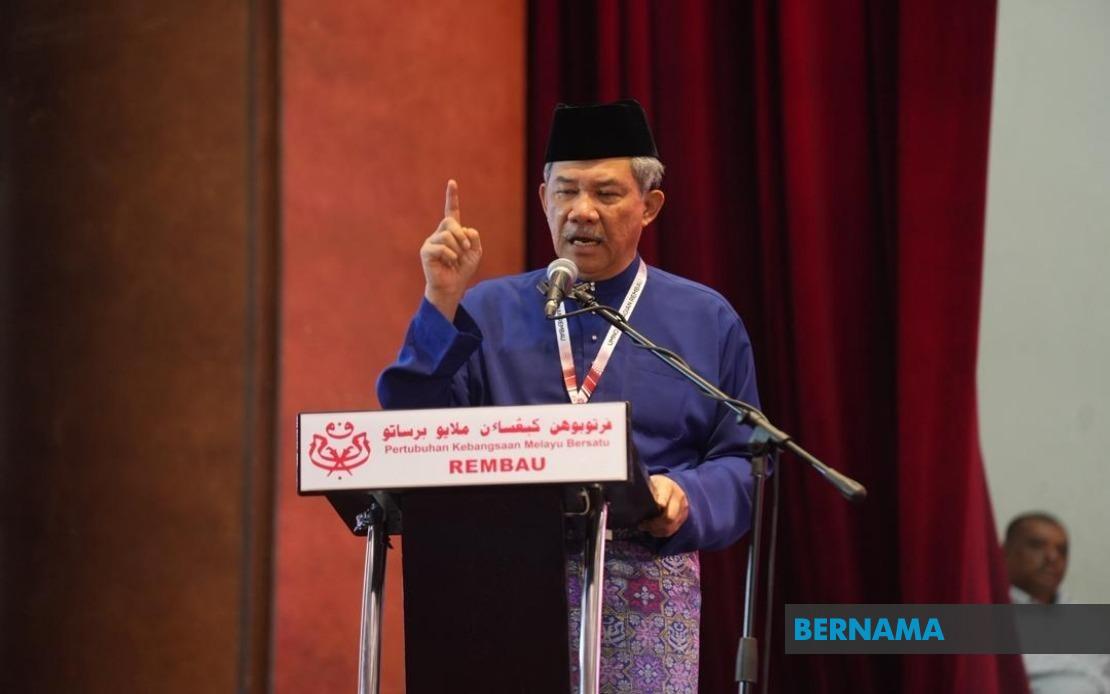
Barisan Nasional Deputy Chairman Datuk Seri Mohamad Hasan has thrown his weight behind the 10 newly appointed Negeri Sembilan State Executive Council members, asserting they are equipped to work seamlessly with the Menteri Besar and execute their assigned portfolios in service to the state's residents. The remarks came on August 7 in Seremban, hours after the fresh slate of exco members concluded their oath-taking ceremony before the Yang Dipertuan Besar of Negeri Sembilan, Tuanku Muhriz Tuanku Munawir, at Istana Besar Seri Menanti.
For Malaysian political observers, Mohamad's endorsement carries weight given his position as both a senior BN figure and the Rantau State Assemblyman. His intervention signals party confidence in the reshuffle at a time when state-level governance continues to draw scrutiny from voters concerned about administrative efficiency and responsiveness. The appointment of fresh faces to the exco represents an opportunity for the BN administration in Negeri Sembilan to reset its engagement with constituents and demonstrate tangible progress on longstanding local grievances.
Central to Mohamad's pitch is the conception of exco members functioning as conduits between the state apparatus and the public. Rather than viewing their role narrowly as administrators executing top-down directives, he articulated a vision whereby excos actively translate government initiatives into language and frameworks meaningful to ordinary Negeri Sembilan residents. This two-way flow of communication, he suggested, underpins effective governance at the state level and justifies the institutional presence of these appointed officials.
The broader role Mohamad outlined extends beyond mere communication and into the realm of evidence gathering and policy refinement. Exco members, in his conception, must systematically collect complaints, recommendations, and observations from their respective communities and territorial portfolios. This accumulated intelligence feeds back into the machinery of state administration, allowing officials to identify pain points, adjust course corrections, and ultimately enhance living standards across different demographic and geographic segments of Negeri Sembilan.
A critical operational requirement Mohamad emphasised involves exco members undertaking comprehensive briefings from the civil service divisions under their assigned portfolios. Without such foundational knowledge of departmental functions, administrative procedures, and inherited challenges, newly appointed excos risk stumbling through their tenures, unable to translate policy aspirations into concrete outcomes. This emphasis on institutional learning reflects broader anxieties within the Malaysian political establishment about the capacity of newly appointed officials to hit the ground running and avoid costly missteps during transition periods.
Equally important, according to Mohamad, is the maintenance of cordial working relationships between the exco tier and the permanent bureaucracy. State-level administration in Malaysia has historically been marked by occasional friction between elected political appointees and tenured civil servants, with each constituency sometimes suspecting the other of obstructionism or ideological deviation. By stressing the imperative of sustained professional cooperation, Mohamad underscored a pragmatic truth: state policy implementation depends on genuine partnership between these two power centres rather than adversarial positioning.
The timing of these appointments coincides with broader shifts in Malaysian state politics. Negeri Sembilan, like other BN-governed states, faces persistent questions about whether conventional coalitional politics can effectively address contemporary concerns around cost of living, employment opportunities, and service delivery. The exco reshuffle offers a test of whether fresh personnel and renewed commitment can translate into measurable improvements in governance quality and public satisfaction, metrics that will ultimately determine the coalition's electoral prospects in the state.
Mohamad's remarks also touched obliquely on Melaka's political situation, noting that any decision regarding a state election in that neighbouring jurisdiction rests with the Melaka Chief Minister and the Yang Dipertua Negeri. This acknowledgment of constitutional proprieties reflects an awareness that BN must operate within established legal frameworks even as it navigates competitive political terrain. The comment suggests no imminent dissolution is anticipated, allowing the Melaka administration space to consolidate its governance agenda without the distraction of electoral campaigning.
For Southeast Asian federations grappling with state-level governance challenges, Malaysia's exco system represents a distinctive institutional mechanism for bridging national and local administration. The performance of Negeri Sembilan's newly appointed officials will offer insights into whether this structural arrangement, combined with professional competence and political will, can generate the responsive governance that Malaysian publics increasingly demand. The months ahead will test whether Mohamad's optimism translates into demonstrable policy wins that materially improve residents' daily experiences across the state's various districts and municipalities.

