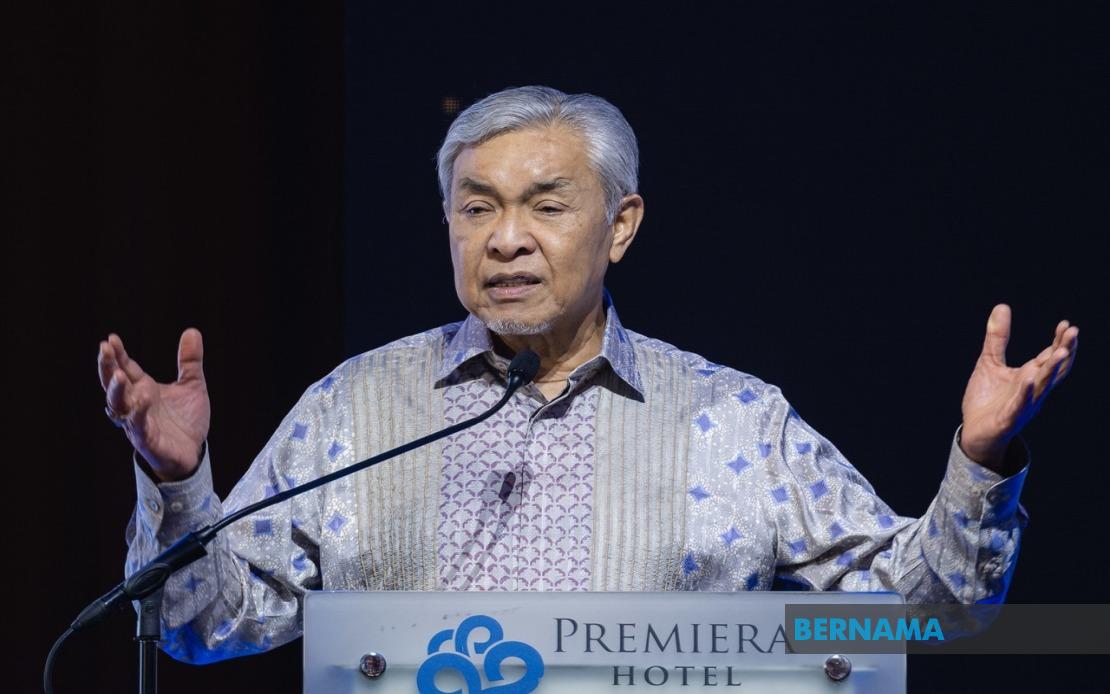
Deputy Prime Minister Datuk Seri Dr Ahmad Zahid Hamidi has signalled that the Malaysian government will seriously consider funding new rural road projects in Sabah and Sarawak during its Budget 2027 deliberations, particularly those aimed at improving connectivity between isolated communities and established urban centres. Speaking after attending the Ministry of Rural and Regional Development's 2025 awards ceremony in Kuala Lumpur, Ahmad Zahid, who also helms the rural development portfolio, made clear that infrastructure gaps remain a priority for the administration despite competing budgetary pressures across multiple sectors.
The Deputy Prime Minister's comments reflect a sustained commitment to narrowing the development divide between Peninsula Malaysia and the two largest East Malaysian states, where geographical and infrastructural challenges have long hindered economic participation and social mobility. For communities in Sabah and Sarawak that currently lack adequate road networks connecting them to provincial capitals and major commercial hubs, such assurances provide tangible hope that years of petitioning government agencies may finally yield results in the coming fiscal cycle.
Ahmad Zahid underscored that the Rural and Regional Development Ministry has maintained road construction as a core function, viewing infrastructure connectivity as foundational to broader development goals. The ministry's remit, he emphasised, centres on bridging gaps between remote settlements and existing population centres, a mission that naturally extends to East Malaysia given its dispersed settlement patterns and vast territories. This institutional focus suggests that rural road projects will compete on relatively level ground with other departmental priorities during budget negotiations, rather than being marginalised as peripheral concerns.
However, Ahmad Zahid tempered enthusiasm by cautioning that any approved projects must navigate the stringent approval processes mandated by the Ministry of Finance and the Public Works Department (JKR), both of which maintain tight oversight over public infrastructure spending. This bureaucratic reality means that even budget allocation does not guarantee swift implementation, as detailed design, environmental assessments, and tendering procedures can extend project timelines substantially. The rural communities awaiting connectivity improvements must therefore expect a lengthy pathway from budgetary approval to ground breaking.
The Deputy Prime Minister indicated that the Ministry of Rural and Regional Development will develop comprehensive project proposals following consultation with stakeholders, suggesting that a structured engagement process will precede any formal budget submissions. This methodical approach, whilst potentially time-consuming, aims to ensure that approved projects genuinely address the most pressing connectivity deficits rather than responding to ad hoc political pressure. The consultation phase will likely involve state governments, local authorities, and community representatives across both Sabah and Sarawak.
Beyond the immediate question of rural roads, Ahmad Zahid articulated a broader philosophical reorientation for his ministry, calling for what he termed a "new discipline" in programme management. This framework demands that the Rural and Regional Development Ministry subject all initiatives to rigorous impact assessment, discontinuing underperforming schemes whilst accelerating those demonstrating tangible benefits to target populations. Such accountability-focused governance, if genuinely implemented, could significantly improve the ministry's effectiveness and public trust in its decision-making processes.
The Deputy Prime Minister's vision extends beyond mere infrastructure creation, encompassing rural development as an integrated ecosystem designed to generate sustainable livelihoods and employment prospects. This conceptual shift acknowledges that roads alone, whilst necessary, prove insufficient without complementary investments in productive capacity, market linkages, and skills development. For Sabah and Sarawak specifically, this holistic approach suggests that rural road funding may be accompanied by initiatives supporting agricultural value chains, small business development, and digital connectivity.
Ahmad Zahid also addressed the broader challenge of public service reform, arguing that the transition from analogue to digital administration must be accompanied by fundamental shifts in institutional mindset and decision-making culture. Civil servants managing rural development, he contended, must embrace innovation, maintain rigorous personal and professional integrity, and demonstrate courage in implementing necessary changes. This emphasis on cultural transformation indicates recognition that bureaucratic structures themselves often impede rural development progress, regardless of funding availability.
For Malaysian policymakers and East Malaysian stakeholders, the Deputy Prime Minister's remarks signal that rural infrastructure remains on the government's agenda despite competing priorities ranging from economic transformation to urban development. The explicit mention of Sabah and Sarawak, combined with the commitment to evaluate Budget 2027 proposals, represents a meaningful political commitment, though not an unconditional guarantee of funding. Communities and state governments should accordingly prepare detailed project proposals during the coming months to maximise the likelihood of inclusion in next year's budget allocation.
The implications for Southeast Asian regional development are also noteworthy, as improved rural connectivity in Malaysian East Malaysia could facilitate cross-border trade and people-to-people linkages with Indonesian and Bruneian counterparts. Enhanced infrastructure networks often generate spillover benefits extending beyond national borders, particularly in relatively integrated regional economies. Stakeholders monitoring Malaysia's rural development trajectory should view the Budget 2027 process as a crucial juncture determining whether the government prioritises equity-focused infrastructure investment or allows rural development to slide further down the policy agenda.

