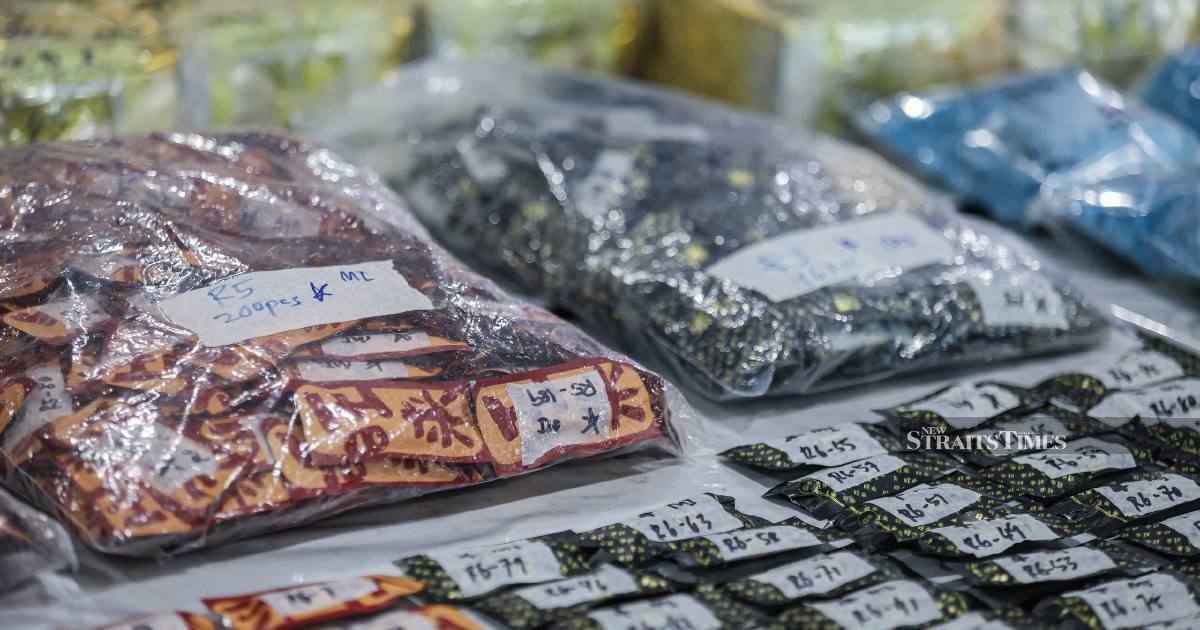
Two brothers face serious drug trafficking charges following their arrest by the Malaysian Maritime Enforcement Agency (MMEA) during an operation conducted from Johor Baru on Sunday. The men allegedly endeavoured to transport narcotics valued in excess of RM6.85 million across territorial waters toward a neighbouring nation, prompting swift intervention by maritime authorities patrolling Malaysian waters.
The seizure represents a significant enforcement success in the ongoing battle against organised drug smuggling networks operating in Southeast Asia. The MMEA, which oversees maritime security and law enforcement operations across Malaysian waters, detected suspicious activity that led to the interception of the vessel and subsequent arrests. The coordinated response reflects strengthened border security efforts aimed at disrupting trafficking routes that frequently exploit the region's coastal geography and maritime accessibility.
The contraband material has been identified as 'Piu Piu', a designation that signals the emergence of a previously undocumented or lesser-known synthetic substance entering regional drug markets. The naming convention suggests either a novel chemical variant or a colloquial street designation for a dangerous compound, underlining the dynamic nature of illicit drug production and distribution networks. The appearance of unfamiliar drug categories complicates enforcement efforts, requiring constant adaptation by authorities to identify, classify, and combat newly synthesised substances circulating through trafficking chains.
The monetary value attached to the seized shipment—exceeding RM6.85 million—provides insight into the substantial profit margins that drive international drug trafficking operations. These financial incentives fuel increasingly sophisticated smuggling methods and justify the investment in specialised transportation infrastructure and personnel. For traffickers willing to risk severe legal penalties, the economics of large-scale drug movement across borders remain compelling, particularly when targeting markets with high demand and substantial purchasing power.
The maritime context of this operation underscores a persistent vulnerability in regional border security. Southeast Asia's extensive coastlines, numerous islands, and busy shipping lanes create ideal conditions for clandestine operations. Traffickers routinely exploit the challenge faced by authorities in monitoring vast ocean expanses, using small vessels, fishing boats, or legitimate commercial shipping to transport contraband across international boundaries. The MMEA's interception capability demonstrates active monitoring, yet the sheer volume of maritime traffic ensures that detection remains an ongoing challenge requiring substantial resources and intelligence coordination.
The involvement of family members—specifically two brothers—reflects patterns commonly observed in organised trafficking networks. Familial relationships often provide the trust and operational cohesion necessary for managing high-value contraband movements. Criminals frequently rely on kinship bonds to ensure loyalty and minimise the risk of law enforcement infiltration or informant betrayal, making family-based trafficking cells resilient operational units that complicate investigation and dismantling efforts.
The arrest occurs within a broader context of Malaysia's intensified focus on maritime law enforcement and border security. The MMEA has expanded operations and capabilities in recent years, reflecting growing recognition of the maritime dimension of transnational crime. Enhanced patrols, improved coordination with neighbouring countries, and investment in detection technology have contributed to increased seizures, though trafficking networks continuously adapt their tactics to circumvent enforcement mechanisms.
For Malaysia and the wider Southeast Asian region, the emergence of new drug varieties presents complex challenges spanning health, public safety, and international cooperation. Each novel substance requires rapid assessment of its pharmacological properties, addiction potential, and public health implications. The appearance of 'Piu Piu' will necessitate swift analysis by regional drug monitoring agencies and health authorities to understand its characteristics and develop appropriate regulatory and educational responses.
The seizure also highlights the necessity for cross-border cooperation among Southeast Asian law enforcement agencies. Drug trafficking networks operate without regard to national boundaries, routinely employing routes that traverse multiple jurisdictions. Effective interdiction requires information sharing, coordinated operations, and harmonised legal frameworks. The success of this particular operation likely benefited from intelligence inputs and operational support involving multiple regional partners committed to disrupting trafficking corridors.
The prosecution of the arrested brothers will proceed through Malaysia's judicial system, where drug trafficking offences carry substantial penalties reflective of the severity with which authorities treat transnational narcotics crimes. Successful convictions serve both as punishment and deterrent, signalling to potential traffickers that maritime borders are monitored and enforcement carries serious consequences. However, the fundamental economics and demand dynamics driving the trade suggest that disruption of individual operations, while important, represents one component of a broader strategic challenge requiring sustained investment, international cooperation, and demand-reduction initiatives.

