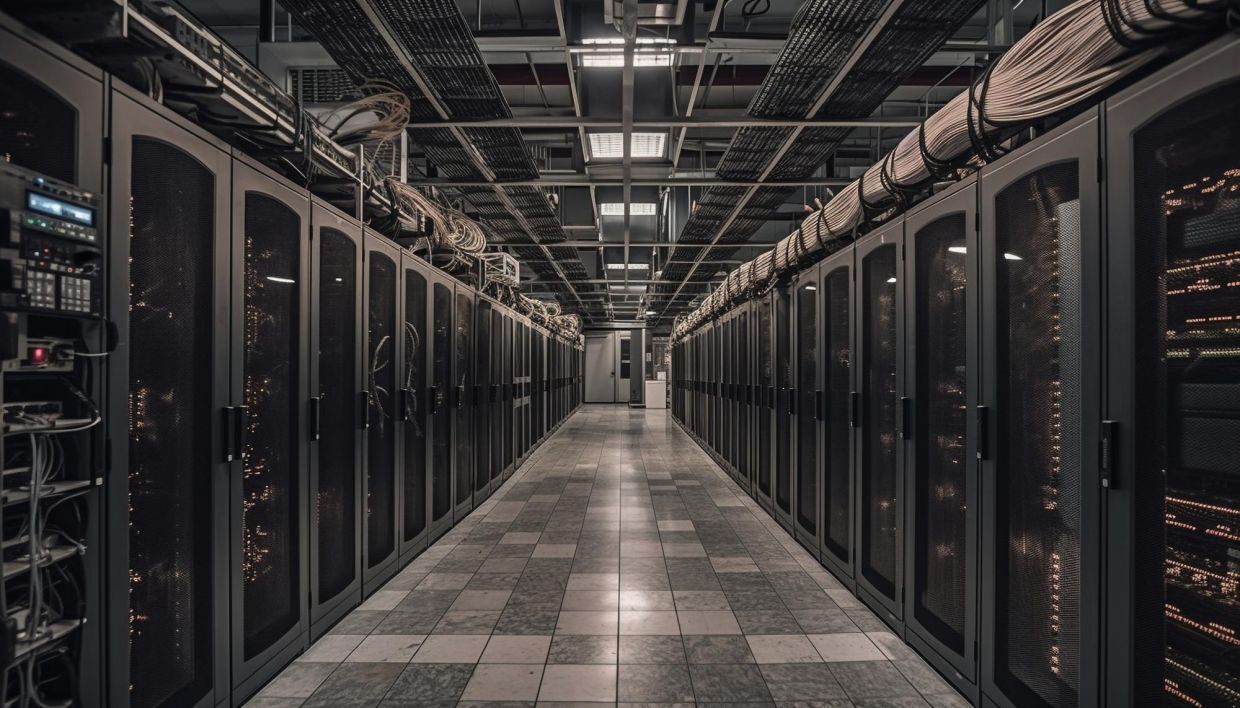
New York has become the first American state to impose a statewide pause on large data centre construction, marking an unprecedented regulatory intervention in an industry experiencing explosive growth driven by artificial intelligence development. The moratorium, which took effect immediately, targets facilities capable of consuming at least 50 megawatts of electricity—a threshold sufficient to power tens of thousands of residential homes—and reflects Governor Kathy Hochul's determination to develop comprehensive regulatory frameworks before permitting further expansion in what has become one of the nation's fastest-growing infrastructure sectors.
Hochul framed the decision as essential stewardship, arguing that New York's long history as an innovation hub must be balanced against the legitimate concerns of residents and communities. She emphasised that while the state welcomes technological advancement and the economic investment it generates, the state bears responsibility for ensuring that New Yorkers themselves derive tangible benefits rather than bearing disproportionate costs. Her administration has signalled intent to pursue additional legislative action, including repealing existing sales tax exemptions that have advantaged massive data centre operators, fundamentally rebalancing the economic incentives in play.
The environmental and infrastructural case against unchecked data centre expansion has grown increasingly compelling. These facilities consume vast quantities of electricity, creating potential strain on local power grids and contributing to elevated utility bills for surrounding communities. Beyond electrical demands, data centres require substantial water resources for cooling systems, generate considerable noise pollution, and typically create far fewer permanent jobs than their physical footprint and capital investment might suggest. Critics contend that communities bear genuine costs—degraded infrastructure, environmental degradation, and fiscal pressures—while capturing minimal economic benefit relative to the corporations profiting from these installations.
The political dynamics surrounding data centre placement have shifted markedly across the United States. Although governors and national policymakers have traditionally embraced technology sector development enthusiastically, recognising the prestige and investment opportunities associated with hosting major tech infrastructure, they now encounter intensifying grassroots opposition. Voters increasingly resist having such facilities sited near their communities, transforming what was once a welcomed economic development opportunity into a contested political issue. This constituent pressure has forced elected officials to recalibrate their positions, even when philosophically sympathetic to technological advancement.
While New York's statewide moratorium represents a significant threshold, the regulatory landscape elsewhere remains fragmented. Dozens of American cities and counties have implemented local restrictions on data centre development, but these scattered approaches lack the comprehensive force of statewide action. However, New York's move follows a more cautious path than some other states have attempted. The state legislature passed its own moratorium bill in June, which would have imposed a stricter 20-megawatt threshold, capturing a broader range of facilities. Hochul declined to sign that legislation, directing her office to signal that the bill required substantial additional refinement before she could support it—suggesting that the governor's approach balances environmental and community concerns against economic considerations rather more carefully than some hardline critics might prefer.
The political economy of data centre regulation became starkly apparent in Maine, where Democratic Governor Janet Mills vetoed a similar moratorium in April. Mills reasoned that blocking data centre construction would have prevented a proposed facility from locating in a community that had suffered severe economic trauma following a major mill closure. Her decision underscores the genuine tension between environmental protection and economic revitalisation in communities experiencing industrial decline—a consideration particularly relevant for regions across the American Northeast and Midwest where traditional manufacturing has contracted dramatically.
Proponents of data centre expansion advance compelling counterarguments, particularly regarding international competitiveness. Tech industry representatives contend that blocking construction undermines domestic job growth and strategic positioning relative to China in the intensifying global competition for artificial intelligence dominance. They argue that the United States risks surrendering technological leadership and the geopolitical advantages flowing from it if regulatory constraints prevent American companies from building the computational infrastructure that AI development demands. This framing appeals to policymakers concerned about national competitiveness, though it has struggled to overcome constituent-level opposition in many jurisdictions.
The scale of investment and construction activity in the data centre sector underscores why regulatory attention has intensified. American technology companies have redirected tens of billions of dollars toward data centre infrastructure expansion in recent years, reflecting surging demand for computational capacity. This capital flood has accelerated facility proliferation, overwhelming existing regulatory capacity in many jurisdictions and prompting the reactive regulatory responses now taking shape. The speed of expansion has left many communities and policymakers struggling to develop coherent responses to facilities appearing suddenly in their regions.
The environmental footprint of existing data centre operations is sobering. A June study by Allianz Trade documented that data centres emitted 286 million tonnes of carbon dioxide in 2025, contributing significantly to global greenhouse gas inventories. More concerning for future emissions trajectories, artificial intelligence already accounts for between 15 and 20 percent of electricity consumption across data centre operations globally, with projections suggesting this share could climb to 40 percent by 2030. This escalating demand for computational power driven by AI development creates a cascading environmental challenge that regulatory intervention must address—not merely to constrain current impacts but to prevent far more severe environmental consequences materialising within coming years.
For Southeast Asian readers and policymakers, New York's moratorium carries instructive implications. As technology companies explore global alternatives for data centre expansion, nations throughout the region increasingly become targets for investment by firms seeking jurisdictions with less restrictive regulatory environments. The precedent established by New York suggests that jurisdictions that fail to develop anticipatory regulatory frameworks risk attracting data centres without adequate environmental protections or community benefit agreements. Regional governments considering data centre proposals should recognise that the American experience demonstrates both the genuine tensions between technological development and environmental stewardship, and the political costs of permitting facilities without adequate public consultation or environmental safeguards. Establishing robust regulatory standards now, rather than reactively restricting operations already underway, represents more effective policy.

