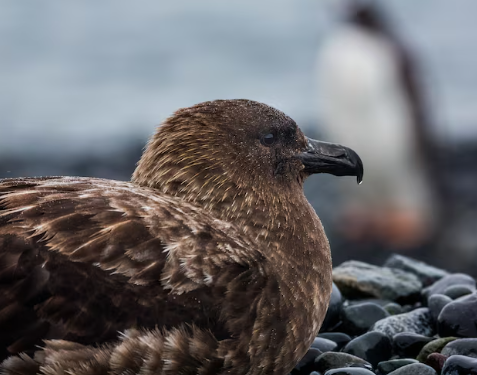
New Zealand has joined the growing list of countries grappling with H5N1 bird flu after Biosecurity Minister Andrew Hoggard announced on Wednesday that a brown skua seabird discovered on a Wellington beach tested positive for the highly pathogenic virus. The detection marks a significant epidemiological milestone for the South Pacific nation, which has remained vigilant against the spread of this devastating disease that has wreaked havoc across multiple continents. The positive case arrives just weeks after Australia reported its first H5N1 detections, underscoring how rapidly the virus continues its relentless global march and the interconnected vulnerability of regional ecosystems across Oceania.
The confirmed case comes amid an escalating international crisis that has unfolded since 2021, when H5N1 began devastating wild bird populations and subsequently spreading to domesticated poultry and livestock operations worldwide. The strain has demonstrated alarming adaptability, infecting mammal species including dairy cattle and causing illnesses among farmworkers in various countries. By the time New Zealand's case was confirmed, neighbouring Australia had already logged 14 confirmed or suspected H5N1 detections, suggesting that the virus's arrival in the region was not a matter of if but when. The proximity of these detections raises legitimate concerns about continued transmission pathways between the two nations, particularly given the migratory patterns of seabirds that traverse the Tasman Sea.
Hoggard sought to reassure the public that the current situation remains contained, noting that no evidence of widespread wildlife mortality or inter-avian transmission has emerged within New Zealand's borders so far. Crucially, domestic poultry operations have remained clear of infection, a fact that represents the critical distinction between a concerning detection and a full-scale agricultural crisis. The minister indicated that New Zealand anticipates its experience will follow a pattern similar to Australia's, suggesting that aggressive early containment measures and heightened biosecurity protocols may prevent the rapid dissemination scenario that has played out in other nations. However, the relatively small number of cases in Australia should not breed complacency, as surveillance systems remain essential to detect any uptick in transmission.
New Zealand's preparation for this moment reflects years of coordinated planning between government agencies and the poultry industry. Officials had developed comprehensive biosecurity and resilience frameworks before any domestic case emerged, positioning the nation to respond swiftly once H5N1 inevitably arrived. These preemptive strategies demonstrate how countries can leverage time and resources to establish protocols that minimise economic damage and wildlife casualties. The coordination between public health authorities and agricultural stakeholders has created a more cohesive response structure than exists in many nations still scrambling to establish basic containment procedures. Such preparedness offers lessons for neighbouring Southeast Asian countries that remain in the pre-detection phase of their own H5N1 preparations.
Yet New Zealand faces a uniquely consequential challenge that distinguishes its situation from temperate agricultural nations that experienced H5N1 outbreaks. The country's endemic bird species represent some of Earth's most remarkable and irreplaceable biodiversity, evolved across millions of years in isolation from mammalian predators. This evolutionary trajectory produced extraordinary adaptations, including multiple flightless species such as the takahe and kakapo, alongside ground-nesting birds that lack the behavioural defences and immunological experience that birds in predator-rich continents developed. The absence of native land mammals left these species exquisitely vulnerable to any novel pathogen that might arrive, a vulnerability that colonial-era introductions of rats, stoats, and feral cats have already catastrophically demonstrated. The H5N1 threat therefore represents an existential danger to species that have already been pushed to the precipice of extinction through habitat destruction and invasive species predation.
Recognising this acute peril, New Zealand authorities have implemented an emergency vaccination initiative targeting the genetic foundations of five critically endangered species. The programme focuses on protecting 300 breeding birds from these populations, an approach that acknowledges the biological reality that complete prevention of infection across entire wild populations is neither feasible nor necessary. Instead, the strategy concentrates resources on safeguarding genetically representative core groups whose survival can enable future population recovery even if the wider wild population suffers significant losses. This triage approach reflects sobering pragmatism about what remains possible when a novel pathogen threatens species already clinging to existence through intensive management programmes.
Brett Gartrell, a wildlife health professor at Massey University, articulated the profound anxiety pervading conservation circles as H5N1 looms over New Zealand's irreplaceable fauna. Gartrell emphasised that New Zealand's birds possess no evolutionary preparation for pathogens of this magnitude, having never encountered anything remotely comparable during their long isolation. Unlike bird populations worldwide that have some historical exposure to avian influenza, even if generally less severe strains, New Zealand's endemic species essentially confront H5N1 as an entirely novel threat without established population-level immunity or behavioural adaptations that might limit transmission. The vaccination programme, while representing the most ambitious intervention yet attempted for New Zealand's endangered birds, cannot guarantee complete protection if infection spreads with the speed it has demonstrated in other regions.
The vaccination initiative itself carries inherent limitations that conservationists must acknowledge candidly. Even as authorities vaccinate carefully selected breeding birds, the broader wild populations remain vulnerable, particularly if H5N1 establishes transmission networks among wild seabirds and wading birds that frequent New Zealand's coastlines and wetlands. The virus could potentially spread into remote forest sanctuaries where endangered land birds shelter, locations where detection and intervention would prove extraordinarily challenging. Furthermore, the vaccination programme requires ongoing monitoring of efficacy and potential emergence of vaccine-resistant viral variants, an adaptive management challenge that extends far beyond the initial injection campaigns. The sustainability of vaccination efforts depends upon continued political will and funding allocation at a time when many governments are already stretched managing human health responses to this and other crises.
For the broader Southeast Asian region, New Zealand's predicament carries important cautionary implications about pandemic preparedness and biodiversity conservation. Nations like Malaysia, Indonesia, and Thailand harbour exceptional concentrations of endemic bird species, many already threatened by habitat loss, and face similar risks if H5N1 becomes established in wild bird populations. The proactive vaccination approach now being tested in New Zealand may offer a model for protecting globally significant bird species in Southeast Asia, though implementation would require unprecedented cooperation between national governments and international conservation organisations. The economic and ecological costs of allowing H5N1 to devastate endemic bird populations in tropical biodiversity hotspots could dwarf the agricultural losses that have defined the pandemic response in temperate nations.
As New Zealand advances its vaccination programme and maintains heightened surveillance, the coming months will reveal whether early intervention can prevent the catastrophic scenario that wildlife experts fear. The single positive case in a migratory seabird represents an early warning that demands sustained vigilance and adaptive management. Australia's experience suggests that active transmission may remain sporadic if biosecurity measures and monitoring remain rigorous, offering grounds for measured hope. Yet the fundamental vulnerability of New Zealand's unique bird fauna to a pathogen for which it has evolved no defences means that success cannot be measured by the relatively low case counts now observed in Australia and New Zealand, but rather by whether the endemic species at greatest risk remain extant to carry their singular evolutionary heritage into future generations.

