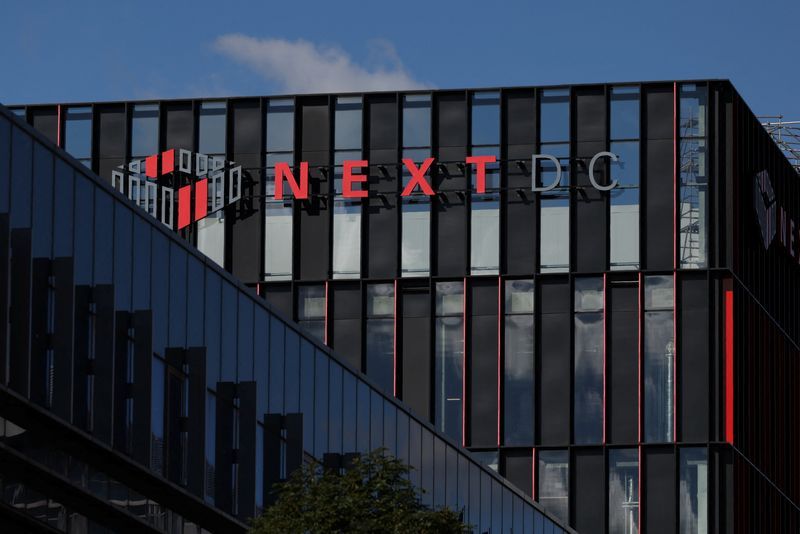
Australia's major data centre operator NextDC has disclosed that both its water consumption and electricity usage have climbed during the past financial year, even as the company delivered stronger-than-expected profits. The findings arrive at a critical juncture when governments across the region are grappling with whether to welcome or restrict the explosive growth of data centre infrastructure fuelled by artificial intelligence investment. The efficiency deterioration, occurring for three consecutive years running, highlights the tension between the economic benefits of hosting computing capacity and the physical constraints facing utilities and communities.
Water usage at NextDC's facilities deteriorated meaningfully, with the company's water usage effectiveness ratio reaching 2.40 litres per kilowatt-hour in the twelve months ending June 2024, compared with 2.25 litres the previous year. Simultaneously, the power usage effectiveness metric, which gauges the proportion of electricity consumed by cooling systems and auxiliary infrastructure relative to actual computational work, worsened to 1.49 from 1.44. Both indicators moving in the wrong direction suggests that the company's operational efficiency has not kept pace with rapid capacity expansion, a pattern that may signal broader challenges facing the sector as it races to meet burgeoning demand.
NextDC attributed the escalation partly to newly installed computing infrastructure operating its cooling apparatus at full capacity while still ramping up IT systems to handle actual computing workloads. Additionally, the company undertook substantial reconciliation work on its water consumption data, uncovering previously undetected leaks and discrepancies between internal monitoring systems and utility meter readings. In its sustainability documentation released alongside financial results, the company emphasised that portfolio expansion and intensified activity across operational, development and commissioning projects all contributed to heightened resource consumption during the reporting period. The findings represent a significant finding because they underscore the gap between theoretical efficiency and real-world performance when infrastructure scales rapidly.
These efficiency ratios carry outsized significance beyond NextDC's boardroom because lawmakers, regulators and voters increasingly view them as reliable indicators of data centre operations' impact on electricity grids and freshwater supplies. In many parts of Australia and Southeast Asia, where water scarcity represents a genuine constraint on economic development, the prospect of data centre proliferation triggers genuine anxiety. The metrics have become political lightning rods, discussed not merely in technical forums but in parliamentary hearings and community forums where residents worry about competition for limited water resources and rising electricity costs.
Global regulatory momentum is shifting decidedly toward stricter data centre governance. An expanding roster of governments, regional authorities and municipal councils worldwide are implementing moratoria, tightening restrictions or outright prohibiting new data centre developments. The underlying concerns motivating these responses encompass surging electricity tariffs, dwindling water supplies, competition for valuable land, and broader community anxieties about the costs and benefits of hosting such infrastructure. Several European jurisdictions have already implemented or contemplated stringent curbs, and comparable sentiment is emerging in parts of North America and Asia-Pacific.
Australia's federal government is currently developing a comprehensive regulatory framework intended to establish mandatory, uniform national standards governing data centre operations. These standards would establish minimum performance requirements regarding energy and water consumption, while also regulating site selection criteria to direct development toward areas with adequate infrastructure. In a particularly stringent move, Canberra recently signalled its intention to require that new data centre facilities construct dedicated renewable energy generation capacity rather than purchasing electricity from the existing grid. Such proposals, if enacted, would fundamentally alter the economics of data centre development and operating and could reshape investment decisions across the region.
Despite the deteriorating efficiency metrics, NextDC delivered financial results that exceeded market expectations. The company's revenue expanded by 16 percent while it achieved a net profit of A$82.1 million (approximately US$59.14 million) in the year ending June 2024, reversing a A$60.5 million loss recorded twelve months prior. The turnaround benefited substantially from an accounting modification that recognised gains arising from revaluation of the company's substantial property portfolio. When examining underlying operational performance, earnings before interest, taxation, depreciation and amortisation climbed 15 percent to A$248.8 million, surpassing the consensus forecasts tracked by analyst consensus platforms including Visible Alpha. Market sentiment appeared positive, with NextDC shares climbing 3.3 percent by mid-session trading on Friday following the announcement.
The disconnect between improved financial metrics and deteriorating environmental indicators captures a fundamental challenge facing data centre operators and policymakers. NextDC's competitors, including Blackstone-controlled AirTrunk and Infratil-backed CDC, confront identical pressures balancing investor expectations for growth and profitability against mounting environmental and political scrutiny. For Southeast Asian economies considering whether to welcome data centre investment, NextDC's experience offers instructive lessons about the true resource costs associated with hosting global computing infrastructure. The company's situation suggests that explosive growth in data centre capacity can generate immediate economic gains while accumulating environmental liabilities that may prove costly to remedy subsequently.
The implications for Malaysia and the broader Southeast Asian region warrant careful consideration. As technology companies and cloud providers expand their regional infrastructure footprint to service growing Asian demand, regulatory frameworks governing water usage, energy consumption and grid impact remain underdeveloped compared to Australia's emerging standards. Should the Australian model gain traction internationally, Malaysian authorities may face pressure to implement comparable efficiency requirements and renewable energy mandates for data centre operators. Conversely, should regulatory burdens prove excessive, such requirements could deter data centre investment, redirecting capital toward jurisdictions with lighter-touch oversight. The NextDC disclosure suggests that the data centre sustainability question represents not a peripheral policy matter but rather a central challenge that will shape technology infrastructure development patterns across the Asia-Pacific for years to come.

