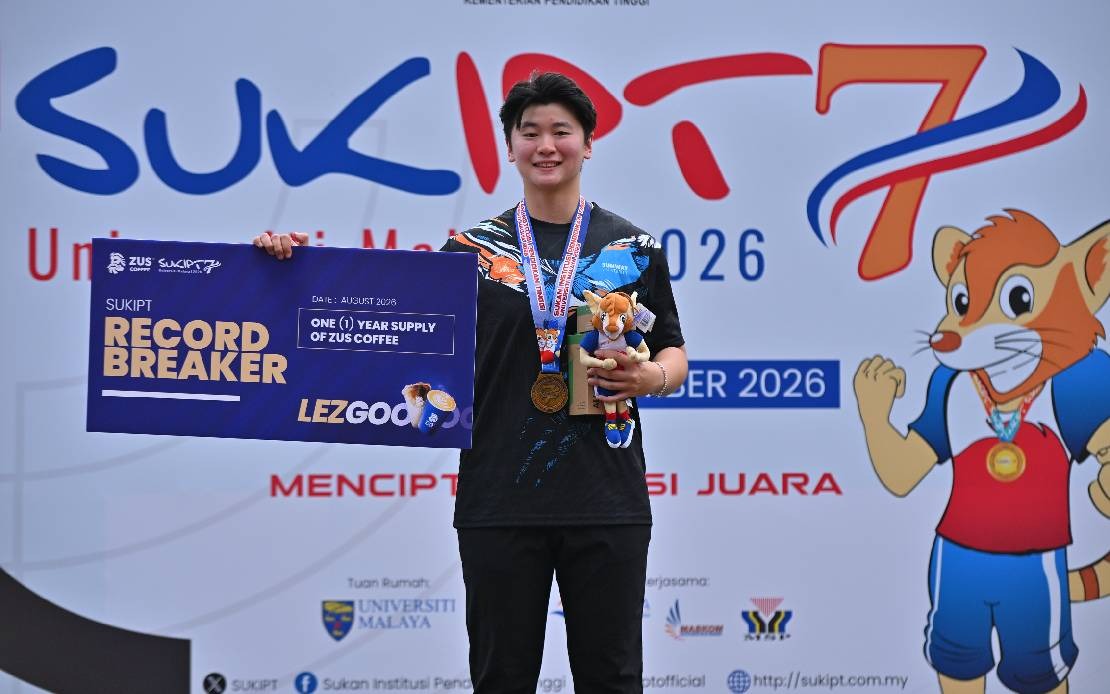
Javelin thrower Ng Jing Xuan delivered a triumphant performance at the 2026 Higher Education Institutions Sports Games, establishing a new meet record that underscores Malaysia's growing strength in women's track and field disciplines. Competing at the UM Arena in Universiti Malaya on August 31, the 22-year-old Sunway University representative hurled the javelin 46.92 meters—a distance that decisively surpassed the previous championship benchmark and provided a fitting patriotic flourish to the National Day occasion.
The achievement carries particular significance as it erases a record that had stood for a full decade. The earlier mark of 44.41 meters was established during the 2016 iteration of SUKIPT by Nur Fatin Adibah Suharman representing Universiti Malaysia Perlis. This ten-year gap between record-setting performances reflects both the competitive depth that has developed within Malaysian university athletics and the trajectory of Jing Xuan's progression as she has matured into a prominent figure in the sport at the collegiate and national levels.
Despite the evident success, Jing Xuan's reflections on her performance revealed the mentality of an athlete constantly pushing toward higher ambitions. She candidly acknowledged that her primary objective for the games extended beyond the meet record itself. The 52.17-meter national record, which she established previously, remained her target, and her failure to approach that distance left her somewhat deflated despite the tangible medal success. This reveals a common dynamic among elite competitors—the gap between gold medal achievements and truly exceptional performances that transcend competition-specific benchmarks.
The athlete attributed her mixed feelings to a convergence of factors that likely prevented her from reaching her full potential on the day. A scheduling adjustment implemented shortly before competition, which shifted the women's javelin final from an afternoon slot to the morning, proved disruptive to her preparation rhythm. Such logistical changes, while often necessary for overall tournament management, can meaningfully impact performance, particularly in technical throwing events where athlete routine and environmental conditions influence outcomes.
Jing Xuan emphasized that she had completed an intensive month of specialized training immediately following her participation in the Asian U23 Athletics Championships. This concentrated preparation period typically represents a critical window where athletes refine technique, build competition-specific strength, and elevate their physiological readiness. Her disappointment stemmed partly from a perception that her training sessions had suggested greater capacity than what manifested on competition day, a common frustration when multiple variables conspire to prevent the realization of prepared potential.
The competitive field at SUKIPT demonstrated the emerging depth of javelin talent across Malaysia's university system. Farisha Athirah Wai from Universiti Pendidikan Sultan Idris claimed the silver medal with a respectable 36.21-meter performance, while Tai Yu Tian of Universiti Putra Malaysia completed the podium with a bronze-medal throw of 32.74 meters. The substantial gap between Jing Xuan's winning distance and the second-place finisher illustrated her current dominance within the collegiate athletics landscape, yet it also underscored areas where competitors continue developing their capabilities.
Jing Xuan's forward-looking perspective demonstrates professional maturity beyond her years. Rather than dwelling extensively on the missed national record opportunity, she has already refocused on upcoming milestones that carry even greater weight for Malaysian athletics. The ASEAN University Games scheduled for December represent an important regional stage where she will compete against leading throwers from across Southeast Asia. Beyond that lies the SEA Games in the following year—an event where medal performances could elevate her profile significantly and contribute to Malaysia's medal tally in a marquee multi-sport championship.
The timing of the SUKIPT competition during National Day weekend adds cultural resonance to Jing Xuan's achievement. For Malaysian athletes and observers, records established during these patriotic occasions carry additional symbolic weight. Breaking a decade-old benchmark while competing for one's university and nation creates a narrative that extends beyond pure athletic statistics, touching on themes of generational progress and the advancement of Malaysian sporting capability.
Jing Xuan's trajectory within women's javelin reflects broader patterns within Malaysian athletics, where young female competitors have increasingly moved into prominent positions across multiple disciplines. The improvement in standards evident from comparing the 44.41-meter benchmark from 2016 to the current 46.92-meter mark indicates that consistent investment in grassroots development, coaching expertise, and competitive opportunities continues producing measurable results. For regional observers, these improvements suggest Malaysia maintains competitive capacity across track and field events at international forums.
Looking ahead, the December ASEAN University Games will provide valuable context for assessing Jing Xuan's standing relative to regional counterparts. The exposure to international competition at that caliber typically offers insights into where athletes rank within the wider Southeast Asian context and what gaps might exist between current performance levels and those of leading athletes from larger regional nations. Success at that competition would substantially strengthen her credentials heading into SEA Games preparation.
The broader significance of this SUKIPT achievement extends to Malaysian university athletics more generally. As the national higher education championships continue attracting increasingly talented competitors and drawing greater attention from sports administrators and media, the records set during these games function as benchmarks for future generations. Jing Xuan's mark now becomes the standard against which subsequent javelin competitors will measure themselves, potentially spurring others to accelerate their own development trajectories.

