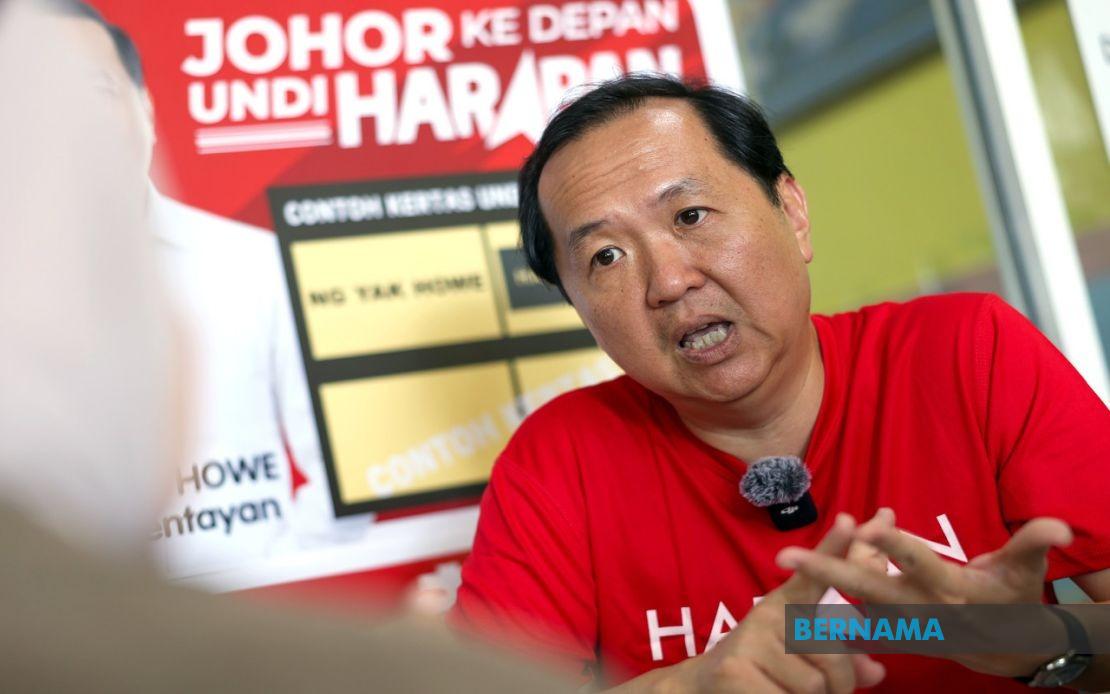
Muar's town centre faces a familiar challenge confronting many Malaysian cities: the slow drain of vitality as residents and businesses migrate outward to sprawling suburban developments. Pakatan Harapan's Ng Yak Howe, the incumbent assemblyman for Bentayan, has positioned the revival of this historic commercial hub as the centrepiece of his campaign ahead of the July 11 Johor state election, recognising that the constituency encompasses more than half of the town centre itself and bears direct responsibility for its fortunes.
The problem afflicting Muar town centre reflects broader urbanisation patterns across Malaysia, where older commercial districts struggle to compete with newer shopping complexes and residential townships on the periphery. Ng's diagnosis is precise: the area experiences a bipolar existence, bustling with daytime commercial traffic but emptying substantially once business hours conclude. This hollowing-out effect leaves approximately 18 per cent of commercial premises vacant and underutilised, a visible marker of economic stagnation that extends beyond mere statistics to affect the psychological vitality of the community itself.
Ng's approach combines grassroots engagement with targeted economic stimulus. During his recent walkabout through Muar town, he has been canvassing traders and residents directly, building consensus around the need for intervention. This direct consultation method signals recognition that town centre revival cannot be imposed top-down but requires buy-in from the business community whose survival depends on increasing customer foot traffic and spending.
Working alongside Bakri Member of Parliament Tan Hong Pin, Ng has championed consumer-focused initiatives including cash voucher schemes and lucky draw campaigns designed to incentivise spending at local establishments. These measures, while modest in scope, represent a practical recognition that reversing urban decline often requires temporary stimulus to restore consumer confidence and rebuild shopping habits. Such initiatives have become increasingly common in Malaysian towns seeking to compete with larger commercial centres, offering both immediate relief to struggling traders and psychological reassurance that local leadership remains engaged with their struggles.
Ng's personal background lends credibility to his economic revitalisation narrative. A former quality assurance engineer with over a decade of industry experience, he brings technical expertise and systematic thinking to governance challenges. His 25 years in politics provide the institutional knowledge necessary to navigate bureaucratic processes and mobilise government resources. As a Johor DAP committee member, he sits within the party's state-level structures, potentially enhancing his ability to access resources and coordinate with party colleagues across multiple constituencies.
The Bentayan seat itself represents a substantial electoral battleground, with 34,205 registered voters determining the outcome of a straight fight between Ng and Barisan Nasional candidate Chua Lee Huat. The constituency's composition—dominated by town centre concerns but encompassing both urban core and suburban spillover areas—creates a complex political landscape where competing visions of development appeal to different constituencies within the electorate. Younger voters, particularly those frustrated by limited urban entertainment and retail options, may respond to Ng's vision of a revitalised town centre offering walkable, authentic commercial experiences.
The broader Johor state election context amplifies the significance of individual contests like Bentayan. With 172 candidates contesting 16 state seats, and early voting scheduled for July 7 before main polling on July 11, the election will test voter appetite for continuity versus change. For Pakatan Harapan, retaining seats held by established incumbents like Ng becomes crucial for maintaining state-level momentum and demonstrating effective governance in areas under their control.
Muar town centre revival also touches on regional economic development priorities. Johor's economy depends partly on revitalising secondary towns beyond the Klang Valley-Selangor axis, and towns like Muar possess historical commercial importance that modern development patterns have partially eroded. Success in reversing town centre decline offers lessons applicable across Malaysia, where dozens of municipalities face similar pressures.
The effectiveness of Ng's proposed interventions will ultimately depend on whether temporary stimulus measures can catalyse lasting behavioural change among consumers and businesses. Town centre revitalisation typically requires complementary investments in public realm improvements, enhanced accessibility, and perhaps regulatory reforms encouraging residential development above ground-floor commercial spaces—strategies requiring coordination across multiple government levels and agencies. Ng's campaign message emphasises readiness to undertake this broader coordination work, positioning him as a candidate capable of moving beyond campaign rhetoric into sustained implementation.
For Malaysian voters monitoring the Johor election, Bentayan exemplifies how local candidates frame governance around specific community challenges rather than broader political abstractions. Ng's focus on commercial premises, resident migration, and economic vitality grounds his campaign in material concerns affecting daily life. Whether this ground-level approach proves sufficient to overcome BN's traditional organisational advantages in Johor will become clearer as the election approaches, with early voting beginning July 7.

