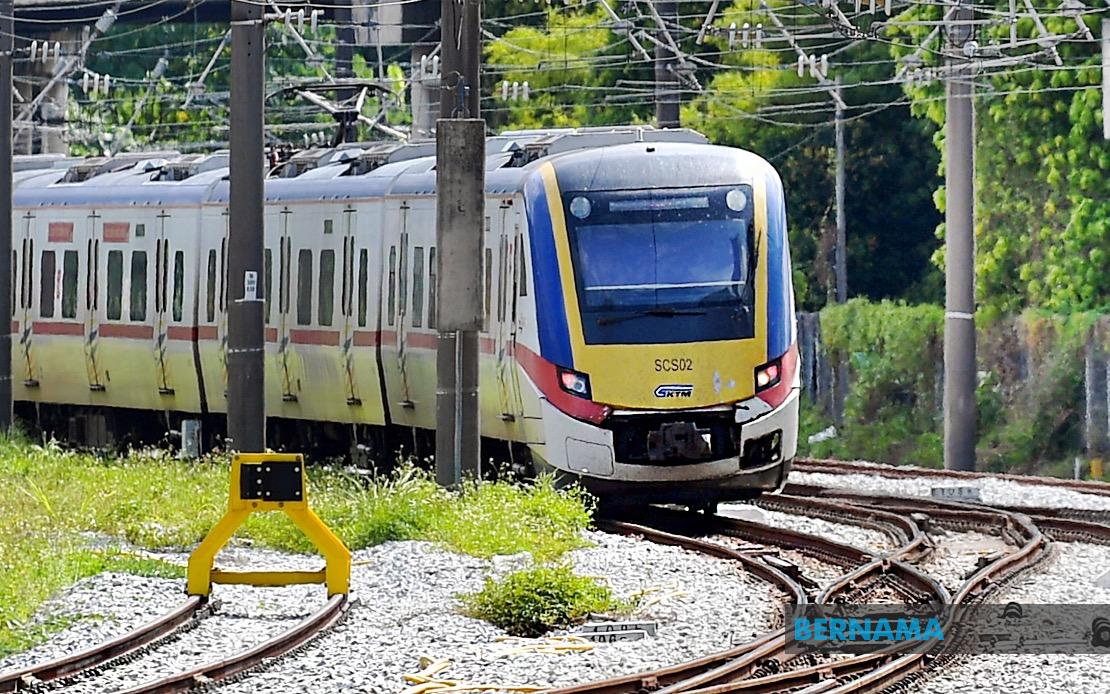
As voters prepare to head home for the Johor state election this Saturday, civil society and transport operators are stepping in to ease the logistical challenges facing Malaysians living outside the state who wish to cast their ballots. An umbrella organisation called Stesen Pemantauan Rakyat is mobilising six free coaches to transport approximately 240 voters, while the country's main railway operator is substantially expanding seat availability on express routes into the southern state. The dual effort underscores both the practical barriers facing distant voters and the determination of key stakeholders to remove friction from democratic participation.
Stesen Pemantauan Rakyat, represented by Yong Shui Wen, is deploying a carefully coordinated network of buses to accommodate voters scattered across Malaysia's largest urban centre and neighbouring Singapore. Four coaches will depart from Kuala Lumpur at 9 pm on Friday evening, while a separate pair will collect passengers from the Sultan Iskandar Building Customs, Immigration and Quarantine Complex on the Johor border at both 9 pm Friday and 9 am Saturday. The buses will fan out across a wide swathe of Johor's heartland, serving districts including Tangkak, Muar, Batu Pahat, Pekan Nanas, Segamat, Labis, Kluang, Ayer Hitam and Kulai, ensuring that voters in multiple constituencies can access the service without undertaking lengthy detours.
What distinguishes this initiative is its track record and scale of uptake. The NGO has sustained this voter transport programme since 2018, demonstrating sustained commitment to addressing a structural challenge in Malaysian elections: the concentration of working-age adults in federal territories and developed centres far from their registration constituencies. Yong reported that demand for the service remains robust, with all available seats already allocated. This speaks to a genuine appetite among diaspora voters to participate despite the costs and inconvenience of travel, suggesting that transport barriers, rather than political apathy, may explain lower turnout rates among non-resident electors.
Keretapi Tanah Melayu Bhd, the national rail operator, has taken an aggressive supply-side response by effectively doubling seating capacity on its premium express services. For the high-volume KL Sentral to JB Sentral corridor, KTMB added 7,560 additional seats between 10 and 12 July, raising total capacity from approximately 7,560 to 15,120 seats on this route. This expansion reflects the operator's confidence in demand and its willingness to incur operational costs to support electoral participation. However, the near-complete sell-through rate—with 12,769 seats, or 84 per cent of capacity, already booked as of early morning on the announcement day—suggests that even this substantial injection of seats may prove insufficient to accommodate all would-be travellers.
The secondary rail route from Gemas to JB Sentral received a similarly dramatic upgrade, with KTMB expanding capacity from 630 to 4,410 seats during the same window. This network extension serves voters from Malaysia's central and eastern regions who might find the KL Sentral route congested. As of the morning the announcement was made, 2,064 of the 4,410 available seats had been booked, representing 47 per cent occupancy and leaving approximately 2,346 seats available. The asymmetry between demand on the two routes hints at demographic concentration and suggests that the KL Sentral corridor, serving the largest population centre within feasible travel distance, remains the principal gateway for returning voters.
The timing of these transport upgrades frames the Johor election as an event of genuine competitive significance. A total of 172 candidates are competing across 56 contested seats in the 16th Johor state assembly election, with 2,727,926 registered voters eligible to participate. In a state where political competition has historically turned on razor-thin margins and coalition mathematics, maximising turnout among voters in diaspora communities—particularly those in Kuala Lumpur—could theoretically influence seat distributions, especially in marginal constituencies. Both transport initiatives appear calibrated to enable maximum accessible participation.
For Malaysian readers, these developments carry broader implications about electoral infrastructure and civic participation. The reliance on civil society and commercial operators to solve transport challenges reflects gaps in formal election management systems. While Elections Commission officials and political parties can advocate and organise, it falls to an NGO and a commercial railway company to address the practical obstacles preventing citizens from voting. This functional division of labour works in this instance, but raises questions about equity: voters with private vehicles, sufficient income for transport, and flexible work arrangements face no such barriers, while lower-income voters in distant states bear disproportionate costs even when such services are offered.
The data from the KTMB Mobile app shows demand far outpacing supply across peak-hour services on Friday and Saturday. Reported ticket availability is depleting rapidly, with the operator advising continuous monitoring of the app. This suggests a potential repeat of previous electoral cycles in which transport capacity limitations, rather than voter willingness, determined final turnout patterns. For voters unable to secure seats on initial booking windows, alternative options—express coaches operated by private firms, shared ride services, or early departure times—become essential contingencies. The concentration of departures around the Friday evening and Saturday morning windows creates natural congestion points.
Regional observers watching this election will note the practical sophistication of Johor's voter transport ecosystem. This southern state, as Malaysia's second-most developed economy and the gateway to Singapore, attracts significant working-age migration. The transport solutions now activated reflect the institutional capacity of state capitals and the organisational maturity of civil society networks. Smaller or more remote Malaysian states might lack equivalent NGO capacity or commercial transport networks capable of responding similarly to election-driven demand. The Johor precedent thus illuminates both best practice and structural inequality within Malaysia's federal system.
The underlying narrative connects to Malaysia's demographic reality: a young, mobile workforce distributed unevenly across the country, yet locked into electoral registration systems based on residential address. Each election cycle in states like Johor forces a reckoning between where citizens live, where they work, and where they can vote. The solutions assembled—NGO buses, expanded rail services—are pragmatic and well-intentioned. Yet they remain temporary patches addressing a recurring structural problem. Whether electoral authorities will institutionalise similar arrangements or advance systemic reforms such as remote voting or postal ballots for registered out-of-state electors remains uncertain.

