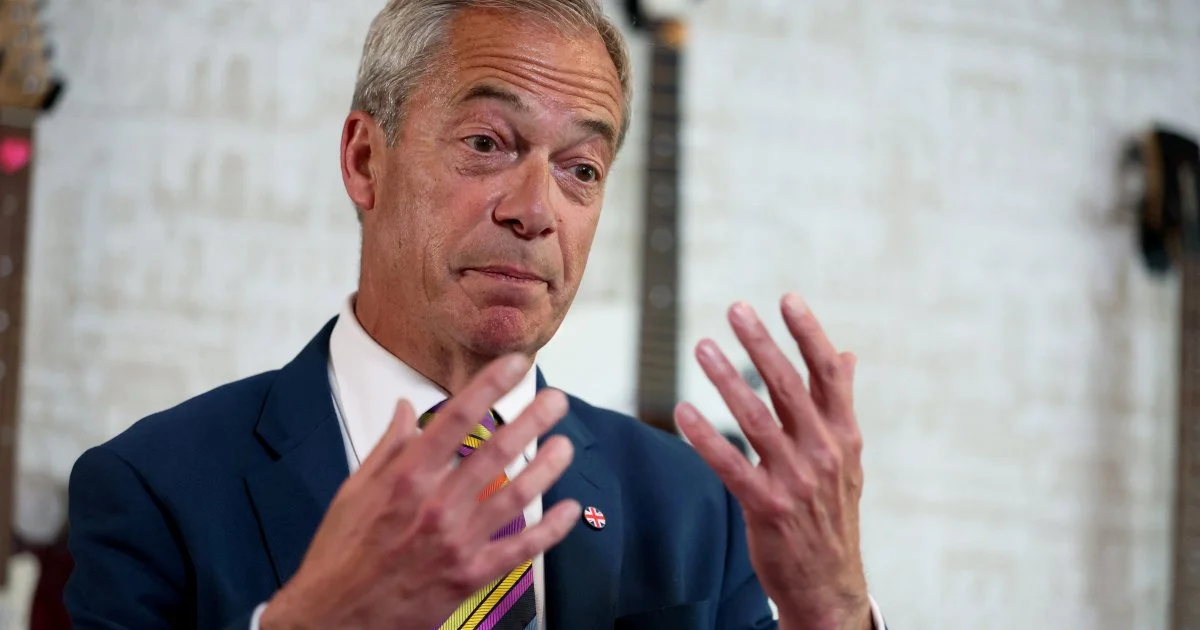
Nigel Farage, the prominent British hard-right politician, faced intensifying ethical questions on Sunday when media allegations emerged that a man with a criminal fraud conviction had underwritten substantial portions of his personal security arrangements and staffing costs prior to his entry into Parliament. The timing of these revelations strikes at a particularly sensitive moment in the political career of the Reform UK leader, who has cultivated a public persona as an anti-establishment outsider critical of traditional political elites.
The reported financial backing from an individual carrying a fraud conviction raises uncomfortable questions about the transparency of Farage's funding sources and his adherence to parliamentary disclosure requirements. These allegations suggest a pattern of financial arrangements that may not have been properly declared through official channels, potentially violating Westminster's conflict-of-interest protocols. Such infractions, if substantiated, would contradict Farage's self-presentation as a champion of accountability and government reform.
For Malaysian observers, the Farage situation offers instructive parallels within Southeast Asia's own political landscape. The region has grappled with recurring scandals involving undisclosed financial relationships between politicians and wealthy benefactors, questions of accountability in political financing, and the tension between populist leaders' anti-corruption messaging and their actual governance practices. The mechanisms of democratic scrutiny that are now being applied to Farage's conduct—parliamentary inquiry procedures, investigative journalism, and public disclosure frameworks—represent protective institutional structures that democratic societies depend upon to maintain political integrity.
Farage's political ascendancy has been built substantially on challenging Westminster's establishment and championing causes that resonate with economically anxious voters. His leadership of the Brexit campaign fundamentally reshaped British politics, and his subsequent establishment of Reform UK as a rival to the Conservative Party has positioned him as a formidable force in contemporary British politics. However, the current allegations threaten to undermine the anti-corruption and anti-elitism credentials that have sustained his political appeal and attracted supporters frustrated with traditional parties.
The specific nature of the allegations—relating to security arrangements and staffing support—points to a gap between public perception and documented accountability. Security costs and personnel expenses represent significant financial commitments, and the involvement of a third party with criminal antecedents in funding these arrangements suggests potential vulnerabilities in vetting procedures and financial transparency. The apparent lack of official disclosure raises whether such arrangements were deliberately obscured or simply overlooked within Farage's operational framework.
Britain's parliamentary system contains multiple layers of oversight designed to prevent precisely such scenarios. MPs are required to register financial interests and benefits received, with particular scrutiny applied to significant in-kind contributions. The discovery that these disclosure obligations may have been breached underscores the importance of these institutional safeguards and their consistent application across all elected representatives, regardless of their political standing or public popularity.
The allegations also illuminate the broader challenge democracies face in regulating political financing while preserving the right of individuals to support causes and candidates they believe in. The line between legitimate philanthropic support and improper financial arrangements can be ambiguous, particularly when donors maintain low profiles or when the full extent of their contributions remains unclear. This ambiguity is precisely why transparent disclosure mechanisms exist—to convert opacity into accountability.
For Farage, these allegations arrive at a moment when Reform UK is attempting to consolidate itself as a serious parliamentary force. The party has campaigned on populist themes that explicitly criticise traditional political establishments and their perceived corruption. The irony of Farage himself facing such allegations is therefore particularly acute and potentially damaging to the party's electoral prospects and credibility among voters motivating by anti-corruption sentiment.
The role of investigative journalism in uncovering these relationships cannot be overlooked. Media scrutiny of political financing represents a crucial democratic function, particularly when official oversight mechanisms may prove insufficient or slow to act. The newspaper report that triggered these allegations demonstrates how sustained journalistic investigation can expose arrangements that might otherwise remain concealed from public and parliamentary view.
Moving forward, the resolution of these allegations will likely depend on Farage's willingness to provide comprehensive clarification regarding the donor relationship, the specific services funded, the declared value of such contributions, and why disclosure procedures were not followed. Parliamentary authorities may initiate formal inquiries into whether parliamentary rules were violated, potentially resulting in penalties or further reputational damage.
The broader implications extend beyond Farage's personal circumstances to encompass questions about how democracies should structure political financing oversight, particularly in an era when informal funding arrangements and patronage networks can obscure the true sources of political support. The case underscores why robust transparency requirements, coupled with active enforcement mechanisms and investigative journalism capacity, remain essential to maintaining public trust in democratic institutions and the integrity of electoral processes.

