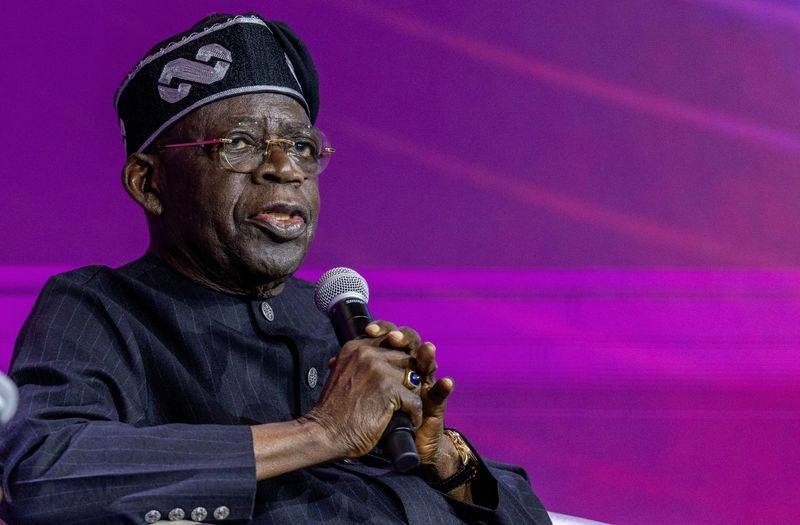
Nigeria is moving to rein in the commercial activities of major technology companies, with President Bola Tinubu directing the country's competition authority to investigate Meta, Alphabet, X and artificial intelligence platforms operating within the nation. The Federal Competition and Consumer Protection Commission announced the inquiry on Monday, responding to formal complaints filed by the Nigerian Press Organisation, an umbrella body representing newspaper proprietors, broadcast networks, journalist unions and digital publishers across the country.
The scope of this investigation extends beyond simple content disputes. The FCCPC will examine whether these technology companies have engaged in market dominance and anti-competitive behaviour, including the unauthorised extraction of copyrighted news and broadcast material and the commercial deployment of journalistic content without proper compensation or licensing. Crucially, regulators will also assess whether news articles and other published material have been used to train generative artificial intelligence systems without publisher consent or fair recompense—an increasingly contentious practice as AI development accelerates globally.
This regulatory move arrives at a critical moment for Nigeria's media industry, which has faced mounting pressure from the digital transformation of content distribution. Local publishers argue that technology platforms have siphoned audiences and advertising revenue by aggregating news stories, creating search result snippets and leveraging journalistic material to power artificial intelligence tools, all while retaining the bulk of commercial gains. The investigation signals that Nigeria's government views protecting domestic media interests as a matter of both fair competition and broader economic justice.
The technology companies named in the inquiry have not yet responded to requests for comment, though the FCCPC was careful to note that the investigation does not presume any wrongdoing. All parties under scrutiny will be afforded the opportunity to present their case and evidence before the regulator reaches any conclusions—a procedural guarantee that underscores the formal nature of the process ahead.
Nigeria's action reflects a widening international pattern. Regulators across multiple continents have begun questioning whether the world's largest technology companies should be compelled to pay news publishers for content that drives user engagement, generates advertising revenue or fuels machine learning systems. This reflects a fundamental tension in the digital age: publishers invest in reporting and editorial operations, yet algorithms and platforms capture much of the economic value their work generates.
South Africa has already secured tangible results from similar regulatory pressure. That country's competition regulator obtained substantial concessions from Google and YouTube following a market investigation, including a media support package valued at 688 million rand, equivalent to approximately 42 million United States dollars. France moved even more aggressively, imposing a 500 million euro fine on Google in 2021 following its failure to negotiate adequately with news publishers and its use of publisher content in AI systems. Australia and Canada have established legislative frameworks requiring technology platforms to negotiate fair payment terms with media organisations, leading to binding agreements that result in ongoing compensation.
For Southeast Asian readers and policymakers, Nigeria's investigation holds particular significance. Regional countries including Malaysia, Indonesia and the Philippines have similarly large media sectors grappling with the same challenges of declining advertising revenue and content appropriation. As technology platforms continue to expand their presence and influence in Asian markets, the frameworks being tested in Nigeria and elsewhere could serve as templates for local regulatory responses. The question of how to ensure that domestic publishers are fairly compensated for their intellectual property while allowing innovation to flourish remains unresolved across the region.
The investigation also speaks to broader questions about digital sovereignty and economic autonomy. Technology platforms headquartered in the United States and elsewhere have operated with relatively light-touch regulation in many African and Asian markets. By asserting competition authority over these companies, Nigeria is attempting to rebalance power dynamics and ensure that commercial rules apply equally to foreign technology firms and local enterprises. This assertion of regulatory authority may embolden other governments in the region to take similar steps.
The outcomes of Nigeria's inquiry could establish important precedents for how African nations manage their relationships with global technology companies. If the investigation finds breaches and the FCCPC imposes significant remedies—whether through fines, payment obligations or operational restrictions—it would signal that technology companies cannot extract value from local content markets without accountability. Conversely, if companies successfully defend their practices, it may suggest that current business models remain legally defensible even as they provoke legitimate policy concerns.
For the Nigerian media industry specifically, success in this regulatory battle could help stabilise a sector that has experienced considerable financial stress over the past decade. Publications and broadcasters have lost both audience reach and advertising revenue to digital platforms, forcing many to shrink operations and reduce staff. Fair compensation for content use could help reinvigorate investment in journalism and editorial excellence, ultimately strengthening the media's capacity to serve public accountability functions.
The path forward remains uncertain. Technology companies typically argue that they drive traffic to publisher websites, providing valuable referral services that ultimately benefit media organisations. They further contend that news aggregation and AI training constitute fair use or transformative activities not subject to licensing fees. The FCCPC's investigation will need to carefully weigh these competing arguments while considering Nigeria's specific economic and developmental context.
Nigeria's investigation represents a test of whether national competition regulators in the developing world can effectively constrain the market power of technology giants. The results will matter not just for Nigerian publishers but for media industries across Africa and Asia, many of which face identical pressures and may soon pursue similar regulatory remedies.

