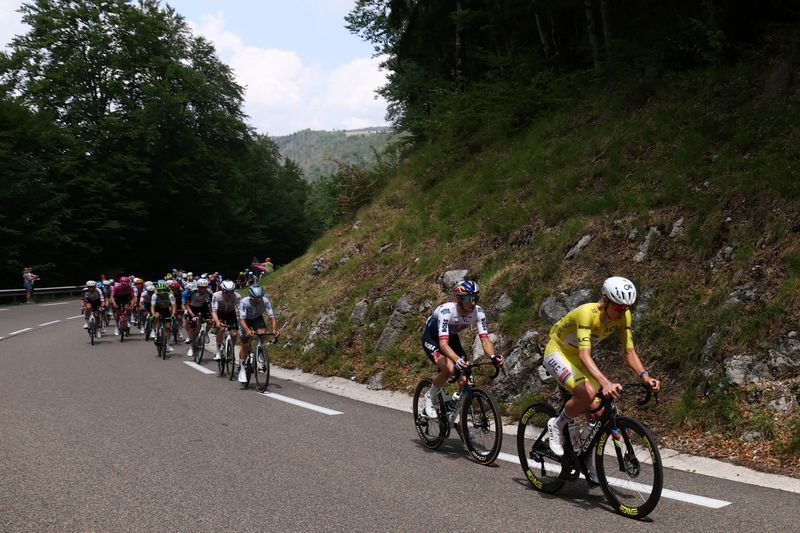
Jonathan Vaughters, the veteran team manager and former professional cyclist, has entered the contentious debate surrounding surprise anti-doping controls conducted in the early morning hours at this year's Tour de France. His intervention carries considerable credibility given his unique perspective as both a reformed doper and current advocate for clean sport. Vaughters' defence of the testing protocol stands in sharp contrast to the complaints raised by several top competitors, including race leader Tadej Pogacar and Jonas Vingegaard, who were roused from sleep for unannounced checks ahead of the 15th stage.
The early-morning tests proved particularly disruptive to the race's leading contenders. Vingegaard, summoned for testing at 2 a.m., reported losing approximately 40 minutes of sleep before tackling a crucial mountain stage—an encounter that ended with a fall and a fractured collarbone. Pogacar fared somewhat better, receiving his test at 5 a.m., yet still secured only four hours of rest. Remco Evenepoel, who ultimately won that stage, characterised the entire practice as "inhuman," articulating the frustrations shared by many competitors who questioned whether such disruption was justified or safe.
Vaughters took to social media to articulate his position on the matter, arguing that early-morning testing represents one of the most effective mechanisms for detecting peptide-based performance enhancement, including EPO, human growth hormone, and testosterone micro-dosing. His assertion rested on a historical observation with sobering implications: had similar testing protocols existed during his own racing days in the early 2000s, he contended that the entire cycling community would have faced suspension, potentially sparing the sport from a quarter-century of scandal and reputational damage. This counterfactual argument carries unusual force precisely because of Vaughters' culpability in cycling's darkest chapter.
The credibility of Vaughters' position stems from his own path through cycling's doping past. During his professional career in the late 1990s and early 2000s, he participated in systematic performance enhancement, including EPO use while riding for the U.S. Postal Service team alongside Lance Armstrong. Rather than remaining silent about this history, Vaughters later became a crucial witness, providing testimony to the U.S. Anti-Doping Agency during its investigation of Armstrong's empire. That investigation ultimately resulted in Armstrong's unprecedented stripping of seven Tour de France titles in 2012, as USADA concluded he had orchestrated what officials described as the most elaborate and coordinated doping conspiracy in sports history.
Following his transition away from racing, Vaughters directed his energies toward establishing Cannondale-EF as a model team committed to clean competition. This redemptive trajectory—from complicit participant in doping to whistleblower to advocate for integrity—lends particular weight to his defence of contentious testing measures. When a former insider argues that aggressive anti-doping protocols are necessary, the argument carries resonance that external critics cannot match.
The International Testing Agency, the body responsible for overseeing anti-doping controls on behalf of the Union Cycliste Internationale, acknowledged the genuine tension inherent in night-time testing. While recognising that early-morning checks do disrupt athletes' sleep and recovery, the agency maintained that effective anti-doping work requires flexibility in timing. The ITA emphasised that while daytime testing should remain the norm, limited and justified exceptions must be permitted to address emerging threats to the sport's integrity.
The scientific reasoning behind night-time testing reflects a fundamental challenge in modern anti-doping enforcement: the evolving sophistication of illicit enhancement methods. Micro-dosing protocols—where athletes consume small quantities of performance-enhancing substances that dissipate from the body within hours—represent a particular vulnerability in daytime-only testing regimes. Athletes engaged in such practices can time their doses to fall within windows when testing is predictable and avoid detection. By introducing unpredictability into the testing schedule, including pre-dawn checks, anti-doping authorities aim to eliminate the possibility of strategic timing around known testing windows.
For Southeast Asian cycling fans and sports observers, this debate carries resonance beyond the professional peloton. The integrity of international sporting competitions shapes how younger athletes view fair play and the meaning of athletic achievement. When governing bodies permit performance enhancement, whether through lax testing or predictable protocols, they send messages about what constitutes legitimate victory. Vaughters' intervention suggests that the short-term discomfort of sleep disruption for top competitors represents a reasonable price for maintaining the credibility of cycling as a contest of pure human capacity.
The tension between athlete welfare and anti-doping effectiveness represents a genuine policy dilemma without straightforward resolution. Vingegaard's subsequent crash and fracture raise legitimate safety concerns about sending fatigued riders onto treacherous mountain terrain. Yet Vaughters' historical perspective reminds observers that cycling's decade-long battle with systematic doping inflicted far greater damage on the sport's reputation and the integrity of its fundamental competition. From this vantage point, modest sleep loss for elite athletes constitutes a proportionate response to preventing another era of wholesale deception.
As cycling moves forward, the sport's administrators face the challenge of implementing anti-doping measures rigorous enough to prevent micro-dosing while respecting the genuine welfare concerns of competitors. The appearance of credible voices like Vaughters defending tough testing protocols may help shift the narrative away from viewing anti-doping enforcement purely as an imposition on athletes, toward recognising it as essential protection for the sport itself. For cycling audiences worldwide, including those in Malaysia and across Asia who follow the Tour de France with keen interest, the outcome of this debate will determine whether future generations can trust that cycling victories represent authentic human achievement.

