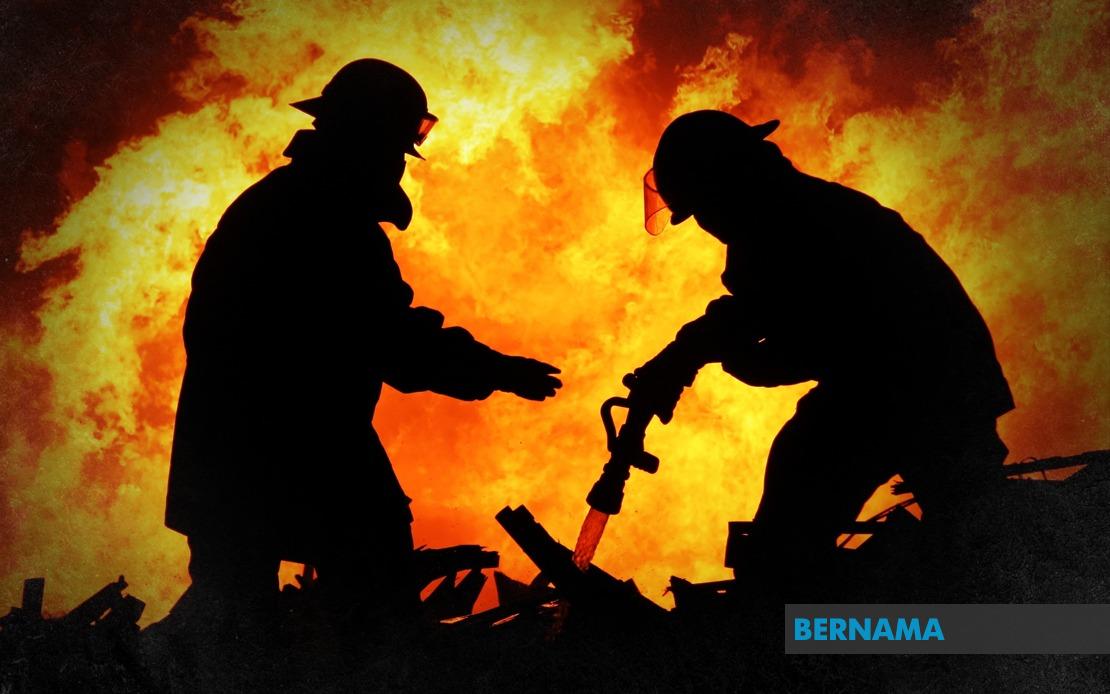
A catastrophic explosion at Talent Fireworks, an unlicensed firecracker manufacturing facility in Ahmedabad's Vastral area, claimed nine lives on Saturday, adding to a grim toll of workplace disasters across India's informal industrial sector. The blast also left six workers injured, exposing once again the dangerous conditions that persist in facilities operating without regulatory oversight or proper safety infrastructure.
The facility's operation without proper licensing represents a critical gap in enforcement mechanisms that have long plagued India's pyrotechnic manufacturing industry. Local authorities subsequently arrested the factory's owner, though questions remain about how such operations continue to function in urban areas despite regulations designed to prevent precisely these kinds of tragedies. The arrest underscores the tension between business operations in the informal economy and the legal frameworks meant to protect workers.
At the national level, Prime Minister Narendra Modi issued a statement of condolence and announced financial assistance from the Prime Minister's National Relief Fund (PMNRF). Each family of the deceased will receive 200,000 rupees—approximately RM8,490—a sum intended to provide immediate relief to bereaved households. While such measures acknowledge the human cost of industrial accidents, they do little to address the systemic failures that enable dangerous working conditions to flourish.
The Gujarat state government, under Chief Minister Bhupendra Patel, committed an additional layer of support by pledging 400,000 rupees (roughly RM16,980) to each deceased worker's family. Combined with the central government's contribution, the total compensation amounts to 600,000 rupees per family. While these announcements demonstrate official recognition of the tragedy, compensation after the fact cannot substitute for preventive enforcement of safety standards.
Firecracker manufacturing incidents have become disturbingly routine across India, reflecting a persistent pattern of inadequate workplace safety measures and lax regulatory compliance. These facilities frequently operate in violation of licensing requirements, employ workers without proper training or protective equipment, and lack basic safety infrastructure such as fire suppression systems or proper building construction. The Talent Fireworks case is neither isolated nor particularly exceptional—it is symptomatic of a broader industrial culture where profit margins consistently override worker protection.
The geographic concentration of firecracker manufacturing in states like Gujarat, Tamilnadu, and others has created clusters of high-risk facilities, many operating informally within residential or semi-commercial areas. This proximity to population centres amplifies both the human toll and the potential for cascading incidents. Workers in these facilities are frequently migrant labourers or economically vulnerable individuals with limited bargaining power or knowledge of their rights, making them particularly susceptible to exploitation and unsafe conditions.
For Malaysian observers, the Gujarat incident carries particular relevance given the similar patterns of informal manufacturing and regulatory challenges that exist within Southeast Asia. Malaysia's own history of industrial accidents—from manufacturing facilities to construction sites—demonstrates that workplace safety requires sustained political will, adequate funding for inspections, and meaningful penalties for violations. The contrast between compensation offered after disasters and investment in prevention remains a policy challenge across the region.
India's central and state governments have periodically announced crackdowns on unlicensed firecracker facilities, yet enforcement remains episodic and often reactive rather than proactive. The underlying economic incentives favour informal operation, where businesses avoid licensing costs, regulatory compliance expenses, and insurance requirements. Workers drawn from disadvantaged communities accept dangerous conditions out of necessity, creating a vicious cycle that perpetuates preventable deaths.
The regulatory architecture governing pyrotechnic manufacturing in India exists on paper but struggles with implementation at ground level. Inspection regimes are under-resourced, penalties for violations are often insufficient to deter non-compliance, and corruption can enable dangerous facilities to operate with tacit approval from local authorities. The arrest of the Talent Fireworks owner will likely prove symbolic unless accompanied by systematic improvements to enforcement capacity and the economic incentives that drive informal manufacturing.
Worker safety in India's informal manufacturing sectors will continue to deteriorate without addressing root causes: inadequate minimum wages that force workers to accept dangerous conditions, insufficient government investment in labour department inspection capacity, and penalties that fail to exceed the financial benefits of non-compliance. The tragedy in Ahmedabad represents not an anomaly but a predictable outcome of this structural neglect.
The international spotlight occasionally illuminates India's industrial safety challenges, particularly when explosions kill multiple workers simultaneously. Yet between headline disasters, thousands of workers face daily hazards in unregulated facilities across the country. The condolences and compensation announced following the Vastral blast, while necessary, remain insufficient responses to a problem requiring fundamental structural reform.
For the region, the Gujarat incident serves as a reminder that rapid industrialisation and economic growth, if not accompanied by genuine commitment to worker protection, simply scale up tragedy. Malaysia and other Southeast Asian nations should view such incidents not as distant problems but as warnings about the consequences of tolerating informal manufacturing ecosystems. The families receiving compensation in Ahmedabad would have infinitely preferred the continued employment and safety of their relatives to financial relief offered posthumously.

