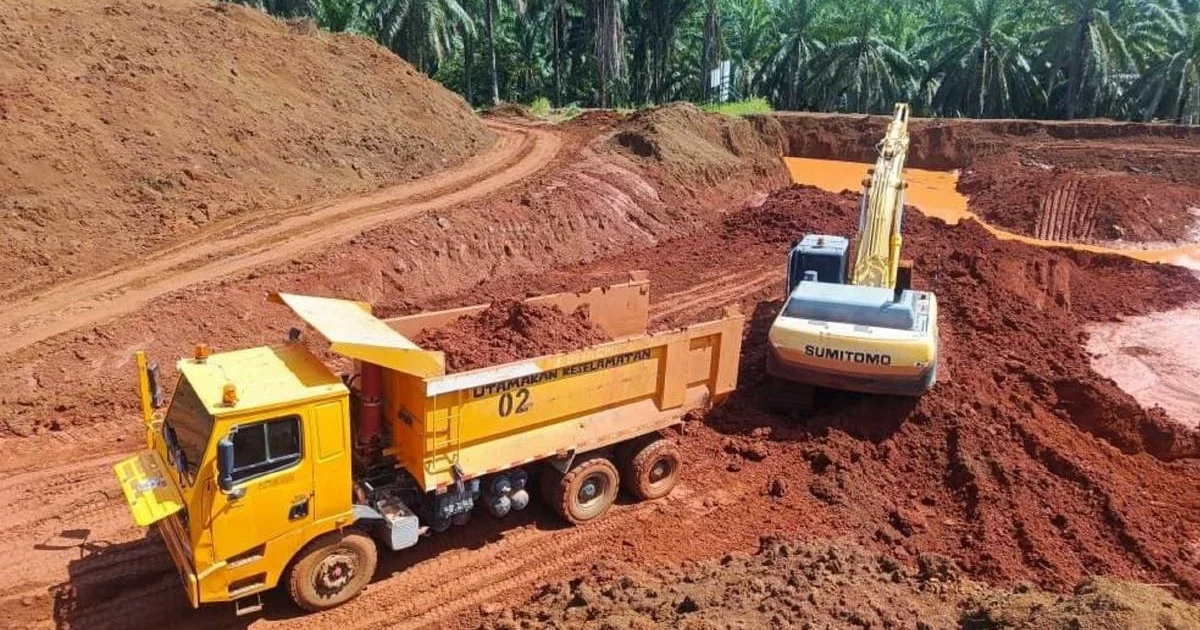
A coordinated enforcement operation in Kuantan has resulted in the arrest of nine individuals suspected of involvement in illegal bauxite mining activities. The raid, conducted on a Felda plantation located in Bukit Goh, has dealt a significant blow to what authorities describe as an organised illegal extraction operation. The crackdown netted substantial quantities of bauxite-bearing soil along with the associated machinery and vehicles used in the illicit operation, with combined seizures valued at RM3.75 million.
The seizure of approximately 10,000 tonnes of bauxite-bearing soil represents the scale of extraction that had been undertaken at the site prior to enforcement action. Bauxite, the primary ore from which aluminium is extracted, remains a strategically important mineral resource in Malaysia. The Pahang region, where Kuantan is located, has long been associated with bauxite deposits, making it both economically significant and vulnerable to unauthorised mining activities. The volume recovered in this operation underscores the extent to which illegal operators had been able to extract and stockpile mineral resources before detection.
Beyond the raw material recovered, authorities seized heavy machinery and lorries integral to mining operations. These assets, which constitute the bulk of the RM3.75 million valuation, are typically expensive industrial equipment designed for excavation, transportation, and processing. The removal of such machinery disrupts the operational capacity of any ongoing illegal mining network and imposes financial consequences on those involved in the venture. For Malaysian law enforcement, the seizure of operational assets sends a clear signal that infrastructure supporting illegal mining will not remain available to criminal actors.
The location within a Felda plantation raises particular concerns regarding land use and environmental stewardship. Felda schemes, administered by the Federal Land Development Authority, are designated for agricultural purposes and controlled development. Illegal mining within these boundaries represents not only a breach of mining regulations but also an encroachment upon managed agricultural land. Such incursions can compromise soil integrity, disrupt farming operations, and create environmental hazards that extend beyond the immediate extraction zone.
The involvement of nine arrested individuals suggests a structured operation rather than opportunistic small-scale activity. The scale of equipment, the volume of material extracted, and the apparent coordination required to operate within the Felda plantation indicate organised criminal involvement. Understanding the network relationships among those arrested—whether they operated under a single command structure or represented different facets of the supply chain—will be crucial for investigators seeking to dismantle broader illegal mining networks.
Illegal bauxite mining has emerged as a persistent enforcement challenge across Southeast Asia, with particular intensity in Malaysia. The economic incentive is substantial: bauxite commands significant value in global markets, and the absence of extraction costs through illegal operations yields high profit margins. The relatively accessible deposits in northern and eastern peninsular Malaysia, combined with porous enforcement capacity in some areas, have created conditions where illegal operations can flourish if left unchecked.
From a regional perspective, the seizure reflects Malaysian authorities' commitment to addressing illegal resource extraction. However, the continued detection of sizeable operations suggests that demand-side pressures—driven by both domestic industrial needs and international trade—continue to incentivise illicit mining. Neighbouring countries face similar challenges, and cross-border cooperation remains essential for effective enforcement. The movement of illegally extracted bauxite across jurisdictions, if it occurs, would necessitate coordinated action among enforcement agencies.
Environmental implications of bauxite mining extend beyond immediate site disruption. Unregulated extraction can result in habitat degradation, water table disturbance, and long-term land rehabilitation challenges. The recovery of 10,000 tonnes of bauxite-bearing soil represents material that would have required processing and transportation, each stage of which carries environmental consequences when conducted outside regulatory frameworks. The enforcement action therefore protects not only mineral resource management but also environmental integrity in the affected region.
The prosecution of those arrested will provide opportunities for courts to reinforce penalties associated with illegal mining activities. Sentencing outcomes in high-value cases such as this typically influence deterrence calculations among potential offenders. Jurisdictions demonstrating consistent enforcement coupled with meaningful penalties tend to experience reduced illegal activity over time, particularly when enforcement is visible and publicised.
Moving forward, sustaining enforcement effectiveness will require sustained resource allocation and coordination among relevant agencies including state mining authorities, police, customs, and environmental regulators. Intelligence gathering regarding emerging illegal mining sites, particularly in vulnerable areas such as Felda plantations, remains essential. Enhanced community awareness and reporting mechanisms can also supplement enforcement by creating additional accountability layers.
The Kuantan operation exemplifies the ongoing struggle between regulated resource development and criminal extraction. As demand for bauxite and other minerals continues, particularly from domestic aluminium processors and external markets, the pressure on enforcement systems will persist. Success in this operation must be consolidated through follow-up investigations targeting supply networks and end-users, ensuring that disruption achieved through asset seizure translates into sustained suppression of illegal mining activity across the region.

