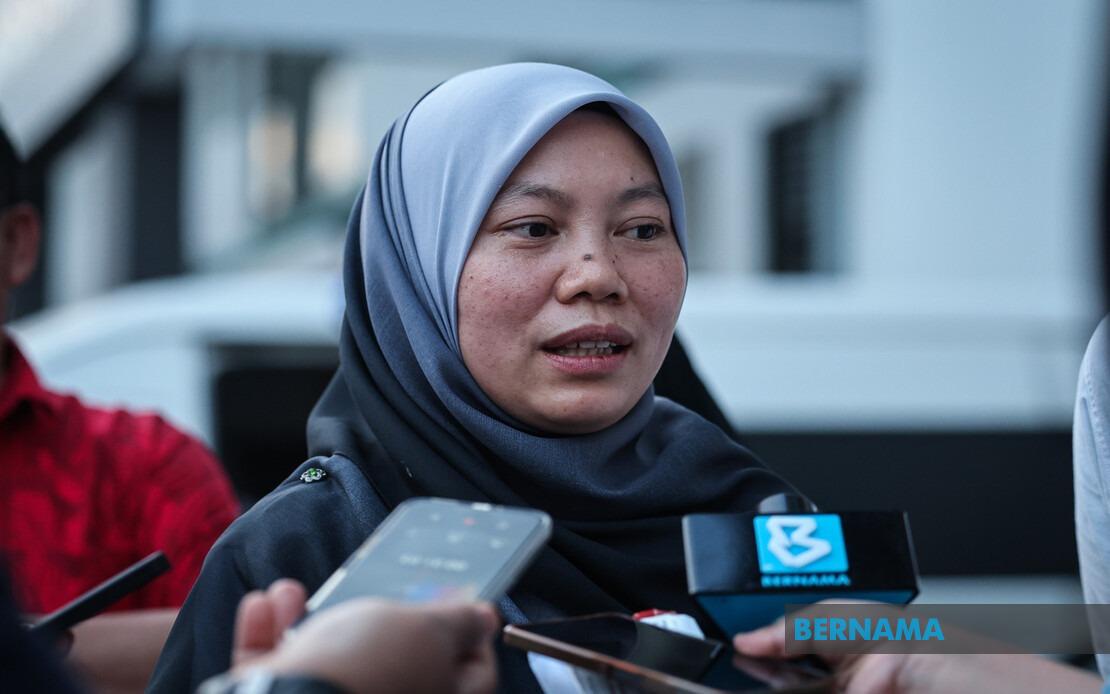
Pakatan Harapan's candidate for the Tiram state seat, Nor Zulaila Abd Ghani, is buoyed by what she describes as overwhelmingly positive reception from constituents as the 16th Johor state election approaches its final stretch. Speaking in Pasir Gudang following a campaign engagement with Entrepreneur Development and Cooperatives Minister Steven Sim Chee Keong, she expressed confidence that the groundswell of support she has encountered reflects genuine voter enthusiasm for her party's message ahead of the July 11 polling day.
The candidate's assessment of her campaign momentum stands in marked contrast to the occasional friction that invariably accompanies electoral contests in Malaysia. Whilst she acknowledged that some critical commentary has surfaced on social media platforms such as Facebook, Nor Zulaila stressed that these isolated incidents do not reflect the tenor of direct interactions with residents during her door-to-door canvassing and community engagement activities. The distinction she draws between online discourse and face-to-face reception underscores a recurring pattern in Malaysian electoral politics, where digital spaces often amplify rhetoric more sharply than traditional campaign settings.
Her strategic approach to mobilising the youth vote reveals thoughtful consideration of voter apathy that continues to plague Malaysian politics. Rather than relying solely on traditional rally speeches and policy pronouncements, Nor Zulaila has deliberately embedded herself within recreational and sporting activities that resonate with younger constituents. Her participation in sepak takraw tournaments, futsal matches, and snooker competitions serves a dual purpose: building personal rapport whilst creating informal platforms where political messaging can take root without the formality that often alienates disengaged voters.
This grassroots methodology addresses a persistent challenge facing all Malaysian political parties. Young voters frequently express disillusionment with the political establishment, viewing electoral participation as merely a ritual obligation rather than a mechanism for meaningful change. By normalising her presence within community sports and leisure spaces, Nor Zulaila attempts to reframe voting not as an abstract civic duty but as a consequential act directly linked to the everyday governance decisions that shape youth experiences. Her messaging emphasises the causal link between electoral choices and the policies that govern employment, cost of living, and social freedoms.
The candidate's candour regarding campaign disruptions adds another dimension to the electoral environment in Johor. Recent vandalism of her campaign billboard illustrates the persistence of uncivil electoral conduct that occasionally mars campaigns across Malaysia. Such incidents, whether perpetrated by rival supporters or politically unaffiliated vandals, reflect broader tensions in the Malaysian political landscape where competition sometimes spills beyond acceptable boundaries. Nor Zulaila's expression of disappointment, coupled with her appeal for dignified conduct from all contesting parties, signals an attempt to elevate the tone of the contest itself.
The timing of the Tiram campaign occurs within the broader context of Johor state politics, where the 16th state election represents a significant moment for evaluating voter sentiment at the subnational level. Elections in Johor historically carry particular weight given the state's demographic size, economic significance, and historical role in shaping national political trends. Results from this contest will provide early indicators of voter preferences ahead of potential federal-level contests and offer insight into the current balance of power between Pakatan Harapan and its rivals in a crucial constituency.
Nor Zulaila's emphasis on youth engagement through sports and recreational activities reflects evolving campaign methodologies across Southeast Asia, where parties increasingly recognise that traditional electoral mobilisation strategies prove insufficient for engaging digital-native generations. The integration of sports platforms as campaign venues represents an innovation that bridges the gap between formal politics and the lived experience of younger voters. By meeting constituents in spaces where they feel comfortable and engaged, candidates can establish authenticity that polished campaign materials often fail to convey.
The electoral schedule itself demonstrates the compressed timeline typical of Malaysian state elections. Early voting on July 7 precedes the main polling day by just four days, concentrating the final campaign push into a remarkably brief window. This compressed schedule places premium value on the groundwork Nor Zulaila has already completed, as the final days allow limited opportunity for new initiatives or course corrections. Her evident confidence suggests she believes the foundations laid through community engagement activities position her favourably as voters prepare to cast ballots.
For Malaysian observers and those tracking regional electoral developments, the Tiram contest exemplifies the evolving nature of state-level politics in Malaysia's federal system. The participation of federal-level ministers in state campaigns, as evidenced by Entrepreneur Development and Cooperatives Minister Steven Sim Chee Keong's presence at the Kota Masai event, illustrates how state elections increasingly function as arenas where national political forces test messaging and mobilise support networks. These interconnections between federal and state politics create layered campaigns where local issues intersect with national party positioning.
Looking ahead to July 11, Nor Zulaila's demonstrated confidence derives not from polling data or internal party surveys but from qualitative assessment of voter receptivity during personal encounters. This reliance on ground-level feedback rather than quantitative metrics reflects the reality that Malaysian electoral campaigns often unfold with limited public opinion research compared to Western democracies. Candidates and campaign managers instead construct their strategic assessments from cumulative impressions gathered through constant engagement with constituents, making Nor Zulaila's optimism contingent on her interpretation of these direct interactions.
The candidate's vision for the remaining campaign period emphasises constructive competition and mutual respect among contesting parties. This appeal for mature electoral conduct represents an implicit acknowledgment that Malaysian democracy functions more effectively when competition remains vigorous but bounded by shared commitment to decorum and constitutional norms. Whether such aspirations translate into actual campaign conduct across Tiram and other Johor constituencies remains to be seen as polling day approaches.

