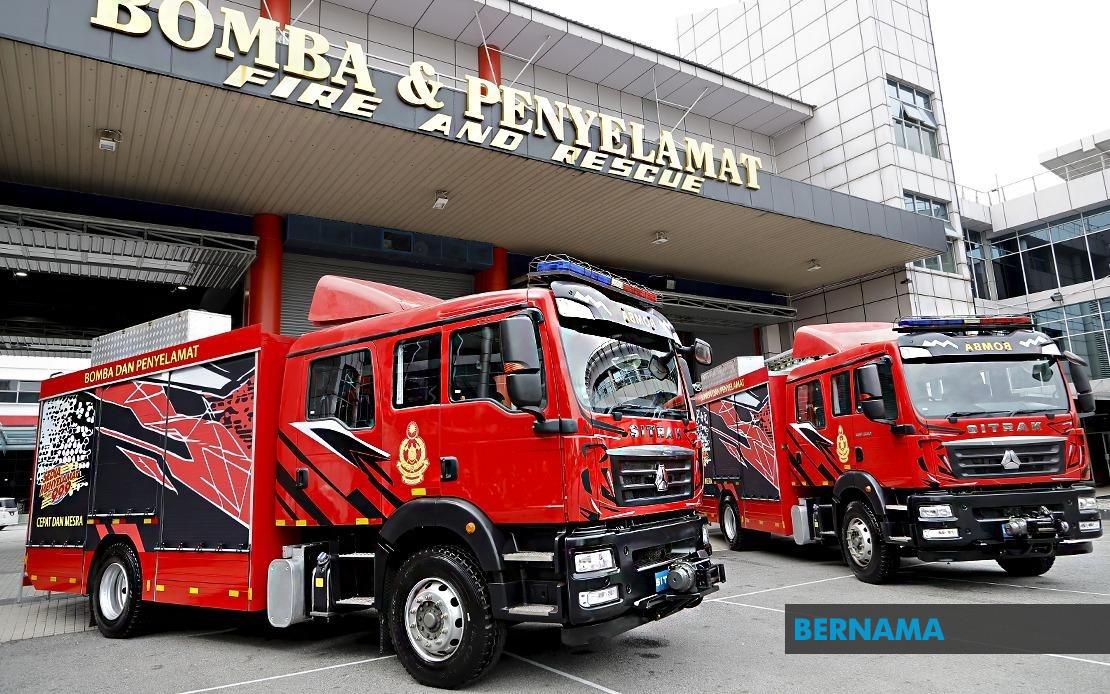
A moderately strong earthquake centred in North Sumatra rippled across Malaysia's most densely populated region on Monday afternoon, triggering an immediate response from emergency services and briefly unsettling thousands of office workers and residents. The tremor, which measured 5.7 on the Richter scale and originated approximately 55 kilometres southwest of Langsa, Indonesia, was felt across multiple locations in the Klang Valley between 12.18 pm and early afternoon, generating three formal emergency calls to the Fire and Rescue Department of Malaysia.
The seismic event caught office occupants off guard, with the tremors lasting roughly 15 seconds and creating enough concern to prompt immediate evacuations at several commercial and institutional buildings. Ashrul Riezal Asbar, the Selangor JBPM assistant director of operations, confirmed receipt of the first alert at 12.31 pm from the Kajang Municipal Council building, followed within minutes by reports from INTI International College Subang in the SS15 area and the Menara B2 Maju Link commercial tower in Bandar Tasik Selatan. The speed at which these reports came in underscores how widely the earthquake's effects were felt across the region's major commercial and administrative centres.
Emergency response teams from Kajang and Subang Jaya stations were immediately dispatched to conduct structural assessments of the affected buildings. Their inspections revealed no cracks, fissures, or other indicators of structural compromise at either the municipal council building or the college campus, allowing occupants to return to their workspaces. The thoroughness of these initial assessments proved reassuring to building management and tenants anxious about potential damage from seismic activity.
At the Menara B2 Maju Link tower in Bandar Tasik Selatan, the situation unfolded differently as a precautionary measure. Upon receiving the emergency call at 12.32 pm, the Sungai Besi fire and rescue team found that most occupants had already voluntarily evacuated the premises, gathering at designated safe assembly points outside the structure. This rapid self-evacuation reflected both the intensity of the tremors as experienced within the building and the effectiveness of workplace safety protocols that encourage immediate movement to safe areas when seismic activity is detected. Subsequent structural inspections by emergency personnel confirmed the building remained safe for reoccupancy, with no damage observed.
The earthquake's impact extended beyond the formal emergency response system into the digital sphere, where social media platforms became an immediate conduit for information sharing and reassurance seeking. Threads, the text-based social network, saw a flood of posts from residents and workers across the Shah Alam area and surrounding suburbs attempting to verify their experiences and confirm the source of the disturbance. Users like 'nabilaishah', posting from Section 26, and 'nadiaxzailan' shared their observations of sudden shaking, with several noting they initially questioned whether the sensation was real or imaginary until connecting with colleagues and online communities for verification.
The social media response demonstrates how contemporary communication patterns influence crisis response and information dissemination during natural events. Rather than relying solely on official announcements or news broadcasts, affected individuals engaged in real-time peer verification, asking colleagues if they too had felt the tremors and consulting online discussions before concluding that seismic activity was responsible. One user noted that she only realised the table shaking was earthquake-related after cross-referencing experiences with colleagues and checking social media discussions, highlighting how modern information ecosystems function as parallel validation systems during emergencies.
The geographic distribution of reported tremors across the Klang Valley reflects the epicentre's distance and the earthquake's magnitude. At 5.7 on the Richter scale, the North Sumatra quake was strong enough to be felt across significant distances but fell short of the threshold typically associated with widespread damage in well-constructed modern buildings. Malaysia's building codes, which incorporate earthquake-resistant design standards for high-rise structures, proved adequate to withstand the event without incident. This outcome aligns with international experience showing that moderate-magnitude earthquakes in stable continental regions rarely cause structural failure in contemporary construction.
The response by Malaysia's Fire and Rescue Department exemplifies the institutional readiness required for seismic events in a region where earthquake activity, while not frequent, remains a genuine hazard requiring preparation. The department's rapid deployment of teams to multiple locations, systematic structural assessments, and coordination across different stations demonstrated operational protocols that balance swift response with thorough evaluation. The decision to inspect buildings even when no obvious damage was apparent reflects best practices in emergency management, ensuring that subtle structural issues would not be overlooked.
For Malaysian businesses and institutions in the Klang Valley, the Monday earthquake served as an unscheduled drill of emergency preparedness measures. The voluntary evacuations at Menara B2 Maju Link and the rapid response from occupants suggest that workplace safety training regarding seismic events has achieved reasonable effectiveness. However, the incident also highlighted variable awareness levels, with some individuals uncertain whether tremors indicated an earthquake until confirmed through social consultation, suggesting opportunities for enhanced public education about earthquake recognition and appropriate responses.
The event carries implications for regional seismic monitoring and building safety standards across Southeast Asia. As a nation with significant earthquake risk extending across Sumatra and parts of the peninsula, Malaysia's earthquake management framework relies on early detection systems and rapid dissemination of information. The Monday tremor, originating in North Sumatra and felt throughout the Klang Valley, represents exactly the type of cross-border seismic event that regional cooperation and early warning systems are designed to address. Continued investment in seismic monitoring infrastructure and building code enforcement remains essential for protecting the region's dense urban populations.
The return to normalcy within minutes of the initial tremors exemplified the resilience of Malaysia's infrastructure and emergency services. No injuries were reported, no significant damage was sustained, and business operations resumed promptly after safety assessments were completed. The combination of modern building standards, well-trained emergency responders, and accessible information systems ensured that what could have been a frightening experience for thousands of people resulted instead in a managed incident that reinforced public confidence in institutional preparedness. As seismic activity in adjacent Indonesian regions remains a persistent feature of the regional geological landscape, this measured response provides a model for future events.

