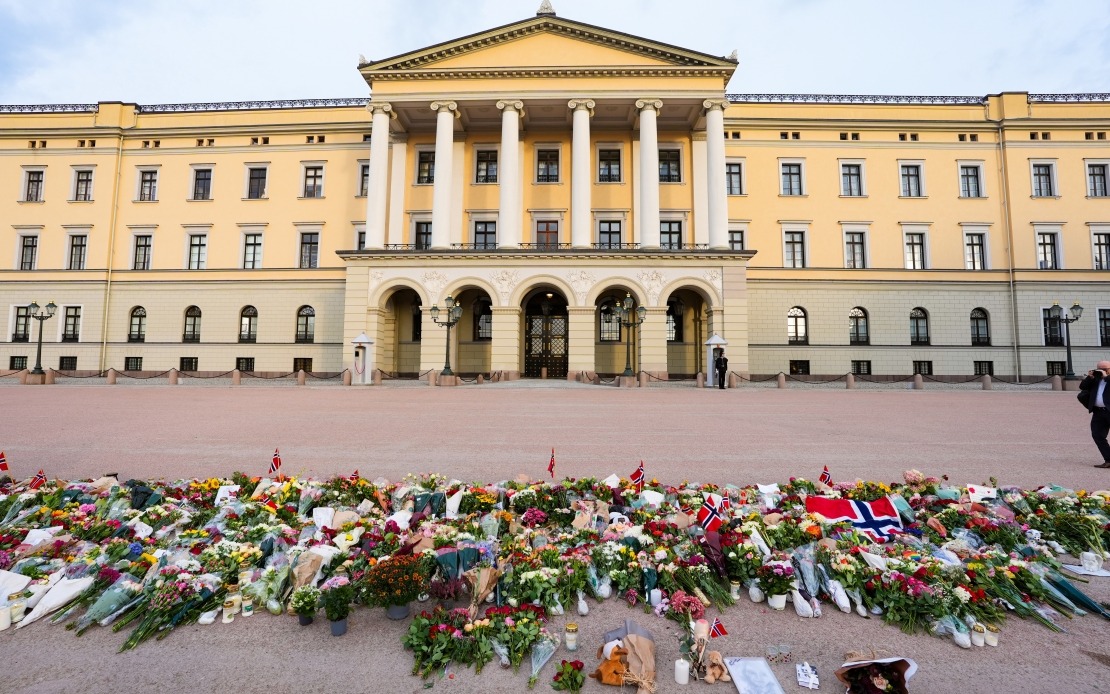
King Harald V of Norway passed away Friday morning at the age of 89, marking the end of an era for the Scandinavian nation and the departure of Europe's oldest working monarch. The Norwegian Royal Palace confirmed his peaceful death at Oslo's National Hospital at 6:35 am local time, with the royal flag subsequently lowered to half-mast in recognition of the historic moment.
The late king had been hospitalised since August 17 following routine medical examinations that revealed underlying health complications. Palace officials subsequently disclosed that Harald had been undergoing cortisone treatment for hemolytic anemia, a blood condition affecting red blood cell function that had caused fluid to accumulate throughout his body. These pre-existing complications were compounded when he contracted a bacterial infection in his bloodstream, a development that accelerated his medical decline in recent weeks.
Harald's accession to the throne occurred on January 17, 1991, following the death of his father King Olav V, granting him a reign spanning more than 35 years during which he witnessed profound transformations across Europe and the wider world. Throughout his tenure, the Norwegian monarch remained an active head of state engaged in constitutional governance, diplomatic duties, and custodianship of national traditions. His longevity as a reigning sovereign distinguished him as an elder statesman among European royalty, a position he maintained until his death.
Constitutional succession provisions in Norway ensure seamless transition of power without ceremonial delay. Crown Prince Haakon immediately assumed the title of king following his father's death, becoming Norway's new constitutional head of state. The succession reflects Norway's established legal framework, which permits automatic transfer of monarchical authority upon a sovereign's demise, bypassing the elaborate coronation ceremonies observed in some other European kingdoms.
The government is scheduled to convene an extraordinary Council of State at the Royal Palace to formally receive the new monarch and conduct official proceedings related to the transition. During this meeting, Crown Prince Haakon's chosen royal regnal name will be formally announced, establishing how he will be known throughout his reign. This procedural step holds significant symbolic weight, as the selection of a regnal name allows a new sovereign to define their reign's character and establish continuity with historical precedent or chart a distinct course.
Norwegian constitutional law mandates that the new king take a solemn oath before parliament, affirming his commitment to upholding the nation's democratic institutions and constitutional order. This parliamentary oath ceremony represents a fundamental principle of Norwegian governance, distinguishing the country from monarchies where coronation rites assume central ceremonial importance. The Norwegian approach emphasizes the king's role as constitutional guardian rather than absolute sovereign, reflecting the nation's centuries-long evolution toward democratic governance.
The transition occurs at a moment when Nordic monarchies face evolving public expectations regarding transparency, accessibility, and alignment with contemporary social values. Norway's constitutional monarchy has sustained public legitimacy through careful stewardship of royal duties, charitable engagement, and perceived commitment to democratic principles. The new reign will likely continue this trajectory, as Crown Prince Haakon inherits both institutional responsibilities and a monarchy that maintains strong public approval in opinion surveys.
For Malaysia and other Commonwealth nations with monarchical systems, Harald's death and Norway's succession procedures offer instructive comparison regarding how different realms manage transitions of power. While Malaysia's constitutional monarchy operates within a distinct federal framework with elected sultans rotating the position of Yang di-Pertuan Agong, both systems prioritize stable constitutional succession and parliamentary oversight of royal authority. The Norwegian model, refined through centuries of practice, demonstrates how hereditary monarchy and liberal democracy can coexist without tension.
Harald's reign encompassed periods of significant global change, from the Cold War's conclusion through the digital revolution, Norwegian Europe debates, and economic transformation driven by petroleum wealth. His steady presence throughout these decades reflected broader Scandinavian values of social responsibility, environmental stewardship, and inclusive governance. The new king inherits not merely ceremonial duties but custodianship of these national characteristics during an era of technological disruption and geopolitical realignment.
International responses to Harald's death have emphasised his role as a bridge-builder between nations and his dedication to humanitarian causes throughout his reign. European counterparts, fellow heads of state, and international organisations have issued statements acknowledging his contributions to strengthening diplomatic ties and advancing shared Nordic interests. The transition represents an opportunity for the new Norwegian monarch to establish his own diplomatic agenda while honouring the institutional legitimacy and cross-border relationships inherited from his predecessor's lengthy tenure.

