Norway's maiden World Cup appearance in nearly three decades came to a dramatic conclusion in Miami on Saturday when Jude Bellingham's two extra-time goals sealed a 2-1 quarter-final victory for England, ending the Scandinavian nation's improbable run through the tournament. The loss marks the end of what manager Stale Solbakken described with characteristic understatement as a summer that turned out to be "fairly OK"—a modest assessment of what observers across Southeast Asia and beyond viewed as a transformative month for Norwegian football's global standing.
The Nordic nation's return to the World Cup finals after a 28-year hiatus carried an almost romantic appeal from the outset. Before the tournament kicked off, the squad embraced their Viking heritage with a photoshoot that doubled as a marketing masterstroke, positioning themselves as the tournament's most visually distinctive contingent. This branding exercise transcended mere theatre; it reflected a deeper transformation within Norwegian football culture, one that had shifted dramatically from the sport's traditional perception in Scandinavia as a rough-and-tumble affair played in cold climates.
The squad's success in qualifying had already signaled that this team possessed genuine world-class talent, particularly through striker Erling Haaland, whose prolific goalscoring has made him one of the sport's most coveted players. Yet advancing beyond the group stage was viewed as merely meeting baseline expectations. Instead, Norway demolished those benchmarks spectacularly, with Haaland's double in a 2-1 victory over Ivory Coast in the round of 32 serving as a statement of intent that rippled through the tournament's narrative.
What followed proved even more striking. In the last 16, Norway dismantled Brazil, the five-time champions and perennial tournament favorites, with a commanding 2-1 performance that left their supporters dreaming of an unlikely semifinal berth or even an improbable final appearance. The victory over Brazil was not merely significant as a scalp; it demonstrated that Norwegian football had fundamentally evolved beyond its old reputation and could stand toe-to-toe with the sport's traditional powerhouses. This has particular resonance for Southeast Asian nations observing the tournament, as it illustrates how smaller footballing nations with sustained investment in player development can elevate themselves into genuine contenders.
The physical and mental demands of their outstanding campaign ultimately proved decisive in Miami, as England's superior depth and experience in knockout competition proved too much. Captain Martin Odegaard and Haaland, whose performances had carried the team's aspirations throughout the tournament, appeared visibly fatigued as England mounted their comeback. Bellingham's brace in extra time punctured Norwegian dreams, but the narrow margin of defeat—rather than a comprehensive thrashing—underscored how closely Norway had come to engineering an unprecedented upset.
Beyond the tournament's immediate results, Norway's campaign has cemented a broader shift in Scandinavian football's trajectory. The success of domestic club Bodo/Glimt in recent European competitions provides evidence of a football ecosystem producing technically proficient, tactically astute young players at a rate previously unseen in the region. This development model, combining systematic youth training with access to elite European club football, represents a blueprint increasingly studied by nations throughout Asia seeking to improve their international standing.
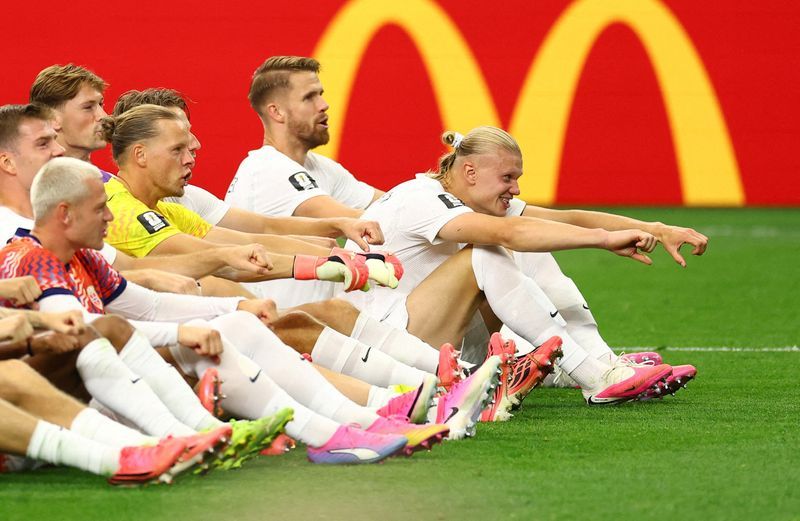
The triumvirate of Solbakken, Odegaard, and Haaland embodied an intriguing combination of self-aware humor and ruthless competitive ambition that captured international imagination during the tournament. The "Viking row" celebration adopted by Norwegian fans became the tournament's most iconic visual motif, while Haaland's charismatic presence and goal-scoring prowess made him a favorite among American spectators, suggesting commercial and cultural appeal that extends far beyond Scandinavian supporters.
Solbakken's measured confidence in his team's newfound status carries profound implications for how nations like Malaysia, Thailand, and Vietnam assess their own footballing futures. The Norwegian manager emphasized that his players now possess genuine belief in their capacity to compete against the world's elite, a psychological shift that cannot be understated. When top-tier players begin to view themselves as genuine competitors rather than grateful underdogs, their performances on the pitch inevitably reflect that elevated self-perception.
The tournament has positioned Norwegian football at an inflection point. The infrastructure, talent pool, and competitive mindset are now demonstrably in place. While qualifying for the next World Cup presents inevitable challenges, the groundwork for sustained competitive performance has been established. For Southeast Asian observers, Norway's trajectory offers instructive lessons about patience, strategic investment, and the importance of creating pathways for young talent to compete at the highest levels of European club football before representing their nations internationally.
Despite Saturday's heartbreak in Miami, Norwegian football enters a new era with genuine optimism. The nation that once seemed permanently consigned to the periphery of international competition has announced itself as a force capable of memorable performances against the sport's traditional superpowers. Solbakken's understated assessment of their summer as "fairly OK" will likely become one of sports' most famous examples of dry Scandinavian humor, masking the genuine pride that course through Norwegian football following a tournament that exceeded all reasonable expectations.

