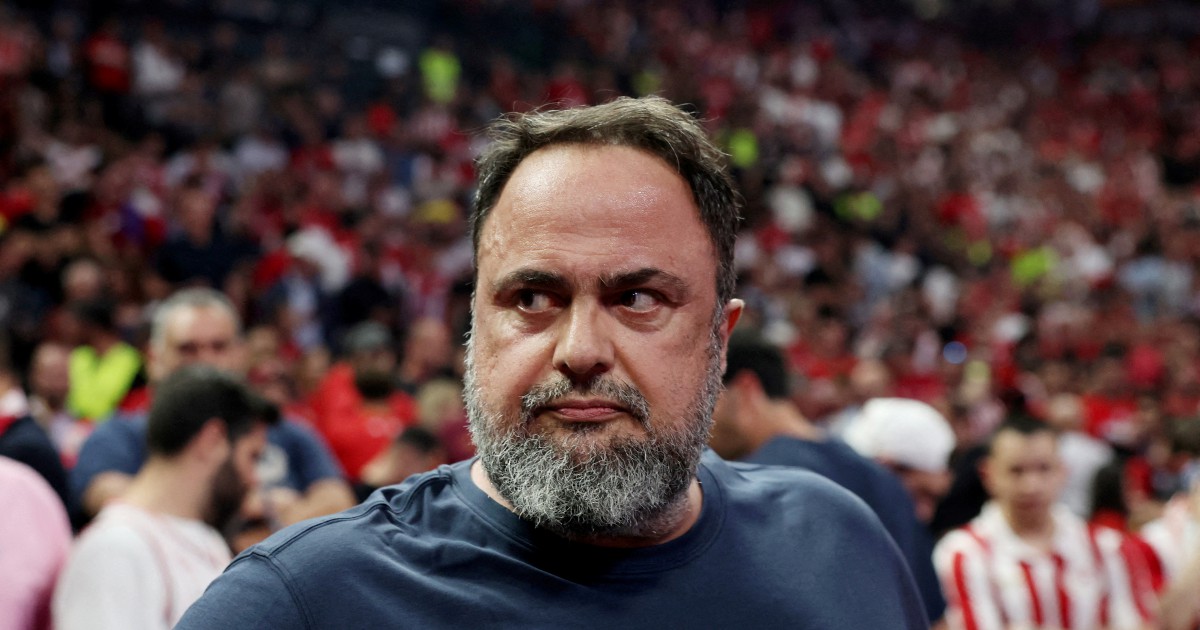
Nottingham Forest owner Evangelos Marinakis has launched a legal challenge against Crystal Palace, filing a libel case at London's High Court on Monday. The action marks a significant escalation in tensions between the two Premier League clubs, with reports indicating that the dispute centres on a controversial banner that supporters of the south London club displayed during a match in the previous season.
The Greek businessman and sports investor, who has held controlling interests in Nottingham Forest since 2017, initiated the proceedings through the English legal system's highest civil court. The decision to pursue formal legal remedies reflects the seriousness with which Marinakis regards the matter, suggesting that the content of the banner touched on issues he considered sufficiently damaging to warrant court intervention.
Banners and visual displays at football grounds have become increasingly contentious in recent years, as supporters seek platforms for political statements, social commentary, or sometimes personal attacks on rival clubs and their leadership. This particular incident exemplifies the ongoing tension between fan expression and the legal protection of individual reputation in professional sports, a dynamic that has become more pronounced across European football.
Marinakis has established himself as a significant presence in English football management since his acquisition of Nottingham Forest. Under his ownership, the club achieved promotion back to the Premier League in 2022 after a 23-year absence, marking a dramatic turnaround for the historic Midlands institution. His investment and strategic direction have been transformative, though his tenure has not been without controversy, a pattern that appears to extend to his relationship with rival clubs and their supporters.
The businessman's background extends beyond football into broader commercial and industrial interests. His willingness to pursue legal action suggests a protective approach to his public reputation, an approach that has precedent in professional sports where high-profile owners and executives frequently defend themselves through litigation against perceived defamation or libellous statements.
Crystal Palace, managed by Roy Hodgson, has not yet publicly responded to the lawsuit. The south London club operates under different ownership structures and has its own well-established relationship with a passionate fanbase. The banner incident represents a flashpoint between two competing organizations within the Premier League's competitive hierarchy.
The case raises broader questions about the boundaries of supporter expression and organizational liability. While individual fans may be responsible for their own statements, clubs can face legal exposure depending on the circumstances and their response to supporter conduct. This particular dispute may ultimately clarify responsibilities and standards within football regarding what constitutes acceptable supporter behavior.
For Malaysian and Southeast Asian football enthusiasts, this development highlights how English football's legal and regulatory frameworks differ from those in other major leagues. The willingness of club owners to pursue civil litigation through established court systems contrasts with dispute resolution approaches in some other jurisdictions, where informal mediation or governing body intervention might take precedence.
The High Court hearing also underscores the increasingly corporate nature of modern football, where billion-pound investments create corresponding sensitivity to reputational matters. Marinakis's action demonstrates that foreign investors in English football operate within the same legal frameworks as domestic stakeholders, subject to the same protections and vulnerabilities regarding their public standing.
The timeline and legal process ahead remain unclear, though High Court libel cases typically involve substantial time and financial investment from both parties. The outcome could establish precedent regarding fan conduct and organizational responsibility within Premier League football, potentially influencing how clubs and supporters navigate contentious displays in the future.
For Nottingham Forest, the legal action represents a continuation of their assertive approach to management since returning to the Premier League. The club has already made headlines through ambitious transfer spending and tactical appointments, with Marinakis clearly willing to engage in vigorous competition—both on and off the pitch—to protect the club's interests and his own reputation.
The dispute also occurs within the context of intense rivalries and competitive pressures that characterize the Premier League. With financial stakes reaching unprecedented levels and the competition for European qualification intensifying annually, tensions between clubs and their supporters have occasionally spilled over into confrontational displays and statements. This particular case may represent only one instance of broader friction within contemporary English football.

