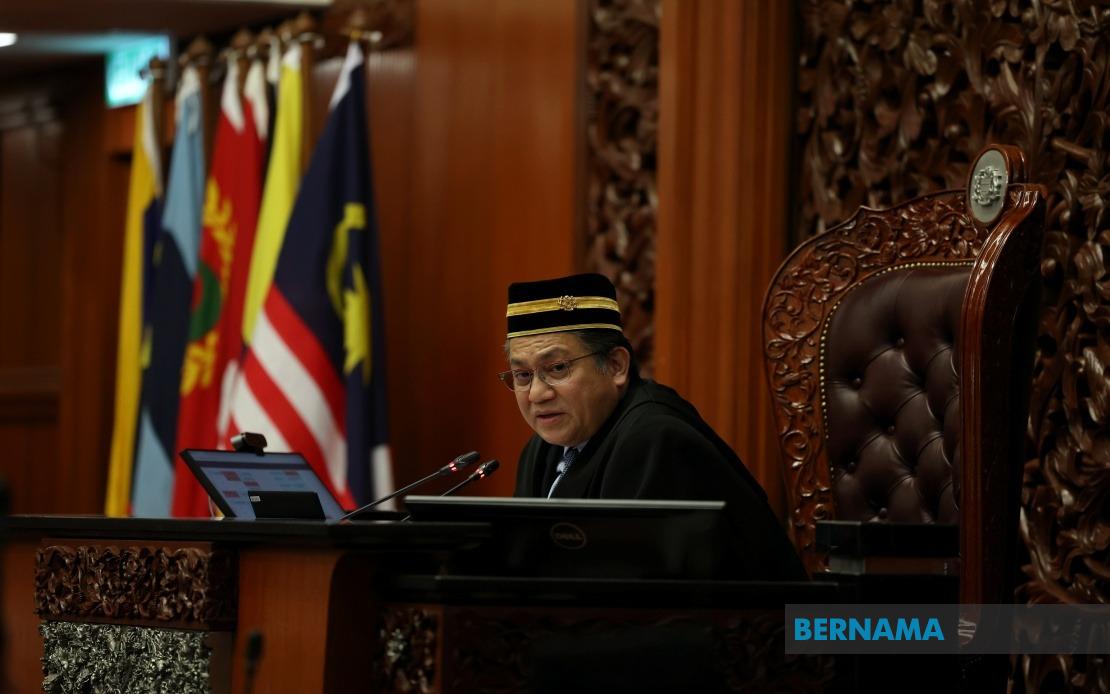
Senator Datuk Nur Jazlan Mohamed has been reappointed to serve as Deputy Speaker of the Dewan Negara for a consecutive second term, cementing his position as a senior figure in Malaysia's bicameral legislative system. The appointment, which followed the sole nomination submitted by Higher Education Minister Datuk Seri Zambry Abd Kadir acting on behalf of Prime Minister Datuk Seri Anwar Ibrahim, was formally announced on July 20 during proceedings at the upper house.
The Dewan Negara, Malaysia's 70-member Senate, operates as a complement to the Dewan Rakyat and comprises appointed members representing state legislatures, the Federal Territories, and interests including commerce, labour, and the professions. The Deputy Speaker role carries considerable procedural authority, assisting in the management of parliamentary business and presiding over debates when required. Nur Jazlan's reappointment underscores his continued acceptance across government coalitions and demonstrates stability in Senate leadership during a period of complex political coalition management at federal level.
Nur Jazlan's new mandate extends for three years, commencing June 15 2026 and concluding June 14 2029, following standard appointment conventions for senatorial roles. At 60 years old, he brings substantial legislative experience and institutional knowledge to the position, having navigated Malaysia's parliamentary structures across multiple political cycles. His previous tenure as Deputy Speaker commenced in June 2023, providing him with over two years of operational experience in the role before receiving renewed confidence from the executive.
Beyond his Senate responsibilities, Nur Jazlan holds considerable sway within United Malays National Organisation circles as a member of the party's Supreme Council and chief of the Pulai Division. His political career spans nearly two decades of electoral representation, having served as Member of Parliament for Pulai constituency from 2004 through 2018, a 14-year continuous mandate from constituency voters. This combination of party leadership and prior parliamentary experience positions him as a bridge figure between executive government and the broader party machinery.
The government's decision to renominate Nur Jazlan reflects confidence in his administrative capabilities and non-partisan approach to Senate management. Parliamentary officers must balance loyalty to their respective party backgrounds with impartial conduct of legislative business, a tension that becomes more pronounced in bicameral systems where the Senate lacks direct electoral legitimacy. His successful first term suggests he has navigated this balance effectively, avoiding controversy while advancing government legislative priorities.
Alongside Nur Jazlan's reappointment, fellow Senator Mussodak Ahmad was similarly renewed for a second senatorial term. Mussodak's three-year appointment, endorsed by the Kedah State Legislative Assembly, runs from March 20 2026 through March 19 2029. Mussodak, who represents Kedah through his party affiliation with PAS, was first appointed to senatorial office in March 2023 and has previously contested state-level electoral contests for the Bayu and Guar Chempedak seats.
Both reappointments were formalised through ceremonial swearing-in proceedings before Datuk Awang Bemee Awang Ali Basah, the Speaker of the Dewan Negara who presides over all Senate sessions. The formal procedures surrounding these appointments reflect constitutional requirements and the solemnity with which Malaysia's parliamentary institutions regard transitions of authority, even where incumbents face renewal rather than replacement.
Nur Jazlan's earlier governmental service extended beyond legislative roles into executive positions with ministerial responsibility. Between 2015 and 2018, he served as Deputy Home Minister, a security-sensitive portfolio requiring trusted judgment and administrative capability. This executive experience complements his legislative credentials and suggests his reappointment reflects recognition of his competence across multiple institutional contexts within Malaysia's governance framework.
The current Senate sitting scheduled from July 20 through August 4 represents the Second Meeting of the Fifth Term during the 15th Parliament, indicating ongoing legislative business requiring upper house attention and deliberation. Regular parliamentary sessions maintain momentum on legislative programmes and provide forums for policy scrutiny and questioning of government initiatives, functions in which the Deputy Speaker's role proves operationally essential.
Nur Jazlan's reappointment arrives during a period when Malaysian parliamentary institutions face evolving demands around democratic accountability, legislative effectiveness, and institutional credibility. The Senate, despite lacking electoral legitimacy in conventional terms, carries responsibility for detailed legislative scrutiny and serves as a chamber permitting more deliberative debate than the lower house typically accommodates. Leadership continuity in such roles can either entrench institutional patterns or enable gradual reform, depending on how office-holders utilise their authority.
The stability signalled by renewing experienced Senate leadership contrasts with broader political uncertainties characterising contemporary Malaysian governance. Coalition configurations at federal level remain fluid, with multiple parties maintaining delicate power-sharing arrangements requiring constant negotiation and adjustment. In this context, retaining proven institutional managers in non-partisan positions like Senate Deputy Speaker reflects pragmatic governance preferences, allowing political actors to focus contestation on substantive policy matters rather than procedural control.

