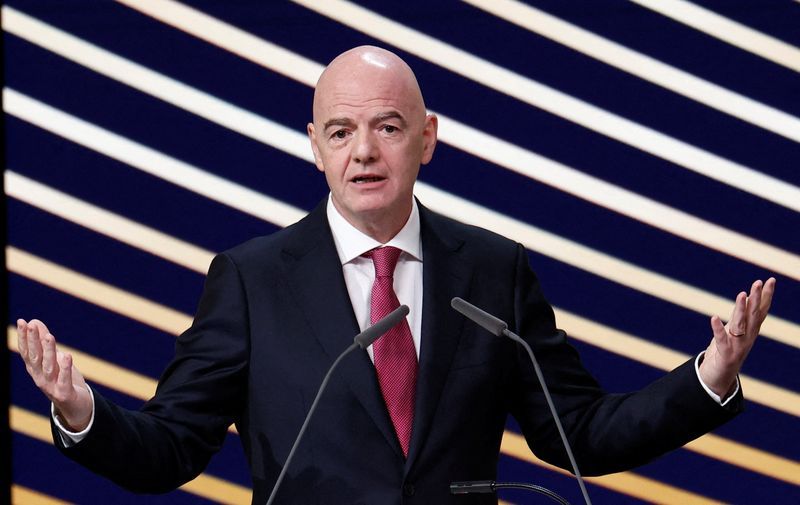
The Oceania Football Confederation expressed measured support on Friday for FIFA's decision to scrap its controversial private investment initiative, yet the region's political unity fractured when New Zealand publicly withdrew its endorsement of President Gianni Infantino's bid to retain his position in next year's election. The divergence underscores deepening tensions within world football as Infantino faces mounting pressure from three major continental bodies seeking a comprehensive review of his leadership amid the failed investment scheme.
Infantino's tenure has become increasingly embattled following open criticism from UEFA, the Asian Football Confederation, and CONCACAF, who have collectively demanded scrutiny of his handling of the FIFA Forward Enterprise proposal. This alliance of continental powerhouses represents a significant challenge to the FIFA president's political standing as he prepares to seek another term. The emerging fracture in the Oceania bloc—traditionally considered aligned with FIFA's establishment—signals that discontent with Infantino extends beyond Europe and North America into other regions.
The OFC, comprising just eleven full member nations and serving as international football's smallest confederation, issued a statement welcoming FIFA's withdrawal of the investment plan following discussions at its executive meeting. The organisation acknowledged that Oceania had experienced tangible benefits from FIFA's administrative direction over the preceding decade, framing the investment controversy as an opportunity rather than a catastrophic breach of institutional trust. This measured tone reflected the confederation's pragmatic assessment that cooperation with FIFA's governing structure remained more advantageous than confrontation.
The statement from OFC explicitly encouraged FIFA to leverage the review process to identify necessary reforms while maintaining operational continuity. By adopting this constructive posture, the confederation positioned itself as collaborative rather than accusatory, suggesting that regional football development in the Pacific islands and Oceania region should not be jeopardised by broader institutional disputes. The organisation's emphasis on FIFA's decade-long commitment to regional advancement implied that isolated policy failures should not overshadow longer-term achievements in grassroots development and infrastructure support.
New Zealand's contrasting position revealed fundamental concerns about governance and institutional integrity within FIFA. As the sole Oceania nation to qualify for this year's World Cup, New Zealand possessed both visibility and credibility that smaller neighbours lacked, enabling it to adopt a more independent stance. The New Zealand Football Association explicitly withdrew support for Infantino's reelection campaign, marking a significant rupture in regional consensus and demonstrating that even geographically isolated football associations could challenge the FIFA establishment's preferred leadership.
The New Zealand Football Association articulated its position in terms that transcended the investment proposal itself, identifying broader systemic problems within FIFA's decision-making processes. By arguing that leadership decisions had precipitated a breakdown in trust and widened divisions across international football, New Zealand diagnosed deeper governance failures beyond a single failed investment venture. This analysis suggests that the private investment scheme functioned as a symptom of wider institutional dysfunction rather than an isolated misstep.
New Zealand's call for an independent review aligned with demands from the three continental confederations, though the timing and regional context of its withdrawal amplified the message that Infantino faced isolation even within traditionally supportive quarters. The association's insistence on independent rather than FIFA-managed investigation reflected scepticism about the organisation's capacity for self-regulation and impartial assessment. This skepticism has particular resonance in Southeast Asian football governance circles, where concerns about institutional transparency and accountability have grown amid various regional corruption investigations.
The proposed FIFA Forward Enterprise had promised member associations $20 million in grants during the subsequent funding cycle, with the potential for doubling this amount through participating in the investment scheme. This financial incentive structure revealed the carrot-and-stick dynamics embedded within FIFA's approach, offering significant resources to confederations and associations willing to endorse the plan. For developing football nations in Oceania, such funding opportunities held particular importance given limited domestic revenue sources and infrastructure constraints.
Following a crisis meeting in Morocco, FIFA issued a formal apology to all 211 member associations for mismanagement of the investment proposal rollout. The organisation simultaneously reaffirmed Infantino's continued leadership and claimed he retained comprehensive support from the governing apparatus. However, this institutional show of confidence contrasted sharply with the public dissent from multiple confederations and now from New Zealand, suggesting that internal FIFA declarations did not reflect genuine consensus among member bodies. The gap between FIFA's public assertions and demonstrated member sentiment exposed the fragility of Infantino's political position.
For Malaysian and Southeast Asian football observers, the Oceania-New Zealand divergence carries implications for regional governance patterns. Malaysia and ASEAN nations operate within AFC structures that have explicitly called for Infantino's leadership review, aligning with New Zealand's critical posture rather than OFC's accommodating approach. The debate surrounding institutional accountability and independent oversight resonates with ongoing Southeast Asian concerns about transparency in continental and international sports administration. How FIFA responds to these accumulated pressures may establish precedents affecting governance expectations across all confederations.
The unfolding situation demonstrates that FIFA's internal politics cannot be reduced to simple geographic or economic divisions. Individual member associations increasingly assert independent judgment regarding institutional leadership, even at political cost, particularly when governance integrity appears compromised. New Zealand's willingness to break regional consensus reflects a broader shift toward holding international sports bodies accountable for procedural transparency and decision-making quality, principles that resonate across Southeast Asian football communities navigating their own governance challenges.
Infantino now faces a contested reelection environment in which multiple confederations have formally questioned his leadership, member associations have withdrawn endorsements, and the legitimacy of his governance approach has been publicly challenged. While FIFA maintains formal institutional support, the visible defection of significant constituencies suggests his path to reelection, while still probable given FIFA's structural advantages, will encounter organised opposition and heightened scrutiny. The episode illustrates how international sports governance remains vulnerable to crises of institutional confidence when leadership decisions prioritise commercial expansion over transparent consultation with constituent members.

