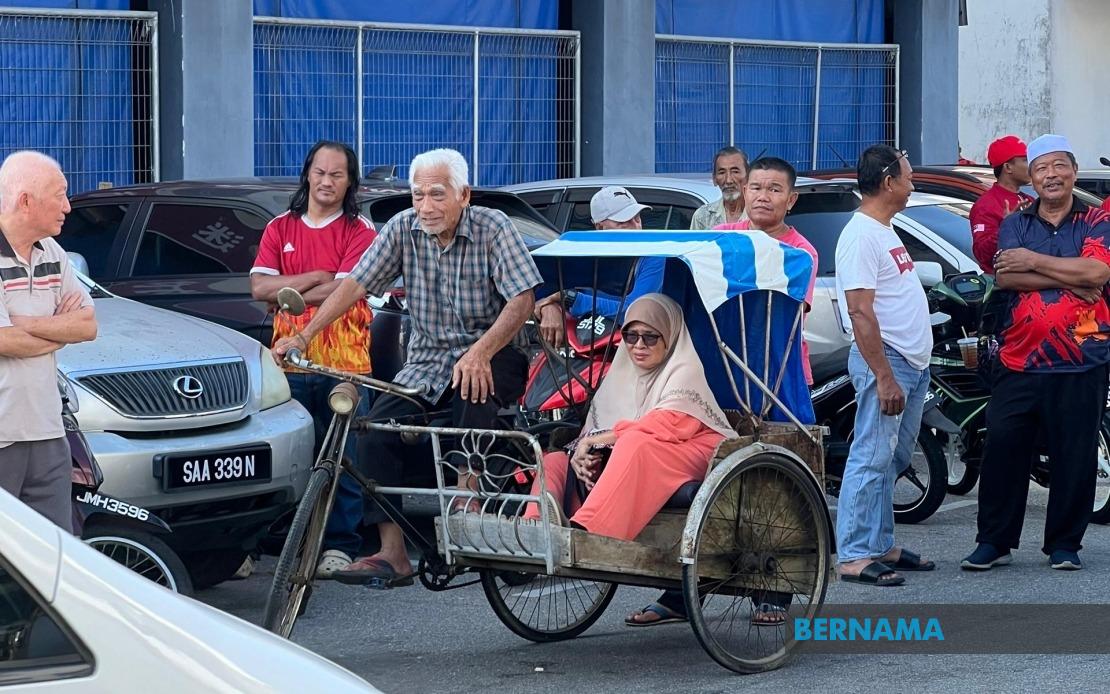
Abdul Razak Pelangga, an 86-year-old imam, undertook an unconventional journey through Batu Pahat's sweltering streets this week, pedalling his trishaw nearly a kilometre to fulfil a cherished wish held by his wife. The elderly clergyman transported his spouse, Jamilah Samsudin, from their home in Kampung Parit Bugis to a coffee shop in Senggarang, where Prime Minister Datuk Seri Anwar Ibrahim had scheduled a breakfast engagement during his campaign swing through the region.
The decision to use the trishaw rather than a motor vehicle revealed both practical wisdom and symbolic intent. Abdul Razak explained that whilst a car or motorcycle would have been less physically demanding, the trishaw offered advantages in the context of the crowded event—specifically avoiding the logistical challenge of securing parking amid the gathering of local residents and media. This pragmatic choice transformed what could have been a routine outing into a meaningful act of devotion, with the elderly imam willing to endure the intensity of the weather for the opportunity.
Abdul Razak's motivation for undertaking this effort stemmed from a personal connection forged years earlier, long before Anwar ascended to the nation's highest office. The imam recalled that the Prime Minister had visited Masjid Raudhatul Jannah Parit Bugis in the past to participate in congregational prayers. During that encounter, the two men exchanged greetings and shook hands, an experience Abdul Razak described as leaving a lasting impression of friendliness and warmth. The imam had preserved this memory and shared it with his wife over the intervening years, eventually nurturing her curiosity to witness the now-prominent political figure in person.
When word circulated that the Prime Minister would be stopping in the small town as part of campaign activities, Abdul Razak seized the moment. His determination to facilitate his wife's wish demonstrated the kind of personal devotion that occasionally surfaces in the interstices of formal political events, where ordinary citizens intersect with national leadership. The couple ultimately achieved their objective, though perhaps not in the manner they had anticipated—the sheer volume of attendees precluded a face-to-face meeting, yet proximity sufficed. Both expressed satisfaction at observing the Prime Minister at relatively close range, having previously encountered him only through the mediated experience of television screens.
The Prime Minister's appearance in Batu Pahat formed part of the PMX Meet-and-Greet Programme, a structured initiative targeting the Senggarang state constituency. Anwar allocated approximately fifty minutes to the engagement, during which he mingled with constituents whilst consuming breakfast at the establishment. The visit coincided with the broader political calendar governing Johor, as the state prepares for its elections scheduled for July 11. Communications Minister Datuk Fahmi Fadzil, who serves concurrently as the Pakatan Harapan Communications Director, accompanied the Prime Minister during the engagement.
The timing held particular resonance for Abdul Razak himself, as the election date aligned fortuitously with his eighty-seventh birthday. The imam expressed enthusiasm about exercising his electoral franchise on this occasion, describing the convergence of personal and civic milestones as generating an unusual sense of significance. Whilst he has participated in voting throughout his adult life, the prospect of fulfilling his democratic duty on the anniversary of his birth lent additional meaning to what might otherwise constitute routine political participation. His perspective illuminated how personal life events and national processes occasionally intersect in ways that imbue formal democratic procedures with heightened emotional weight.
The Johor state election represents the sixteenth iteration of such contests in the sultanate, and the campaign activities reflect the intensity characterising contemporary Malaysian electoral politics. Early voting opportunities had been scheduled for July 7, permitting certain categories of voters to cast ballots prior to the main polling day. The sequencing of these events shaped the urgency animating Abdul Razak's trishaw expedition—the window for witnessing the Prime Minister's presence in the constituency remained narrow and time-sensitive.
The incident itself, whilst modest in scale, encapsulates broader patterns evident in Malaysian political culture. Citizens frequently undertake considerable personal effort to secure proximity to national leaders, viewing such encounters as meaningful despite the constraints imposed by large gatherings and security considerations. The trishaw journey through heat—a vehicle choice evoking Malaysia's pre-motorisation era—added a layer of poignancy to the episode, suggesting continuity between contemporary democratic engagement and older traditions of community movement and shared purpose.
Abdul Razak's status as an imam placed him within a particular social and moral hierarchy within his community, yet his enthusiasm to witness the Prime Minister positioned him alongside countless other Malaysians across the peninsula who maintain interest in political leadership and national affairs. The religious dimension of his identity intersected with his role as a voting citizen and, more intimately, with his capacity as a devoted husband willing to undertake physical exertion to gratify his wife's wishes. These multiple identities converged in the moment of the trishaw ride, illustrating how political engagement in Malaysia frequently embeds itself within networks of personal obligation and familial affection.
As the nation's political calendar unfolds through 2024, such grassroots encounters between leadership and electorate will continue shaping the texture of campaign season across various states. The Johor election, arriving amid broader national political contestation, reflects voters' ongoing engagement with the democratic process despite fatigue or scepticism that periodically surfaces. Abdul Razak and Jamilah's journey to Senggarang exemplified the persistence of this engagement, demonstrating that meaningful political participation—in its emotional and symbolic dimensions—extends beyond the mechanics of voting itself into the realm of presence, witness, and personal connection.

