In a move signalling strengthened coordination among three major Muslim-majority powers, the Organisation of Islamic Cooperation has publicly endorsed the Mecca Joint Defense Agreement signed on Friday by Turkey, Saudi Arabia, and Pakistan. The multilateral accord, inked during a trilateral summit in the holy city of Mecca, represents a significant realignment of defence partnerships in the Islamic world and has drawn immediate recognition from the OIC's leadership as a watershed moment for regional stability.
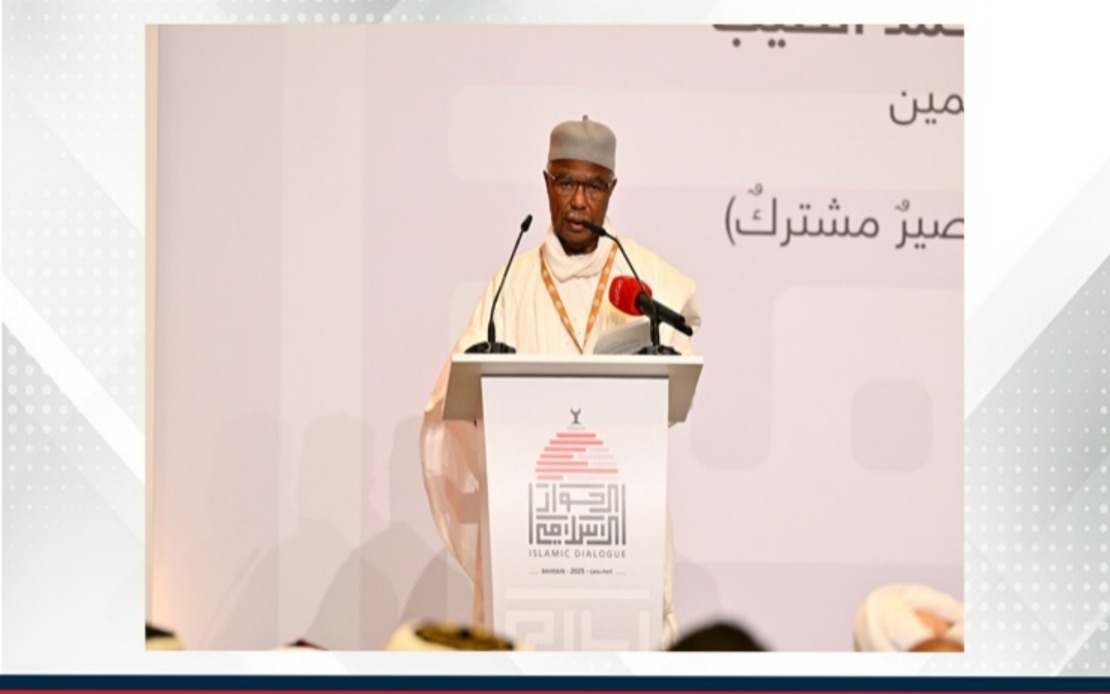
OIC Secretary-General Sharein Brahim Taha articulated the organization's backing for the pact in unequivocal terms, issuing a statement that characterised the agreement as an "important strategic step" reflective of deep commitment by all three signatories to elevate regional and international cooperation frameworks. Taha's remarks underscore the OIC's view that such multilateral security arrangements bolster the organization's own agenda of fostering unity and coordinated action among its 57 member states. The secretary-general particularly highlighted the pact's potential to serve as a foundation for protecting security and stability not merely within the immediate region but across the broader Muslim world—a formulation that expands the agreement's significance beyond bilateral or even regional confines.
The accord was formally executed by Turkish President Recep Tayyip Erdogan, Saudi Crown Prince Mohammed bin Salman, and Pakistani Prime Minister Shehbaz Sharif during ceremonies held at Al-Safa Palace in Mecca. This venue choice carries symbolic weight, as Mecca's designation as the site of signature reinforces the agreement's grounding in Islamic values and collective identity. The timing and location suggest deliberate messaging: that cooperation on defence and security matters emerges from shared religious and cultural foundations, rather than purely transactional geopolitical calculations.
According to clarifications provided by Turkish officials, the agreement functions as a structured defence cooperation mechanism designed to strengthen collective deterrence capabilities whilst maintaining an explicit commitment to regional and global peace. Critically, officials emphasised that the pact targets no specific nation, a reassurance likely intended to forestall concerns from neighbouring states or other regional actors who might perceive the trilateral arrangement as directed against their interests. This carefully calibrated language reflects the diplomatic sensitivity surrounding any new security architecture in a region characterised by longstanding rivalries and competing spheres of influence.
A fundamental provision of the Mecca Joint Defense Agreement establishes mutual defence obligations among the three signatories. The arrangement stipulates that any armed aggression directed against one party shall be construed as an attack upon all three, effectively creating a collective security umbrella. This mutual defence clause represents a considerable deepening of security integration and signals each country's willingness to risk military involvement in defence of the others—a substantial commitment that transcends rhetorical solidarity. Such arrangements typically emerge when nations perceive shared threats and judge coordinated defence posture preferable to isolated national strategies.
For Malaysia and other Southeast Asian observers, the agreement warrants careful attention for several reasons. The rise of multipolar security arrangements within the Islamic world reflects broader trends toward regional power consolidation and autonomous decision-making outside traditional Western-dominated security architectures. Malaysia, as an ASEAN member and OIC participant, operates within multiple overlapping security frameworks; developments in Middle Eastern and South Asian defence cooperation may influence diplomatic dynamics affecting maritime security, terrorism prevention, and broader regional stability that intersect with Southeast Asian interests.
The pact also reflects the particular diplomatic moment in which it emerges. Türkiye's repositioning within Middle Eastern geopolitics, marked by rapprochement with erstwhile regional rivals, creates space for new partnerships. Saudi Arabia's Vision 2030 agenda includes expansion of regional influence through strategic partnerships. Pakistan's security challenges, spanning terrorism, border disputes, and great power competition, make multilateral defence frameworks operationally valuable. Each state enters this agreement from distinct strategic positions and with particular vulnerabilities, yet sufficient convergence exists to motivate formal coordination mechanisms.
Taha's invocation of "historic agreement" terminology reflects the OIC's assessment that this defence pact ranks among significant developments in contemporary Islamic world politics. By framing the accord as addressing "growing security challenges" whilst emphasizing "solidarity and constructive partnerships," the OIC secretary-general positioned the agreement within a broader institutional narrative about Muslim-majority states assuming greater agency in their own security affairs. This rhetorical framing carries implications for how the Islamic world self-represents within international relations and the extent to which member states coordinate action on shared concerns.
The practical manifestations of this defence cooperation remain to be determined as implementing mechanisms develop. The agreement's success hinges upon establishing functional military coordination, intelligence sharing, and joint operational protocols that translate mutual defence commitments into credible deterrence. Regional dynamics will test these arrangements: whether they facilitate genuine security improvements or instead calcify into symbolic gestures depends substantially on how member states operationalise the agreement's provisions amid the competing demands of domestic politics and other alliance commitments.
For Malaysia's strategic planners and policymakers, the emergence of this trilateral defence framework underscores broader regional diversification of security partnerships. As traditional alliance structures evolve and new configurations emerge across the Islamic world and beyond, Southeast Asian nations navigate increasingly complex environments where influence flows through multiple channels and partnerships prove fluid rather than fixed. The Mecca agreement exemplifies this reality: a deliberate, high-profile security initiative among three major Muslim-majority states reflecting contemporary reassessments of threat, capability, and opportunity within their respective regions.

