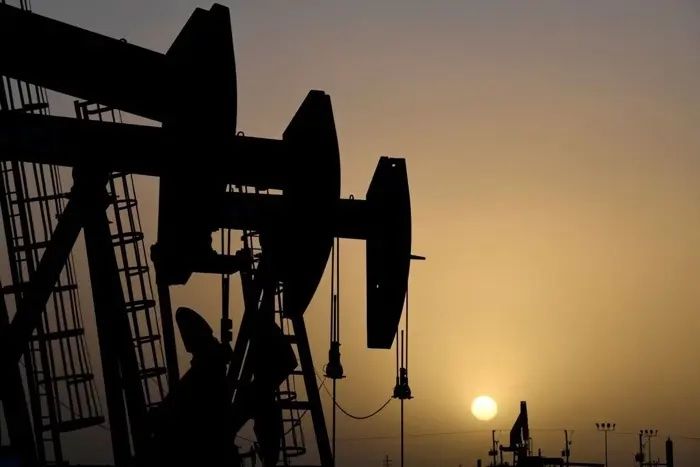
Oil benchmarks climbed sharply on Friday as escalating military confrontation between Washington and Tehran raised fresh concerns about potential disruptions to global crude supplies. Brent crude futures gained 70 cents to close at $84.93 per barrel, representing a 0.83% increase, while US West Texas Intermediate crude added 81 cents to reach $79.76, marking a 1.03% rise. The gains reflected investor anxiety about the unravelling of a fragile ceasefire mechanism that had briefly quietened hostilities in the strategically vital Gulf region last month.
Both crude contracts have now appreciated approximately 12% over the course of the week, positioning Brent for a third consecutive weekly advance and WTI for its second. This momentum underscores growing market apprehension about the trajectory of US-Iran relations and their potential consequences for global energy markets. Market analysts attribute the persistent strength to what traders describe as a "dual-risk scenario"—the combination of direct threats to crude flowing through the Strait of Hormuz and the destabilising prospect of Houthi interference with shipping in the Red Sea.
The fresh round of escalation began Wednesday when American forces conducted two major bombing campaigns in a single day targeting sites near Iran's southern coastline, marking the first significant military action since the understanding broke down. US Central Command confirmed that strikes continued Thursday night and into Friday, describing them as part of "a new wave of strikes against Iran for the sixth consecutive night to further degrade Iranian military capabilities." These operations, launched at 1800 GMT, represent a sustained campaign that signals Washington's determination to significantly reduce Tehran's military capacity and strike capability.
Iran has responded by unleashing waves of missiles and unmanned drones against American military installations positioned in neighbouring countries, with particular focus on a recently enlarged airbase located in Jordan. Qatar's defence ministry reported that its armed forces successfully intercepted an Iranian missile attack early Friday, though the interception operation resulted in shrapnel that injured a child in the country. These tit-for-tat military exchanges have created a dangerous cycle that threatens to spiral further out of control without diplomatic intervention.
A particularly troubling development for energy security emerged when Reuters sources disclosed that Iranian leadership has instructed its Houthi allies—a powerful political and military organisation based in Yemen—to maintain readiness to close the Red Sea to oil traffic. This contingency appears designed to impose costs on the United States should American forces target Iran's critical power infrastructure. Such a blockade would represent an unprecedented threat to one of the world's most crucial maritime corridors, potentially triggering severe global energy shortages and economic disruption far beyond the Middle East.
The International Energy Agency has flagged deepening concern about the trajectory of events. Executive Director Fatih Birol told a gathering at the Council on Foreign Relations in Washington that oil security remains a paramount issue requiring urgent attention. He emphasised his personal worry about the implications if the deteriorating situation does not stabilise within coming weeks, reflecting the perspective of one of the world's most influential energy forecasters. His comments carry particular weight given the IEA's role in coordinating responses to energy crises among developed economies.
For Southeast Asian nations including Malaysia, these developments carry immediate relevance. As significant energy importers dependent on stable Gulf oil supplies, the region faces direct exposure to any supply disruptions or price escalations. Malaysia's downstream energy sector, refineries, and power generation infrastructure all depend on predictable crude pricing and reliable access to Gulf supplies. Elevated oil prices increase input costs across the Malaysian economy, affecting transportation, manufacturing, electricity generation, and consumer inflation—factors that policymakers in Kuala Lumpur monitor closely.
The Red Sea threat represents a qualitatively different risk from conventional supply concerns. Unlike temporary port closures or production hiccups, a sustained Houthi blockade could redirect significant crude flows around Africa's Cape of Good Hope, adding weeks to transit times and substantially raising freight costs. This would create a structural price floor that persists even if headline conflict subsides. Malaysian traders and refiners would face both higher crude costs and logistical complications in sourcing alternative supplies at competitive rates.
Technical analysts at IG Markets suggested that West Texas Intermediate could potentially test the mid-$80s price range if it manages to maintain support above the mid-$70s level. This technical outlook implies traders anticipate further modest upside, reflecting confidence that geopolitical premiums will persist. However, sustained prices above $80 per barrel begin meaningfully impacting global economic growth, particularly in energy-importing developing nations where fuel costs represent a larger share of household and business expenditure.
The broader context involves a complete breakdown of diplomatic communication between Washington and Tehran, leaving few off-ramps from the current escalation cycle. Both sides have demonstrated willingness to absorb costs and pursue military objectives despite acknowledged risks to global energy stability. This suggests resolution, if it comes, will likely require external pressure from major powers or exhaustion of one party's willingness to continue operations—a timeline that remains deeply uncertain and concerning for energy market participants worldwide.

