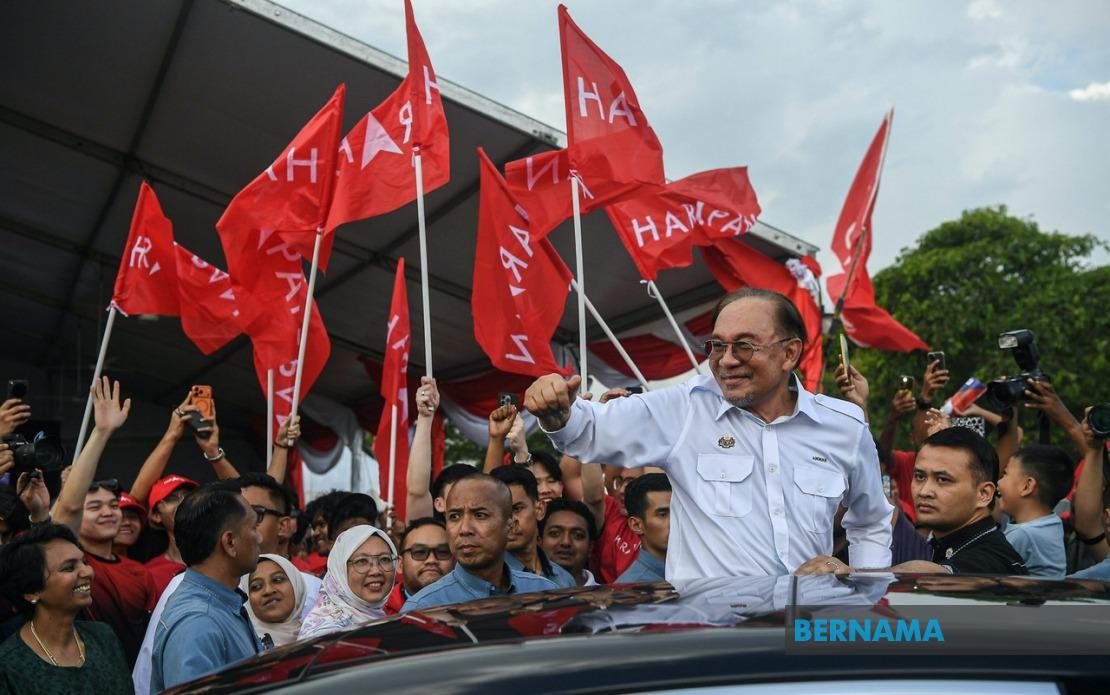
As Johor voters prepare to cast ballots in the 16th state election this weekend, a fundamental tension in modern electoral politics remains unresolved: can social media fully replace the handshake and the rally? A Bernama survey suggests the answer is no, particularly among older voters who maintain deep preference for meeting candidates in person, even as digital platforms reshape campaign strategy across Malaysia.
The campaign machinery has increasingly shifted toward TikTok, Facebook, and WhatsApp, reflecting broader patterns seen across Southeast Asia where younger demographics consume political messaging through screens. Yet interviews with Johor voters across multiple constituencies reveal that for many seniors, algorithmic feeds and live streams cannot substitute for the visceral experience of attending a campaign event. These voters describe an intangible quality they seek—what one respondent called the candidate's "aura"—that only emerges through direct observation. They emphasize assessing demeanour, personality and what they interpret as sincerity, factors they believe digital media struggles to convey authentically.
A. Chandra, 70, a retired teacher from Perling, encapsulates this perspective. For him, attending campaign events creates an atmosphere impossible to replicate through a home screen, offering the chance to scrutinize political figures directly rather than through edited content. His preference reflects a generation's longstanding trust in unmediated experience, a value system that political strategists cannot easily dismiss. With 2.7 million voters expected to participate in Saturday's election across 56 contested seats, understanding these preferences becomes strategically important for parties seeking to mobilize traditionally reliable voting blocs.
Yet the picture grows more complex upon deeper examination. Maimunah Ismail, 73, from Sedeli, demonstrates that voter behavior increasingly defies simple categorization. She attends campaign events when possible but simultaneously follows developments through her mobile phone, browsing social media while managing household tasks. This pattern—leveraging digital platforms for convenience while maintaining commitment to occasional in-person participation—appears widespread among older respondents. The distinction between "digital voters" and "traditional voters" dissolves when examining actual behavior, revealing instead a spectrum of engagement strategies adapted to individual circumstances.
Mobility constraints and time pressures emerge as critical variables reshaping how different demographics interact with political messaging. M. Sivathramani, 73, a retired civil servant with limited physical mobility, describes how TikTok and similar platforms have expanded his electoral participation by removing barriers to information access. Rather than requiring him to navigate crowded venues, digital tools enable him to remain politically engaged while managing his health. Simultaneously, he expresses residual preference for meeting candidates personally when feasible. Similarly, Lee Lian Chen, 58, a grocery shop owner from Bukit Permai, prioritizes efficiency by researching candidates' manifestos digitally before attempting to verify their credibility through ground-level interaction. These voters demonstrate instrumental approaches to campaign media—selecting channels based on practical utility rather than ideological commitment.
The perception that older voters lack digital literacy does not withstand scrutiny according to respondents themselves. Fairuz Saif, 59, from Kempas, explicitly rejects this stereotype while acknowledging that online campaign effectiveness depends on execution quality. Messages delivered through digital channels require simplicity and concision to reach audiences spanning multiple age groups. Poorly designed content—jargon-heavy, structurally confusing, or formatted inappropriately for mobile viewing—fails regardless of viewer age. Conversely, well-crafted digital campaigning can rival face-to-face contact in persuasive power, particularly when candidates respond directly to voter questions or address local concerns with specific proposals. This nuance suggests that generational divides matter less than campaign professionalism and message clarity.
Dr. Nazreena Mohammed Yasin from Universiti Tun Hussein Onn Malaysia's Department of Social Sciences offers an analytical framework that dissolves the apparent competition between digital and physical campaigning. Rather than mutually exclusive approaches, she characterizes them as complementary methods reaching voters through different sensory and emotional channels. Physical rallies provide atmospheric immersion and immediate interpersonal contact that establish emotional connections, while digital platforms enable efficient information distribution and targeted messaging. Contemporary voters increasingly navigate elections through what scholars term "hybrid information seeking," consulting multiple sources before crystallizing preferences at the ballot box.
Generational and occupational differences in information-seeking behavior reflect deeper patterns about how Malaysians access political knowledge. Some voters continue relying on traditional media—newspapers and television broadcasts—maintaining habits formed decades prior. Others have migrated entirely to digital platforms, viewing them as more convenient and comprehensive. Working adults with inflexible schedules gravitate toward social media's flexibility, catching campaign updates between professional obligations. Pensioners attending campaign events may invest several hours in a single gathering because time constraints differ fundamentally from those managing employment. These variations cannot be attributed to digital literacy alone; they reflect rational adaptation to individual circumstances and preferences.
The hybrid voter emerges as the election's modal participant rather than exceptional case. This person might watch a candidate's TikTok video during morning coffee, attend a weekend campaign rally in their neighborhood, scroll through Facebook commentary while commuting, and consult WhatsApp messages from party organizers before deciding. Understanding Johor's 2.7 million voters requires acknowledging this complexity rather than sorting them into binary categories. Campaign strategists who treat digital and physical outreach as separate domains may misallocate resources, whereas those recognizing voter mobility between channels can design more sophisticated engagement strategies.
The 16th Johor State Election ultimately demonstrates that Malaysian electoral politics have entered a genuinely multiplex era. Digital dominance has not eliminated traditional campaigning; instead, the two methods have established an uneasy coexistence mediated by voter preference, availability, and circumstance. Older voters' demonstrated commitment to face-to-face interaction challenges predictions that technology would entirely supplant personal politics. Simultaneously, their selective adoption of social media indicates that traditional demographics need not remain isolated from digital communication. For political analysts and campaign managers, the lesson appears clear: victory in contemporary elections requires fluency across multiple channels and sensitivity to how different voters synthesize information from competing sources before reaching electoral decisions.

