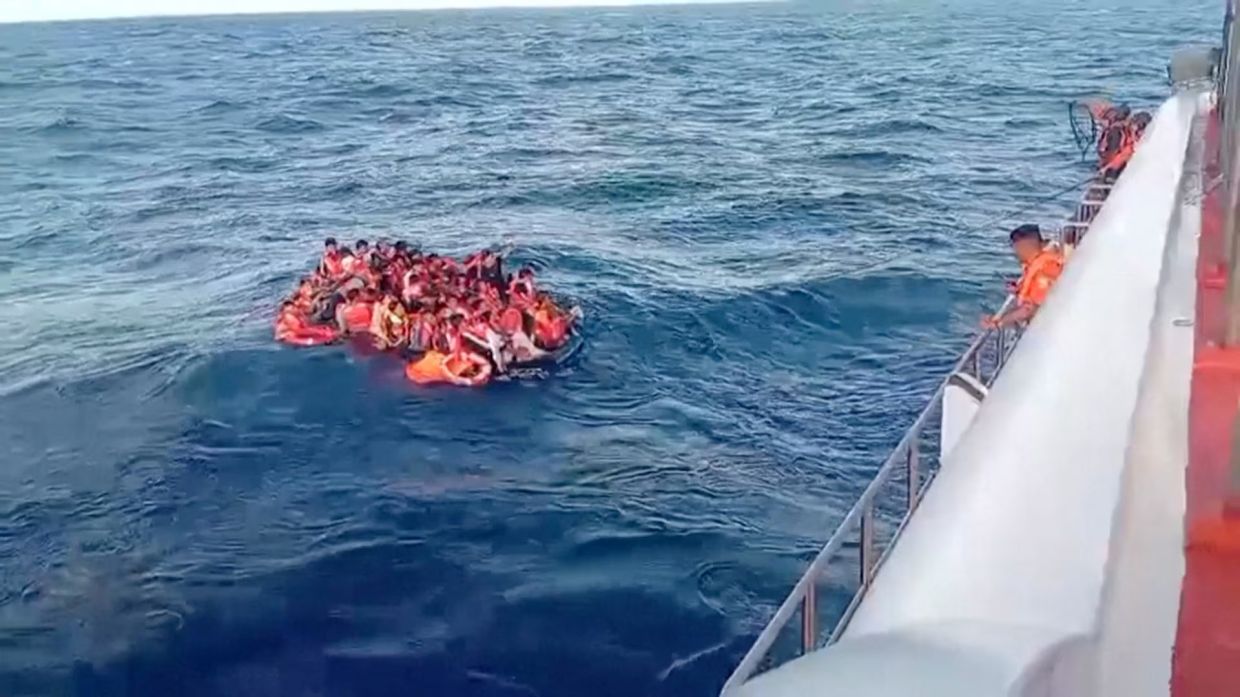
A massive rescue operation off Indonesia's coast has concluded with the safe evacuation of 211 people after the passenger ferry Putri Yasmin erupted in flames Wednesday morning, though the incident claimed at least one life. The vessel, which was transporting travellers from the holiday destination of Bali toward the nearby island of Lombok, suddenly caught fire at approximately 4:15 a.m. local time, prompting an emergency response that drew together multiple government agencies and civilian maritime assets to coordinate the extraction of stranded passengers and crew members.
According to official statements released Thursday, an Indonesian woman perished in the blaze, marking a significant tragedy amid what authorities have characterized as a largely successful emergency evacuation. The coordinated response involved the National Search and Rescue Agency, the Indonesian Navy, maritime police, and crews from civilian vessels operating in the vicinity who answered the distress call and contributed to moving survivors away from the burning ferry to safety at ports on both Bali and Lombok.
Authorities have praised the execution of the rescue effort, with local officials describing the evacuation process as having unfolded "safely and smoothly" despite the urgent and dangerous circumstances. The successful outcome for the overwhelming majority aboard the vessel reflects both the readiness of Indonesia's maritime rescue infrastructure and the willingness of nearby commercial traffic to divert course and provide immediate assistance to those in peril at sea.
However, significant discrepancies have emerged regarding the passenger count aboard the Putri Yasmin at the time of the incident, raising questions about vessel management and record-keeping procedures. The ferry's official manifest documented 131 individuals on board, comprising 114 passengers and 17 crew members, yet authorities subsequently confirmed that the actual number of people rescued far exceeded this figure, indicating that additional passengers had boarded without being formally registered in the ship's records.
The presence of unregistered passengers highlights persistent compliance challenges across Indonesia's maritime sector, where enforcement of safety protocols remains inconsistent despite repeated calls for improvement. The discrepancy between manifested and actual passenger numbers has become an increasingly familiar pattern in Indonesian ferry operations, undermining the reliability of safety data and complicating emergency response planning that depends on accurate headcounts.
Investigators from Indonesia's National Transportation Safety Committee, working in conjunction with authorities from the Lembar Port Authority on Lombok, have commenced a formal inquiry into the origins and progression of the fire that devastated the Putri Yasmin. The investigation will seek to determine whether mechanical failure, electrical systems malfunction, or human negligence triggered the blaze, with particular focus on whether the vessel's maintenance schedule and safety inspections met regulatory standards.
Beyond establishing cause, authorities are continuing to conduct comprehensive damage assessments covering not only the ferry itself but also the vehicles and cargo that were aboard during the incident. These evaluations will eventually inform insurance settlements and provide a clearer picture of the financial impact of the disaster on vessel operators, cargo owners, and transport networks connecting Bali and Lombok.
The Putri Yasmin incident underscores enduring vulnerabilities in Indonesia's maritime transportation system, which bears enormous responsibility for moving people and goods across the nation's vast archipelago of more than 17,000 islands. Ferry services form the backbone of inter-island connectivity, offering the primary and often sole means of transport for millions of Indonesians and tourists navigating between populated centres separated by stretches of ocean.
Yet this critical role is consistently undermined by systemic weaknesses that have proven difficult to eliminate despite decades of tragedy and reform efforts. Inadequate enforcement of existing maritime safety regulations, combined with unpredictable weather patterns characteristic of Southeast Asian waters, creates a high-risk environment for vessel operations. Operators operating under commercial pressure to maximize capacity utilization frequently clash with safety imperatives, resulting in overcrowding, insufficient life-saving equipment, and deferred maintenance.
The Bali-Lombok ferry route is among the busiest inter-island corridors in Indonesia, carrying thousands of passengers weekly to and from one of the world's premier tourist destinations. The route's high traffic volume creates constant opportunity for safety lapses to transform into tragedy, as demonstrated by the Putri Yasmin incident and numerous prior accidents that have cost hundreds of lives in recent decades.
For Malaysian observers, the incident carries particular relevance given the shared maritime geography and comparable challenges facing ferry operations throughout Southeast Asia. The region's reliance on aging vessels, inconsistent regulatory oversight, and weather-related risks create vulnerabilities that transcend national borders and affect regional transport networks and tourism industries.
The outcome of the National Transportation Safety Committee's investigation and any corrective measures implemented subsequently may provide insight into whether Indonesia's maritime authorities are prepared to address systemic safety deficiencies through meaningful enforcement and infrastructure investment, or whether the ferry sector will continue operating amid the persistent hazards that have characterized its recent history.

